Butternut Squash Soup Recipes
One of those foods that quickly makes you feel warm, cozy, and at home is butternut squash soup. This soup has become a seasonal favorite in many cultures because it is smooth, velvety, somewhat sweet, and incredibly fulfilling. Butternut squash soup is a healthy and adaptable dish that may be served as an appetizer for a special meal or on a chilly winter evening.
Everything you need to know about butternut squash soup recipes is covered in this comprehensive article, from picking the ideal squash to mastering both traditional and inventive varieties.
What Makes Butternut Squash Soup So Special?
The natural harmony of tastes in butternut squash soup makes it unique. Savory elements like onions, garlic, herbs, and spices go well with the mild sweetness of squash. It becomes a smooth soup that seems opulent without being heavy when mixed.
The main reasons this soup is so popular:
- Texture that is naturally creamy
- Sugar-free, mild sweetness
- Simple to alter with toppings and seasonings
- Filling and nutritious
- Ideal for vegan and vegetarian diets.
Understanding Butternut Squash:
Winter squash with vivid orange flesh and pale beige skin is called butternut squash. It is ideal for soups since it has a nutty, somewhat sweet flavor and turns soft and creamy when cooked.
How to Choose a Good Butternut Squash?
- Choose one that feels substantial for its size.
- There should be no deep cuts and smooth skin.
- Steer clear of squash with mold or squishy patches.
A delicious soup starts with high-quality squash.
Nutritional Benefits of Butternut Squash Soup:
Butternut squash soup is nutrient-rich and soothing. It is abundant in:
- Vitamin A (promotes eye health)
- Vitamin C (increases immunity)
- Fiber (helps in digestion)
- Potassium (promotes heart health)
Fact: It can be a highly healthful supper option if made with very little cream or oil.

Essential Ingredients for Butternut Squash Soup:
Although there are many different recipes, most butternut squash soups have a straightforward foundation:
- Butternut squash
- Garlic
- Vegetable or chicken stock
- Olive oil or butter
- Salt and black pepper
- Onion
Cream, coconut milk, herbs, spices, and sweet ingredients like apples or carrots are optional.
Classic Creamy Butternut Squash Soup Recipe:
Step 1: Prepare the Squash:
- Chop the butternut squash into cubes after peeling, cutting it in half, and removing the seeds.
This facilitates smooth blending and even cooking.
Step 2: Sauté the Aromatics:
- Heat butter or olive oil in a big pot.
- Cook the chopped onion until it becomes transparent and tender.
- Cook the garlic for a short while until it becomes fragrant.
Step 3: Cook the Squash:
- To coat the cubed squash with the aromatics, add it to the pot and stir.
Suggestion: Add enough stock to cover the veggies.
Step 4: Simmer Until Tender:
- After bringing the soup to a mild boil, lower the heat and simmer until the squash is extremely tender and can be pierced with a fork.
Step 5: Blend Until Smooth:
- Transfer the soup to a blender in batches or use an immersion blender.
Suggestion: Blend until smooth and creamy, it will give a more filling taste.
Step 6: Finish and Season:
If desired, stir in coconut milk or cream. Add salt and pepper to taste.
Butternut Squash Soup Options You Can Try at Home:
1. Creamy Butternut Squash Soup:
Adding cream is a common way to make your soup richer.
Creamy add-ins:
- Heavy cream
- Milk
- Half and half
After combining, add the cream and slowly heat. Don’t boil after adding dairy.
Tip: Before adding the cream, let it warm up. This maintains the soup’s smoothness.
2. Roasted Butternut Squash Soup:
A little sweetness and a deeper taste are added when the squash is roasted.
How to Roast the Squash?
- Add salt, pepper, and olive oil to the squash cubes.
- On a baking sheet, spread.
- Roast until tender and lightly browned.
Advice: Next, repeat the steps for the soup. Add the broth, onion, and roasted squash to the pot.
3. Vegan Butternut Squash Soup:
This soup can be made completely vegan without sacrificing its creaminess.
Vegan substitutions:
- Instead of using butter, use olive oil.
- Make use of veggie broth
- Add cashew cream or coconut milk.
Point: Squash goes well with the subtle sweetness of coconut milk.
Popular Flavor Variations of Butternut Squash Soup:
This soup’s ease of flavor modification is one of its best features.
1. Spiced Version:
Add cinnamon, nutmeg, or ginger for warmth.
2. Slightly Spicy Version:
Add a tiny bit of spicy sauce or chili flakes.
3. Savory Version:
Use thyme, sage, or rosemary.
Suggestion: Gradually add the spices, tasting as you go.
Texture Tips for Perfect Soup:
Achieving the ideal texture is crucial.
Important Tips:
- Blend until completely smooth.
- Gradually add the broth.
- If the soup seems thin, simmer it longer.
- If the soup seems weak, add more squash.
- Smooth soup is more cozy.
Toppings That Make It Better:
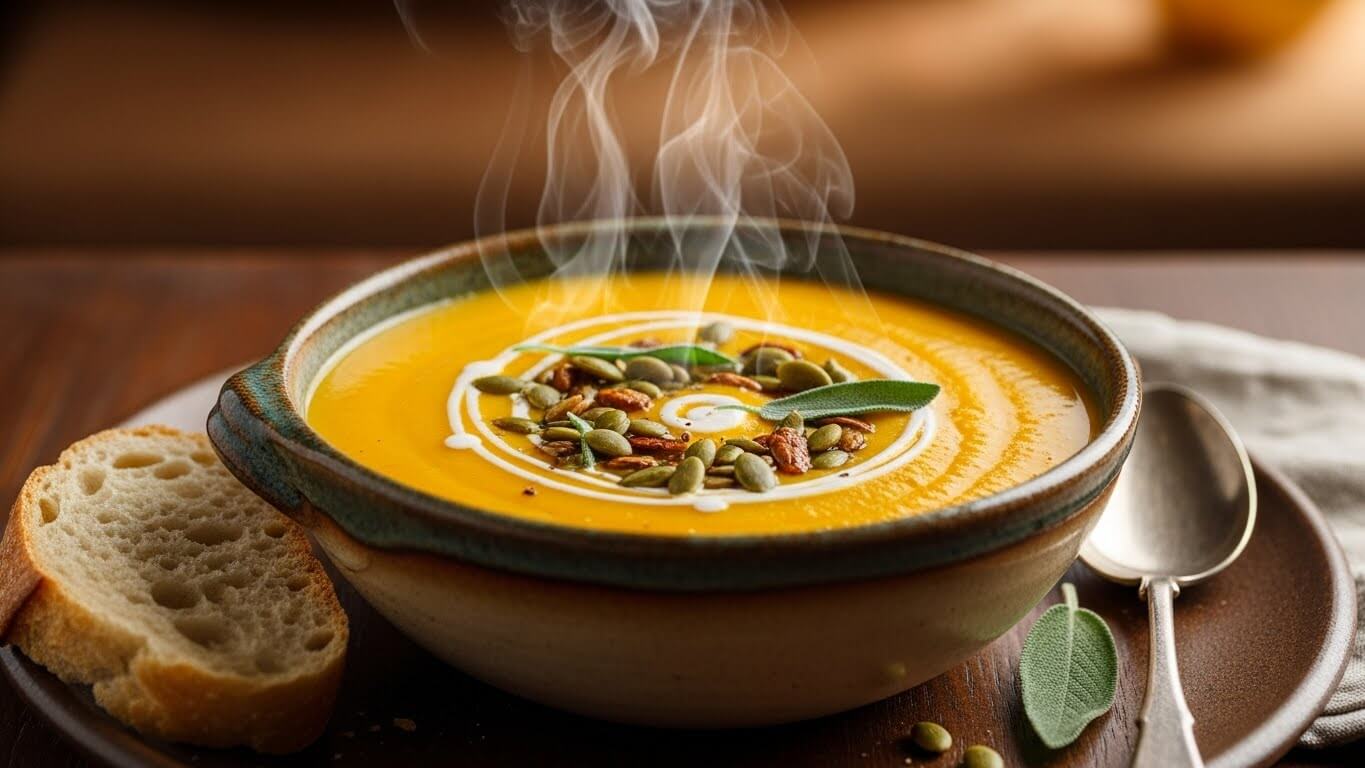
Toppings enhance the bowl’s appearance and provide crunch.
Excellent topping suggestions:
- Croutons
- Pumpkin seeds toasted
- chopped herbs
- A whirl of coconut milk or cream
The soup seems great even with a basic topping.
Serving Ideas of Butternut Squash Soup:
Butternut squash soup complements a variety of dishes.
Serve it with:
- Crusty bread
- Simple salad
- Grilled cheese
- Roasted veggies
It can be a full meal or a starter.
Storage and Reheating Tips:
This soup keeps nicely in storage.
1. Storage:
Store for up to four days in the refrigerator in a sealed container.
2. Freezing:
Allow the soup to cool completely. Freeze for a maximum of three months.
3. Reheating:
Warm carefully in the microwave or on the stove. Stir frequently.
Common Mistakes to Avoid:
- Add too much liquid all at once.
- The squash is undercooked.
- Don’t taste at the end.
- Overindulgence in spices
Better soup comes from simple steps.

Helpful Comparison Table:
| Style | Best For | Texture |
| Classic | Everyday meals | Smooth |
| Creamy | Comfort food | Rich |
| Roasted | Deep flavor | Bold |
| Vegan | Dairy-free | Silky |
Pro Tips From Experience:
Here are some guidelines I typically adhere to after preparing this soup numerous times:
- Taste at each step
- Don’t cook too quickly.
- A good broth is important.
- Often, simplicity is best.
Remaining calm and inquisitive makes cooking simpler.
Why Does Homemade Soup Win?
While store-bought soup is quick, homemade soup has a distinct flavor. The flavor, texture, and salt are all under your control. Additionally, it gives your house a cozy scent that is not available in a box.
As a home cook once remarked,
“A house feels alive when there’s a pot of soup on the stove.”
Can I make butternut squash soup ahead of time?
Yes, the next day it tastes even better.
Is butternut squash soup healthy?
Indeed, it has a lot of fiber and vitamins.
How do I thicken the soup?
Add extra squash or simmer for a longer time.
Can I skip cream?
Yes, it tastes great without dairy.
Final Thoughts:
Butternut squash soup is hearty, comforting, and easy. It can be roasted, vegan, creamy, or classic. You may dress it up or leave it simple. It becomes comfortable and familiar after you make it a few times. This type of recipe develops with you. You learn something new from every pot.