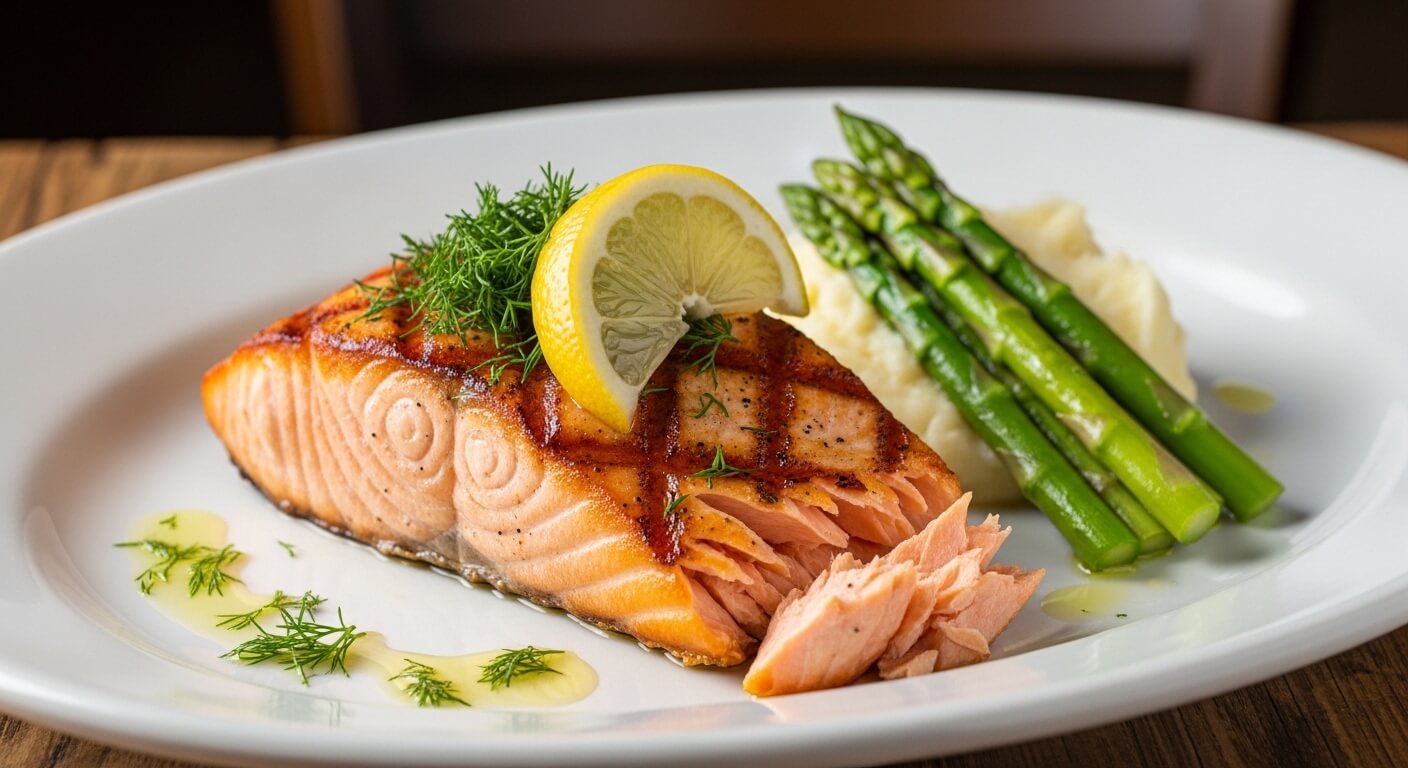
How to Cook Salmon: A Complete Beginner-to-Expert Guide
Salmon is one of the most appreciated fish in the world—and for good reason. It’s tasty, adaptable, nourishing, and surprisingly simple to prepare once you know the fundamentals. Salmon may seem elegant without being difficult, whether you’re preparing it for your family, yourself, or visitors. This amazing fish may be prepared in a variety of ways, from crispy pan-seared fillets to delicate baked salmon and smoky grilled varieties.
Everything you need to know about cooking salmon will be covered in this guide, including how to choose the best variety, prepare it correctly, comprehend doneness, and become proficient in a variety of cooking techniques. Even if you’re a total novice, by the end you’ll feel comfortable preparing salmon in your own kitchen.
Understanding Salmon: Types and Cuts:
Understanding what you’re working with is helpful before cooking salmon.
1. Typical Salmon Types:
- Atlantic salmon is generally available, has a mild flavor, and is frequently farmed on farms.
- Sockeye salmon is typically fished in the wild and has a deeper red color and a stronger flavor.
- Coho salmon has a well-balanced flavor that is milder than sockeye.
- Chinook (King) salmon has a higher fat content and a rich, buttery mouthfeel.
- Mild and lighter, pink salmon is frequently used in cans.
Fact: While all varieties cook identically, fattier varieties—such as Atlantic or Chinook—are more tolerant and more difficult to overcook.
2. Salmon Cuts:
- Fillets are the most popular and are simple to prepare and distribute.
- Steaks are excellent for grilling since they are cross-cut slices with bone.
- Whole salmon is ideal for roasting or special events.
- Skin-on vs. Skinless cooked correctly, skin adds crispiness and keeps the fish moist.
How to Choose Fresh Salmon?
The difference is huge when the fish is fresh.
Search for:
- Firm skin that recoils when compressed
- A fresh, ocean-like scent that is never fishy
- Surface that is wet rather than slimy
- Vibrant, bright color with no gray or drab areas
Suggestion: When purchasing frozen salmon, look for vacuum-sealed containers free of ice crystals.
Preparing Salmon Before Cooking:
1. Thawing Salmon Properly:
If salmon is frozen, defrost it gradually overnight in the fridge. Thawing at room temperature compromises texture and safety, therefore avoid doing so.
2. Cleaning and Drying:
- If necessary, give it a quick rinse in cold water.
- Using paper towels, pat dry fully (this is essential for browning).
3. Removing Pin Bones:
Gently stroke the skin with your fingers. Use tweezers to remove any little bones you feel.
Seasoning Salmon: Keep It Simple
Salmon doesn’t require a lot of seasoning because of its inherent rich flavor.

1. Basic seasoning:
- Salt
- Black pepper
- Olive oil or butter
- Lemon juice or zest
2. Optional additions:
- Garlic
- Paprika
- Dill
- Honey
- Soy sauce
- Mustard
- Chili flakes
Pro Tip: To stop the salmon from losing moisture, season it right before cooking.
How to Cook Salmon:
Following methods will make you an expert in salmon dishes.
Method 1: Pan-Seared Salmon (Crispy and Fast)
One of the most common methods for cooking salmon is pan-searing.
1. Procedure:
- Over medium-high heat, preheat a heavy skillet.
- Let it shimmer after adding oil.
- The salmon should be placed skin-side down.
- For the first ten seconds, gently press to avoid curling.
- Cook for 4–6 minutes without moving.
Suggestion: Cook for an additional two to three minutes after flipping.
2. Why It Works:
- Produces crunchy skin
- Retains moisture
- Quick and tasty
Advice: Avoid packing the pan too full.
Method 2: Baked Salmon (Easy and Reliable)
For novices and meal preparation, baking is ideal.

1. Procedure:
- Set the oven temperature to 400°F, or 200°C.
- Transfer the fish to a baking sheet that has been lined.
- Apply a butter or oil brush.
- Add plenty of seasoning.
- Depending on thickness, bake for 12 to 15 minutes.
2. Variations:
- Top with slices of lemon.
- Bake with veggies
- For more moisture, use foil.
Baking requires little work and yields salmon that is cooked evenly.
Method 3: Grilled Salmon (Smoky and Bold)
Although it provides amazing flavor, grilling takes care.
1. Procedure:
- Set the grill’s temperature to medium-high.
- Give the grates plenty of oil.
- The salmon should be placed skin-side down.
- Grill for five to seven minutes.
- Carefully flip or merely finish the skin-side.
2. Tips:
- Make use of skin-on fillets
- Don’t turn too soon.
- Make use of a fish spatula
Personal Opinion: Fresh salads and sauces go very well with grilled salmon.
Method 4: Poached Salmon (Soft and Delicate)
Salmon that has been poached are incredibly tender.
1. Procedure:
- Bring the broth or water to a low simmer.
- Add aromatics, such as herbs, onions, and lemons.
- Add the salmon.
- Cook for 8 to 10 minutes.
For salads, sandwiches, and cold foods, poached salmon is ideal.
Method 5: Air Fryer Salmon (Modern and Crispy)
Salmon is swiftly cooked in air fryers with minimal oil.
1. Procedure:
- Set the air fryer’s temperature to 375°F, or 190°C.
- Add seasoning to the salmon.
- Cook for 7 to 10 minutes.
- Verify the doneness.
The end product has a juicy core and crunchy edges.
How to Know When Salmon Is Cooked?
Salmon that is cooked to perfection is flaky, soft, and moist rather than dry.
Indications of doneness:
- Transparent flesh turns opaque.
- Easily flakes with a fork
- For medium, the internal temperature reaches 125–130°F (52–54°C).
Suggestion: Always err on the side of slightly undercooked salmon since it continues to cook even after the heat is turned off. Overcooked fish turns chalky and dry.
Common Mistakes to Avoid:
- Cooking too much
- Not using seasoning
- Failing to dry the fish
- Overheating
- Too much flipping
- Cooking chilled salmon right out of the refrigerator
Suggestion: Before cooking, let the salmon rest for ten minutes at room temperature.
Sauces and Pairings for Salmon:
Salmon goes nicely with a variety of flavors.
1. Popular sauces:
- Lemon butter
- Garlic yogurt sauce
- Teriyaki glaze
- Honey mustard
- Creamy dill sauce
2. Side dishes:
- Roasted vegetables
- Rice or quinoa
- Mashed potatoes
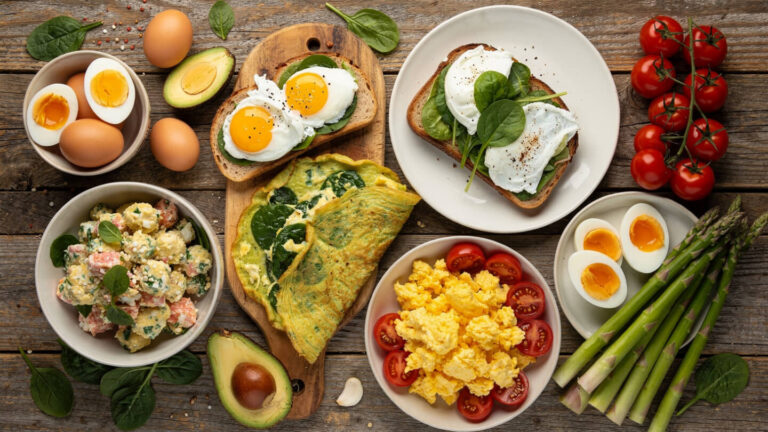
- Steamed asparagus
- Fresh salads
Nutritional Benefits of Salmon:
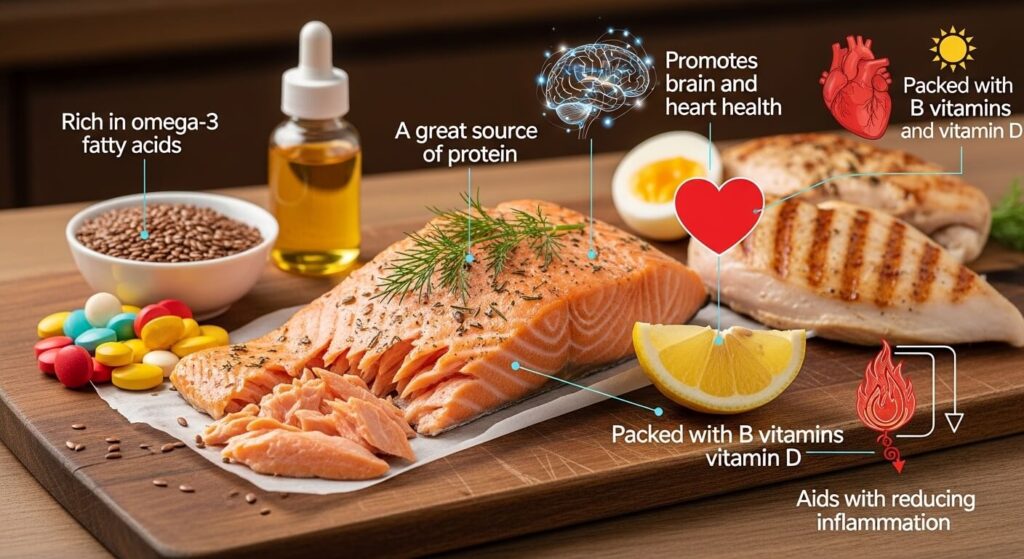
Not only is salmon delicious, but it’s also quite healthy.
- Rich in omega-3 fatty acids
- A great source of protein
- Packed with B vitamins and vitamin D
- Promotes brain and heart health
- Aids with reducing inflammation
Suggestion: It is generally advised to eat salmon two to three times a week.
Storing and Reheating Cooked Salmon:
1. Storage:
- Store in an airtight container and refrigerate.
- Eat within two to three days.
2. Reheating:
- Gently reheat in an oven or pan.
- Steer clear of the microwave if you can.
- To avoid dryness, add a little water or oil.
Additionally, cold salmon tastes great in wraps and salads.
How can I tell when salmon is fully cooked?
When salmon becomes opaque and flakes readily with a fork, it is done.
Is it okay if the salmon is slightly pink inside?
Indeed, slightly pink salmon is safer and has greater flavor and moisture.
Should salmon be cooked with skin on or off?
When salmon is cooked with its skin on, it retains moisture and gains more flavor.
Why does my salmon turn dry?
When salmon is overdone or cooked at an excessively high temperature, it gets dry.
Final Thoughts:
It doesn’t have to be difficult to cook salmon. Anyone can prepare restaurant-quality salmon at home with the correct preparation, basic seasoning, and knowledge of cooking techniques. Salmon can be baked, grilled, pan-seared, or poached to suit your preferences and way of life.
Once you’ve mastered the fundamentals, you’ll find yourself experimenting with sauces, marinades, and side dishes while consistently enjoying a filling, healthful meal. Salmon is evidence that delicious cuisine doesn’t have to be difficult to prepare.