How to Boil an Egg: A Complete Step‑by‑Step Guide
Even though boiling an egg is one of the most basic cooking techniques, many individuals find it difficult to do it correctly. Occasionally, the shell will not peel cleanly, the egg will fracture, or the yolk will turn green. A fundamental culinary skill that can help you make nutritious snacks, quick breakfasts, and ingredients for a variety of recipes is knowing how to boil an egg correctly. Learning this method will make cooking easier and more fun, regardless of your preference for a firm, completely cooked middle or a soft, creamy yolk.
Everything you need to know about boiling eggs is covered in this comprehensive tutorial, from selecting the ideal eggs to getting the ideal texture. You will be able to boil eggs with confidence each and every time after reading this article.
Why Are Boiled Eggs Popular?
There are several reasons why boiled eggs are so popular worldwide. They are simple to prepare, to start. Complex ingredients or specialized equipment are not required. A pot, water, and eggs are all you need. Second, boiled eggs are a great source of nutrients. They are high in vitamins, minerals, and protein, all of which promote general health.
Moreover, boiled eggs are adaptable. They can be added to rice dishes, eaten on their own, or sliced and added to salads or sandwiches. They are ideal for travel snacks and lunchboxes due to their portability. Furthermore, cooked eggs are useful for meal preparation because they may be kept in the refrigerator for a few days.
Choosing the Right Eggs:
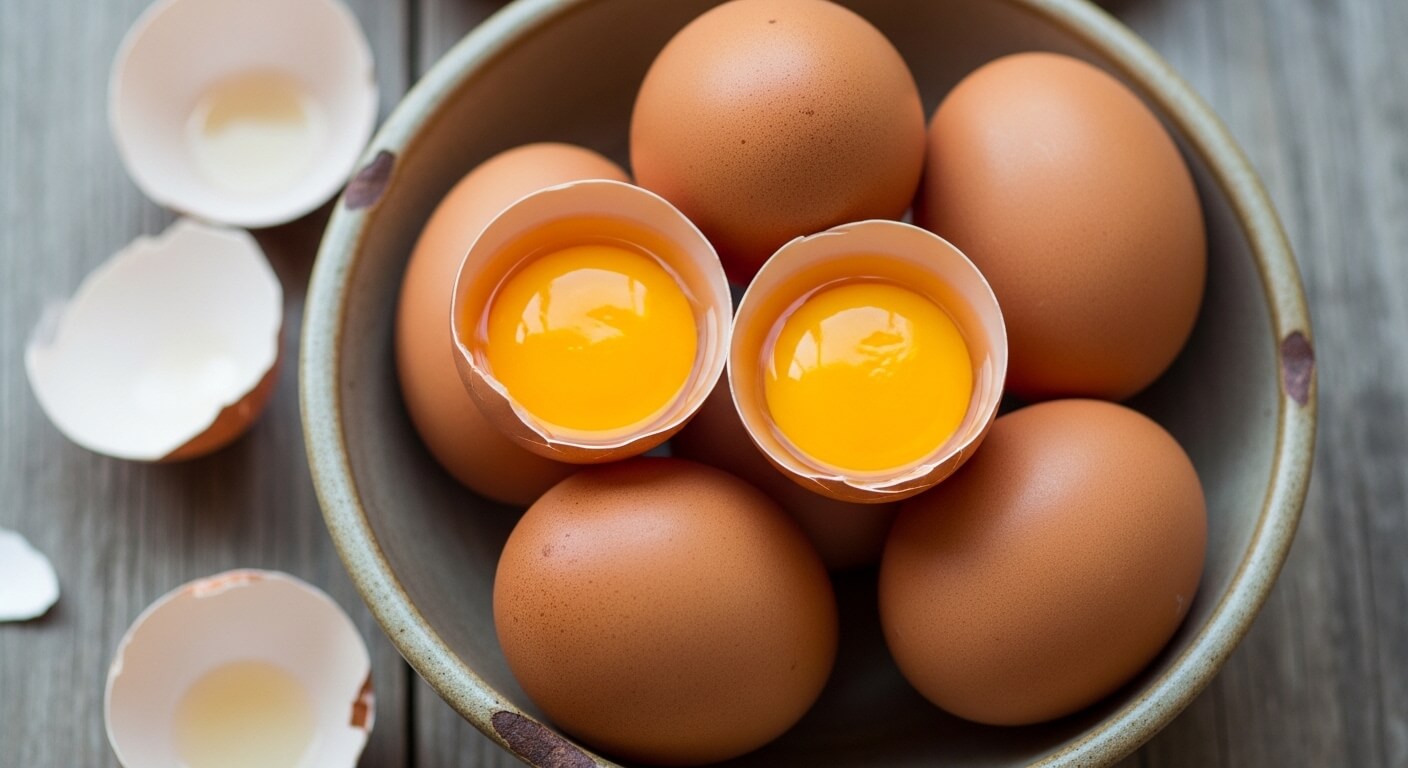
Selecting high-quality eggs is crucial before boiling them. While somewhat older eggs are easier to peel after boiling, fresh eggs have the best flavor. The reason for this is that fresh eggs adhere to the shell more firmly.
The following advice can help you choose eggs:
- Make sure the eggs are clean and undamaged.
- Select eggs that have been adequately chilled.
- For boiling, somewhat older eggs (about 5–10 days old) work best.
- Steer clear of eggs that smell strange.
Suggestion: You can test the egg by submerging it in water if you are not sure if it is fresh. Older eggs float, but fresh eggs sink.
Equipment You Need:
You don’t need pricey equipment to boil eggs. All you need is basic kitchenware:
- A cooking pot or saucepan
- Clean water
- Eggs
- Stove or heat source
- Spoon
- Bowl with cold water or ice (optional but helpful)
Suggestion: It’s critical to use the appropriate pot size. The eggs should be entirely submerged in water and able to fit comfortably in a single layer.
Step‑by‑Step Method to Boil Eggs:
To boil eggs flawlessly, follow these easy instructions.
Step 1: Place Eggs in the Pot
- Place the eggs in the pot’s bottom gently.
- Avoid stacking them since this may lead to cracking.
Suggestion: To ensure consistent cooking, arrange them in a single layer.
Step 2: Add Water
- Pour water into the pot until the eggs are covered by about 1 inch (2–3 cm).
This guarantees even cooking of the eggs.
Step 3: Heat the Water
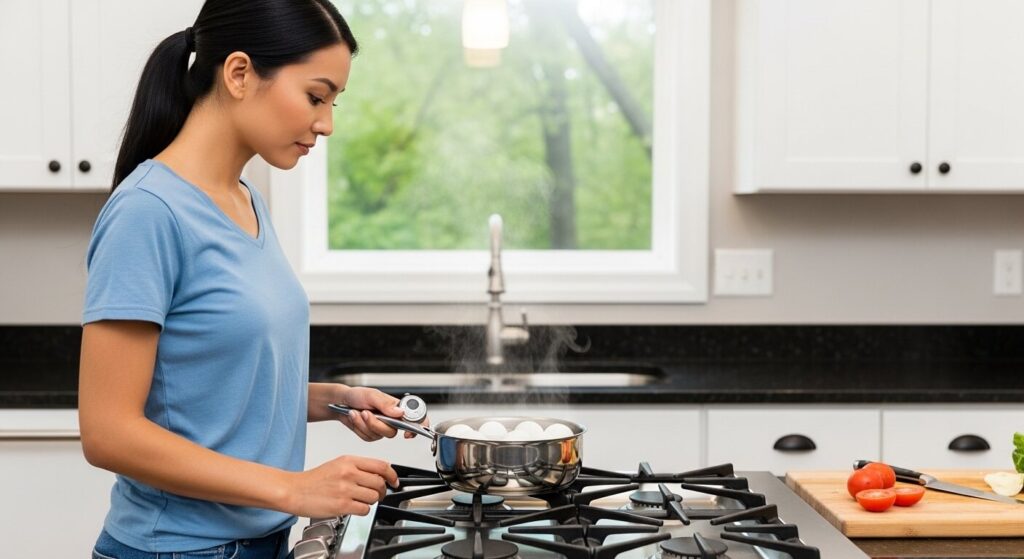
- Set the stove to medium-high and place the pot on it.
- Heat the water until it comes to a mild boil.
Step 4: Start Timing
- Once the water begins to boil, reduce the heat slightly and start timing according to your preferred egg texture.
Step 5: Cook According to Desired Doneness
How you prefer your eggs will determine how long they take to cook:
- Eggs soft-boiled: 4–6 minutes
- Eggs medium-boiled: 7 to 9 minutes
- Hard-boiled eggs: ten to twelve minutes
Fact: The yolk of soft-boiled eggs is runny, that of medium-boiled eggs is slightly firm, and that of hard-boiled eggs is completely cooked.
Step 6: Cool the Eggs
- Once cooked, use a spoon to remove the eggs from the boiling water.
- Submerge them right away in ice water or cold water.
Peeling is made easier and the cooking process is stopped.
Step 7: Peel and Serve
- To break the shell, carefully tap the eggs on a firm surface once they have cooled.
- If necessary, rinse under water after carefully peeling.
You can now consume your boiled eggs.
Alternative Method: Boiling Eggs by Starting with Boiling Water
Putting eggs straight into boiling water is another common technique. When used carefully, this strategy is effective.
Actions to take:
- Warm up some water in a pot.
- Gently drop the eggs into the water using a spoon.
- Cook for the amount of time you want.
- Once cooked, place eggs in cold water.
Although eggs must be handled carefully to avoid cracking, this approach can yield reliable results.
Tips for Perfect Boiled Eggs:
The following useful advice will help you succeed:
1. Avoid Constantly Using High Heat:
Eggs can crack if they are heated too much. Instead, use moderate heat.
2. After cooking, use cold water:
Eggs that are promptly cooled will peel better and avoid overcooking.
3. Steer clear of overcooking:
A green or gray ring forms around the yolk of overcooked eggs. When eggs are overcooked, this occurs.
4. Optional: Add vinegar or salt:
Some individuals flavor the water with vinegar or salt. If the egg cracks, this can help stop the flow.
5. To make peeling easier, use somewhat older eggs:
Compared to very fresh eggs, older eggs peel more readily.
Common Mistakes to Avoid:
When boiling eggs, many novices make easy mistakes. Steer clear of these mistakes:
- Too much time spent boiling eggs
- Applying extremely high heat
- Eggs not being cooled after cooking
- When simple peeling is required, use very fresh eggs.
- Packing the pot too full
Your outcomes will be better if you steer clear of these errors.
How to Store Boiled Eggs?
It is safe to keep boiled eggs in the refrigerator.
Storage advice:
- Store boiled eggs in the fridge.
- Keep them in a container that is covered.
- Use within five to seven days.
- Avoid keeping boiled eggs at room temperature for extended periods of time.
Fact: Eggs can be stored with or without their shells, although preserving the shell prolongs their freshness.
Health Benefits of Boiled Eggs:
Eggs that have been boiled are incredibly nutritious and healthful.
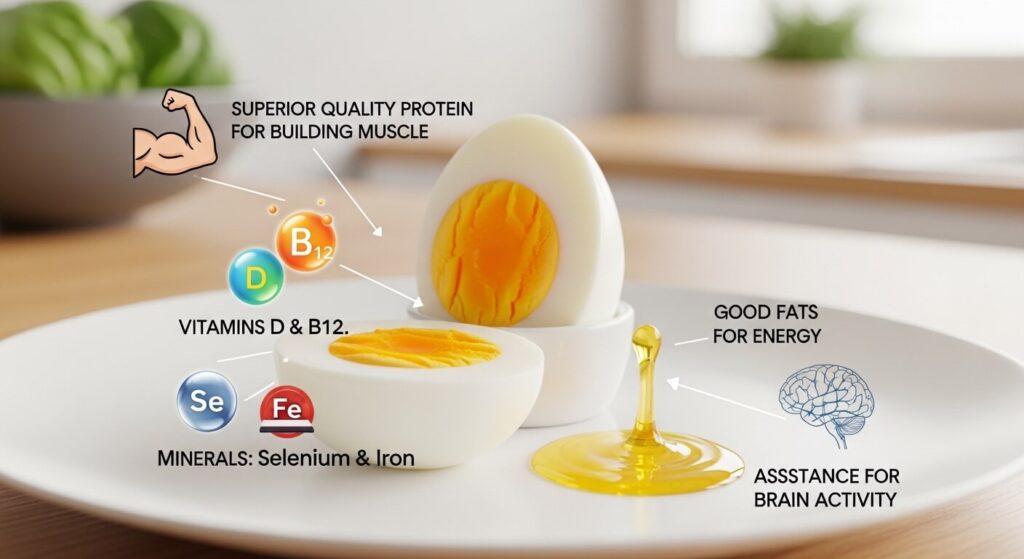
Advantages consist of:
- Superior quality protein for building muscle
- Vitamins like D and B12
- Minerals such as selenium and iron
- Good fats for energy
- Assistance for brain activity
Fact: Compared to fried eggs, boiled eggs are healthier because they don’t require oil.
Ways to Eat Boiled Eggs:
Boiled eggs can be enjoyed in a variety of delectable ways:
- Season with salt and pepper and eat plain.
- Cut into salads.
- Put on sandwiches
- Add to rice dishes.
- Get the egg salad ready.
- Serve as a side dish for breakfast.
You can have boiled eggs for breakfast, lunch, or dinner.
Why Do Eggs Crack While Boiling?
When eggs strike the pot hard or are heated too rapidly, they break. Cracking can be avoided with gentle handling.
Why Is the Yolk Green?
When eggs are overdone, this occurs. Cut down on cooking time to prevent this issue.
Why Are Eggs Difficult to Peel?
Peeling really fresh eggs is more difficult. It helps to use slightly older eggs.
Can You Reboil Eggs?
Yes, but the first time, it’s best to cook them correctly.
Conclusion:
Egg boiling is a basic yet crucial cooking technique. With the correct approach, you can consistently get flawless outcomes. Eggs must be submerged in water, heated gradually, cooked for the appropriate amount of time, and then promptly cooled.
You may prevent typical blunders and always have perfectly boiled eggs by following the directions and advice in this article. Boiled eggs are a great complement to any diet because they are inexpensive, nutrient-dense, and simple to prepare.
You can utilize boiled eggs in a variety of dishes and recipes once you have mastered this fundamental method. You will quickly become proficient at boiling eggs without any trouble if you practice frequently.