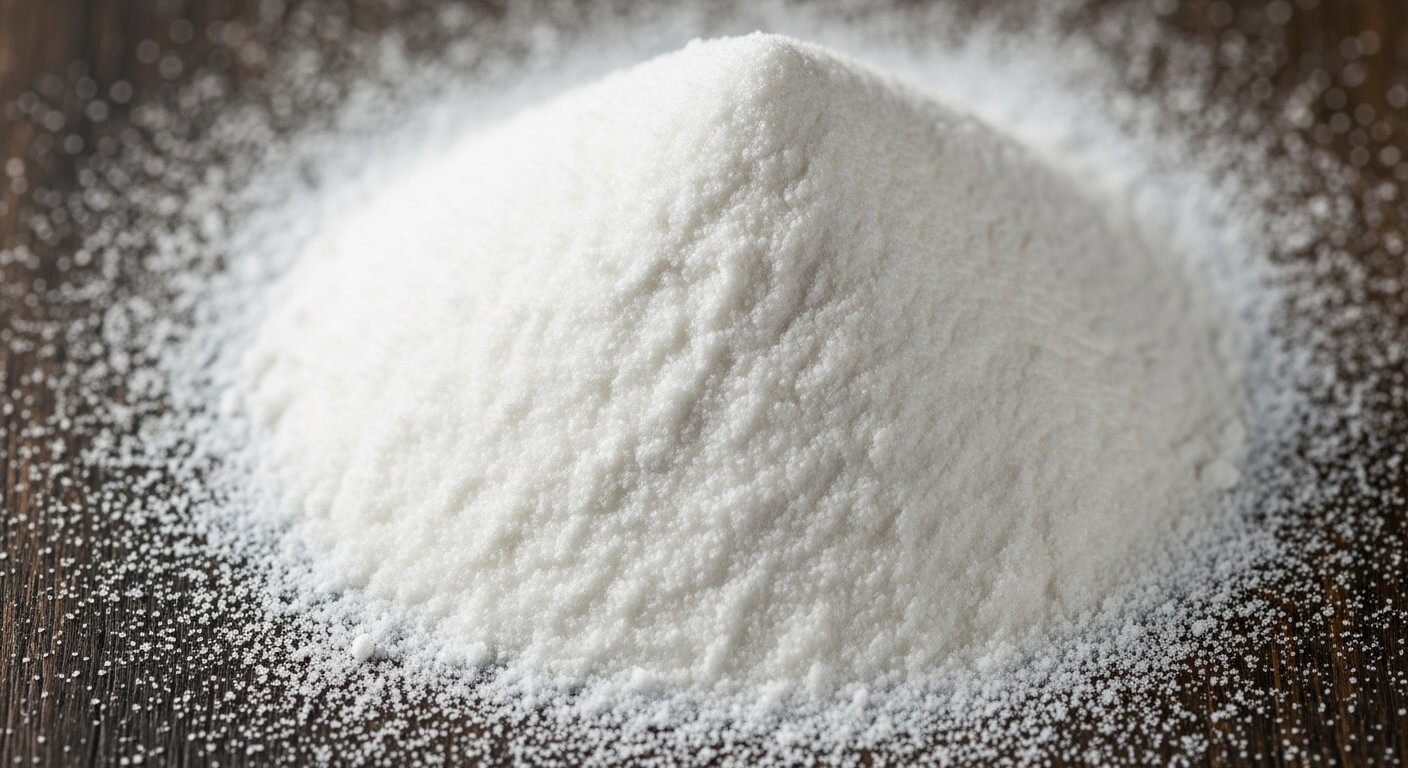
How to Make Powdered Sugar at Home
In baking and dessert preparation, powdered sugar—also referred to as confectioners’ sugar or icing sugar—is a necessary component. It is ideal for frostings, glazes, dusting pastries, and producing smooth finishes that ordinary granulated sugar cannot match because of its fine, soft texture. Although powdered sugar is readily accessible in stores, many people are shocked to discover that it can be prepared quickly and simply at home with basic materials and everyday kitchenware.
Everything you need to know about making powdered sugar will be covered in this comprehensive book, including usage, storage techniques, step-by-step directions, and answers to often asked questions.
What Is Powdered Sugar?
Granulated sugar that has been ground into an extremely fine powder is known as powdered sugar. To maintain the sugar smooth and free-flowing and to prevent clumping, a small amount of anti-caking agent, like cornstarch, is added to the majority of commercial versions.
Powdered sugar dissolves quickly in liquids and mixes easily into frostings and icings due to its fine texture. Because of this, it is perfect for recipes that call for a smooth texture.
Other common names for powdered sugar include:
- Confectioners’ sugar
- Icing sugar
- 10X sugar (referring to how finely it is ground)
Why Make Powdered Sugar at Home?
Making your own powdered sugar has various benefits:
1. Practicality:
When baking, you could occasionally run out of powdered sugar. You can prepare it at home in a matter of minutes rather than visiting the store.
2. Economical:
Generally speaking, granulated sugar is less expensive than powdered sugar. Over time, making your own can result in cost savings.
3. Newness:
If you decide not to use cornstarch, homemade powdered sugar is fresh and additive-free.
4. Ingredient control:
If you would rather, you can omit the cornstarch, or you can add a certain quantity according to your demands.
Ingredients Needed:
Making powdered sugar requires only one main ingredient:
- Granulated white sugar
Optional ingredient:
- Cornstarch (1 tablespoon per cup of sugar) – helps prevent clumping
Suggestion: Alternative sugars, such as coconut sugar, can also be used, however the color and texture would be different.
Tools Required:
You will need one of the following:
- Blender
- Food processor
- Coffee grinder
- Spice grinder
Suggestion: For the finest texture, a high-speed blender is ideal.
Step-by-Step Instructions to Make Powdered Sugar:
To produce powdered sugar at home, simply follow these steps:
Step 1: Measure the Sugar
- Calculate how much granulated sugar you’ll need.
Point: About one cup of powdered sugar can be made from one cup of granulated sugar.
Step 2: Optional: Add cornstarch
- To avoid clumping, add one tablespoon of cornstarch to each cup of sugar.
Although not required, this step is advised if you intend to store the sugar.
Step 3: Mix the sugar
- Add the sugar to your grinder or blender.
- For 30 to 60 seconds, blend at a high speed.
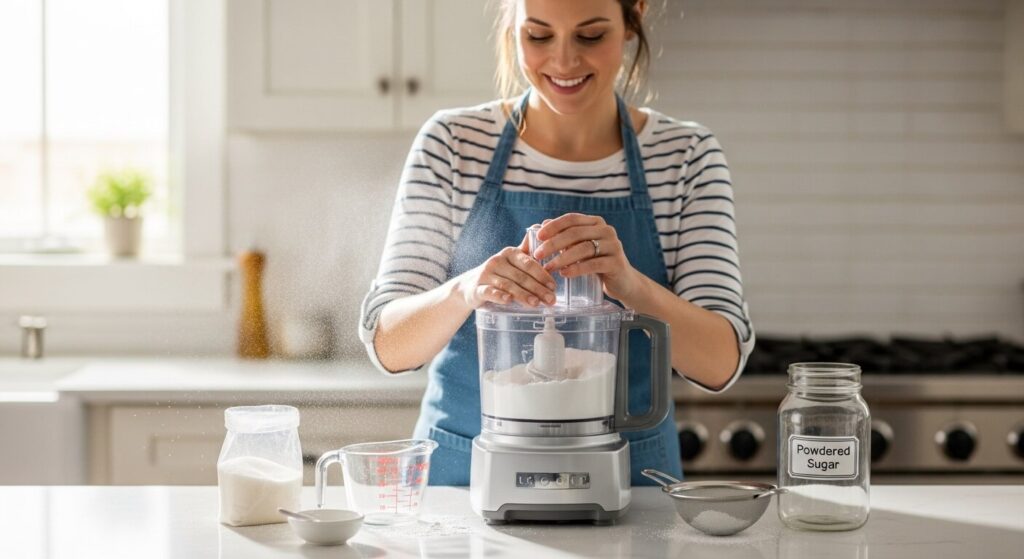
Take a moment to examine the texture. The sugar ought to resemble a fine powder.
Step 4: Check Texture
- Small amounts should be rubbed between your fingers.
- Instead of feeling grainy, it should feel powdered and soft.
Suggestion: Add another 15 to 30 seconds of blending if it still feels gritty.
Step 5: Let the powder settle
- Hold off on opening the blender for a few seconds.
This stops the sugar dust from flying around and lets it settle.
Step 6: Properly Store
- Place the powdered sugar in a tightly sealed jar.
Tips for Best Results:
1. Make use of white powdered sugar:
It yields the finest and smoothest powdered sugar.
2. Make use of a strong blender:
Blenders at high speeds produce a finer texture more quickly.
3. In tiny batches, blend:
This guarantees uniform grinding.
4. Avoid filling the blender to overflow:
Give the sugar ample room to circulate.
5. If stored for a long time, add cornstarch:
This stops clumping and the absorption of moisture.
How Long Does It Take?
It just takes roughly:
- Time spent preparing: one minute
- Time spent blending: 30 to 60 seconds
- Two minutes in total.
One of the quickest ingredients you can prepare at home is this one.
Uses of Powdered Sugar:
There are numerous applications for powdered sugar in baking and cookery.
1. Icing and frosting:
It is the primary component of glaze and buttercream frosting.
2. Dusting desserts:
used to dust donuts, cakes, brownies, pancakes, and waffles.
3. Creating Glazes:
Ideal for pouring over cookies and pastries.
4. Dessert Decorating:
Gives baked items a more polished appearance.
5. Making Candy:
used in truffles, fudge, and other confections.
6. Cream Whipping:
Aids in whipped cream stabilization.
Can You Make Powdered Sugar Without Cornstarch?
It is possible to create powdered sugar without using cornstarch. Just mix the granulated sugar by itself. But in the absence of cornstarch, the sugar could clump while being stored. It is preferable to use it right away or keep it somewhere dry.
Alternative Sugars You Can Use:
Other forms of sugar can also be used to manufacture powdered sugar:
1. Sugar from coconuts:
Yields caramel-flavored brown powdered sugar.
2. Unprocessed sugar:
It could take longer to grind, but it can be used.
3. Sugar from cane:
Works effectively and yields positive outcomes.
Note: Compared to white sugar, the texture might not be as fine.
How to Store Homemade Powdered Sugar?
Clumps are avoided and freshness is preserved with proper storage.
1. Make use of airtight containers:
This keeps moisture out.
2. Keep in a dry, cool location:
Steer clear of dampness.
3. Avoid being near hot:
Clumping may be brought on by heat.
4. Duration of shelf life:
If stored correctly, homemade powdered sugar can last for up to six months.
Common Mistakes to Avoid:
- Making use of wet equipment because clumping is caused by moisture.
- Insufficient blending time produces a texture that is gritty.
- Too fast opening the blender creates dust from sugar that can spread.
- Lack of an airtight container for storage causes firm lumps.
Powdered Sugar vs Granulated Sugar
| Feature | Powdered Sugar | Granulated Sugar |
| Texture | Fine powder | Coarse crystals |
| Dissolving speed | Very fast | Slower |
| Best use | Frostings, glazes | Baking, sweetening drinks |
| Smoothness | Very smooth | Slightly grainy |
Is Homemade Powdered Sugar the Same as Store-Bought?
Yes, in most recipes, homemade powdered sugar performs just as well as store-bought sugar. The primary distinction is that anti-caking chemicals are present in commercial powdered sugar.
Powdered sugar prepared at home is fresher and more natural.
Benefits of Making Powdered Sugar at Home:
- Fast and easy
- Saves money
- No preservatives
- Fresh and pure
- Convenient
- Customizable
When Should You Use Powdered Sugar?
Use powdered sugar when you need:
- Smooth frosting
- Instant dissolving sugar
- Decorative topping
- Professional dessert finish
Can I use a coffee grinder?
Indeed. For tiny amounts, coffee grinders are quite effective.
Can I make powdered sugar in advance?
Yes. Store it in an airtight container.
Why add cornstarch?
It prolongs storage life and avoids clumping.
Can I use brown sugar?
Yes, but texture will be different.
Conclusion:
Making powdered sugar at home is easy, quick, and practical. In less than two minutes, you can make fine powdered sugar using simply granulated sugar and a blender. This DIY version is ideal for glazes, frostings, desserts, and decorations.
In addition to saving money, making your own powdered sugar allows you complete control over the ingredients and freshness. Understanding this simple technique guarantees that you will never run out of powdered sugar when you need it most, regardless of your level of baking skill.