How to Clean a Burnt Pot Complete Step-by-Step Guide
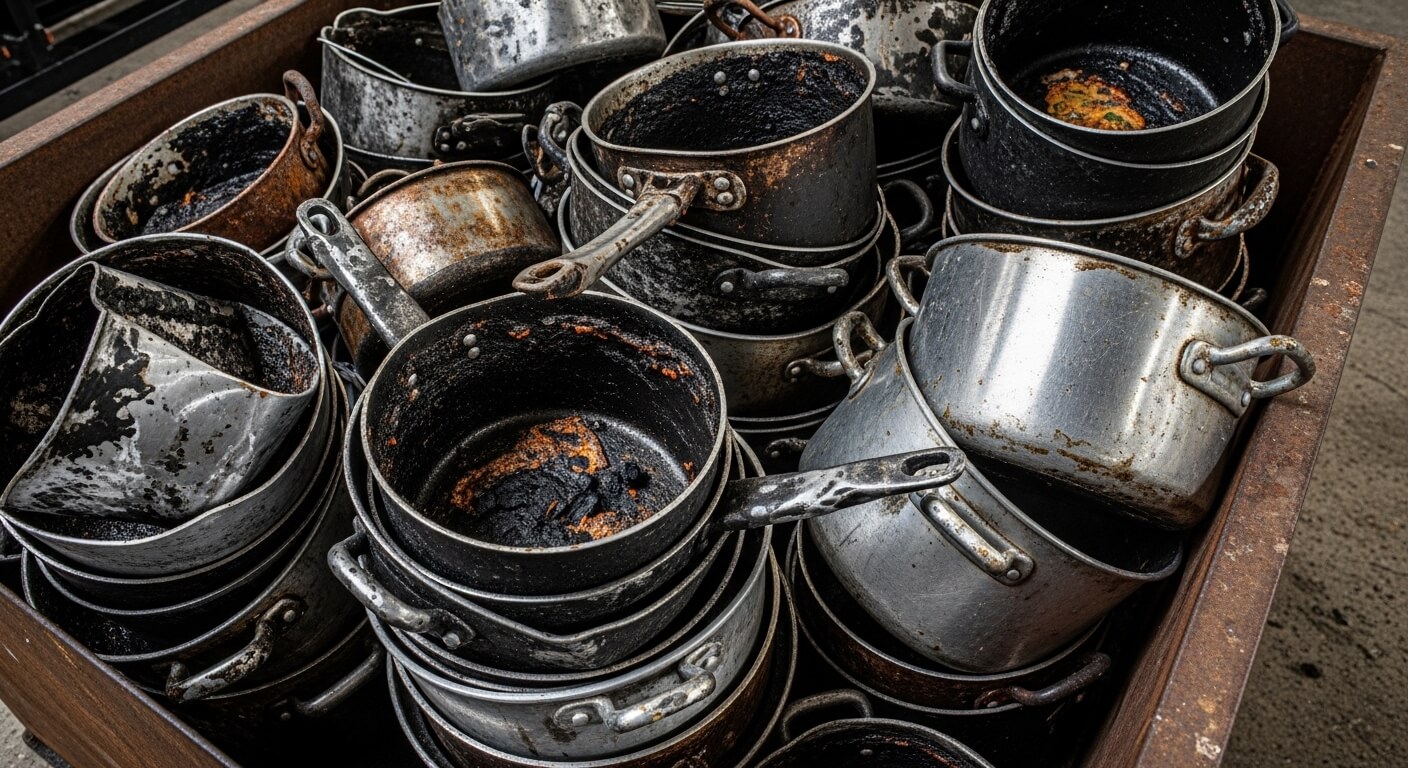
In the kitchen, a burnt pot can seem like a catastrophe. It sometimes seem impossible to get rid of that blackened layer, whether it’s from rice sticking to the bottom, milk boiling over, or something just cooking for too long. Fortunately, neither harsh chemicals nor costly cleansers are required. You may restore your pot and give it a nearly brand-new appearance with a few easy techniques and commonplace components.
Everything you need to know is covered in this article, including deep cleaning methods, quick solutions, and advice on how to avoid burning in the future.
Why Do Pots Get Burnt?
It is helpful to comprehend why burning occurs before beginning cleaning:
- Cooking over extremely high heat
- Leaving food unsupervised
- Using unevenly heated thin cookware
- Not stirring often
- Low amount of liquid in the dish
Particularly in metal pots, burnt residue adheres firmly to the surface, making removal more difficult if improperly handled.
Things You’ll Need:
Most burnt pot cleaning methods use simple household items:
- Baking soda
- White vinegar
- Dish soap
- Lemon
- Salt
- Wooden spoon or spatula
- Scrubbing pad or sponge
These items are safe, effective, and easily available.
Different Methods to Clean Burnt Pots:
Method 1: Baking Soda and Water (Basic Cleaning)
This is among the safest and most efficient methods for cleaning a burned pot.
Procedure:
- Cover the burned area with enough water.
- Add two to three tablespoons of baking soda.
- Heat the mixture until it boils.
- Simmer for ten to fifteen minutes.
- After turning off the heat, let it cool.
- Use a sponge to gently scrub
The charred residue will become looser and easier to remove.
Method 2: Vinegar and Baking Soda (Deep Cleaning)
This technique is effective for scorched stains that are difficult to remove.
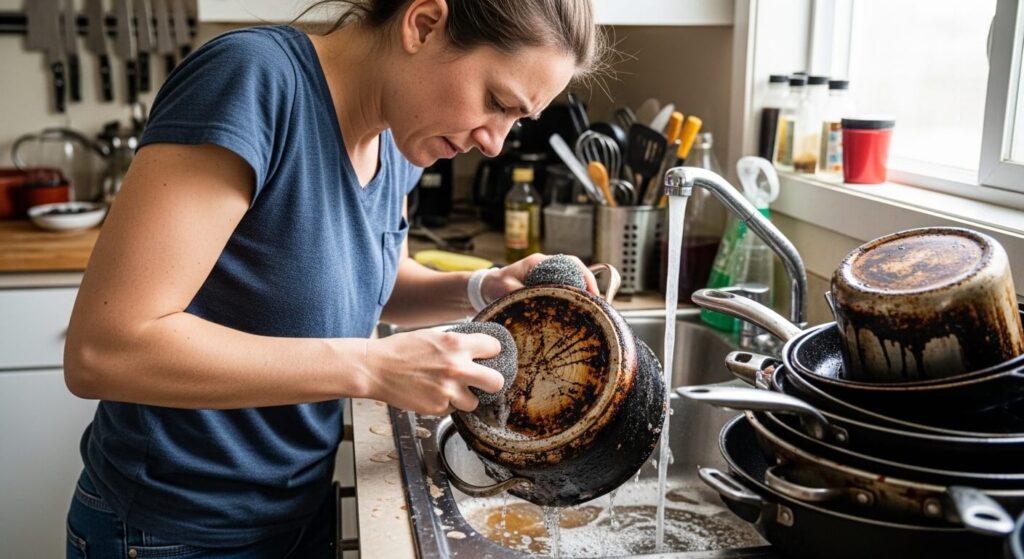
Procedure:
- Cover the pot with a layer of vinegar.
- Bring it to a simmer.
- After turning off the heat, add the baking soda.
- Give the mixture ten to fifteen minutes to fizz.
- Gently scrub the surface.
Tough burned layers are broken down by the chemical process.
Method 3: Dish Soap and Hot Water (Soaking Method)
Soaking can help if the burn is not too bad.
Procedure:
- Pour hot water into the pot.
- Put a few drops of dish soap in there.
- Soak it for one to two hours, or overnight.
- Use a sponge to scrub
As a result, the residue becomes softer and easier to remove.
Method 4: Lemon and Water (Natural Cleaning)
Lemon works as a natural cleaner to get rid of odors and stains.
Procedure:
- Cut up a lemon and add it to the saucepan.
- Cover the burned area with water.
- Boil for ten minutes.
- Let it cool.
- Gently scrub
Your pot will be clean and fresh after using this procedure.
Method 5: Salt Scrub (For Light Burns)
Salt functions as a gentle abrasive.
Procedure:
- Over the burned area, sprinkle salt.
- To make a paste, add a little water.
- Use a sponge to gently scrub
For minor burned areas, this works well.
Method 6: Boiling Water and Scraping
Burned food can occasionally be loosened by heat alone.
Procedure:
- Pour water into the pot.
- Heat it until it boils.
- Gently scrape the bottom with a wooden spoon.
Steer clear of metal tools to avoid scratches.
Cleaning Different Types of Pots:
1. Pots made of stainless steel
- Use vinegar and baking soda.
- Steer clear of steel wool since it might scratch surfaces.
2. Non-Stick Cookware
- Use warm water and a light soap.
- Steer clear of metal instruments and aggressive scrubbers.
3. Aluminum Pots
- Use vinegar or lemon.
- Steer clear of powerful abrasives
4. Pots made of cast iron
- Don’t soak in water.
- Scrub with oil and salt.
- To avoid rust, dry right away.
Always use the proper technique because each material needs somewhat different care.
Common Mistakes to Avoid:
- Scrubbing too vigorously and causing surface damage
- Using non-stick cookware with metal tools
- Ignoring the soaking time
- Overuse of strong chemicals
When cleaning burned cookware, patience is essential.
How to Remove Burnt Smell?
A burning scent may persist even after cleaning.
Fast Fix:
- Bring vinegar or lemon slices to a boil.
- Give it a few minutes to sit.
- Rinse well.
This aids in scent neutralization.
Tips to Prevent Pots from Burning:
Cleaning is never preferable to prevention. Here are a few easy pointers:
- Cook over low to medium heat.
- Stir food frequently.
- For uniform heat dispersion, use pots with hefty bottoms.
- Cooking should never be neglected.
- When necessary, add enough liquid.
These behaviors lessen the likelihood of burning.
When to Repeat the Cleaning Process?
Sometimes, particularly for severe burns, one cycle is insufficient. Don’t worry; instead of pushing the residue off, repeat the process. Cleaning your pot gradually keeps it safe.
Eco-Friendly Cleaning Benefits of Burnt Pots
It is safe for the environment and your health to use natural ingredients like vinegar, lemon, and baking soda. You obtain great results without using harsh chemicals.
Can a Burnt Pot Be Fully Restored?
Yes, most of the time. With repeated treatments, pots that have been severely burned can still be cleaned. However, a non-stick pan should be replaced if its coating is damaged because it might not be safe to use.
Final Thoughts:
Although cleaning a burnt pot may appear difficult, it can be made lot simpler with the correct method. Baking soda, vinegar, and lemon are basic items that can work wonders without causing damage to your cookware.
The secret is to be patient; instead of scrubbing vigorously, let soaking and mild cleaning do the trick. You won’t have to worry about scorched pots once you grasp these techniques.
You can maintain your cookware in great shape and enjoy your time in the kitchen much more with routine maintenance and a few preventive habits.