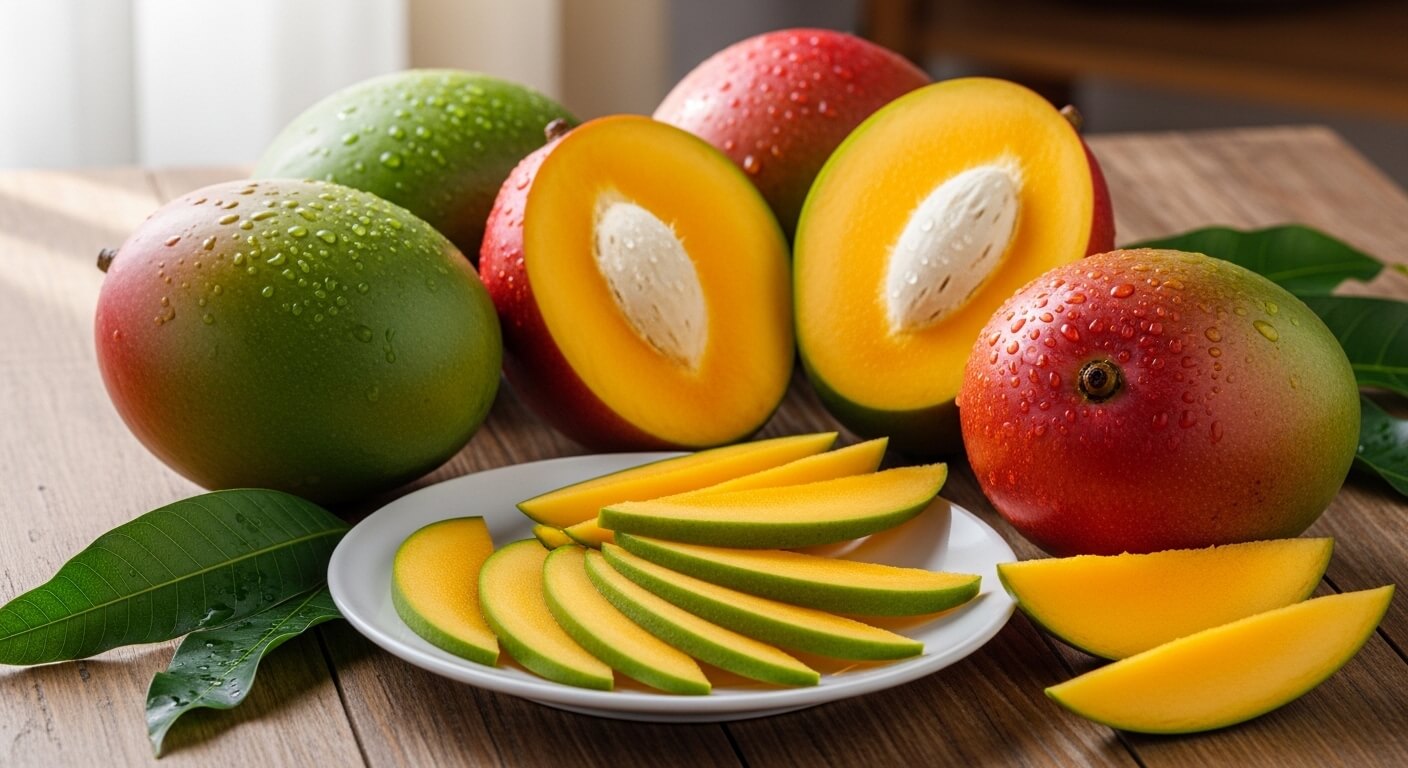
How to Cut Mango: A Complete Step-by-Step Guide
For good reason, mangos are frequently referred to as the “king of fruits.” Its tropical scent and sweet, juicy flesh make it a global favorite. However, despite its widespread use, many individuals find it difficult to answer the straightforward issue of how to properly cut a mango.
You’re not alone if you’ve ever attempted to slice a mango and found yourself in a messy, slippery scenario. It can be challenging because of the big, flat pit in the middle. However, chopping a mango becomes quick, simple, and even fun once you know how to do it.
Everything you need to know is included in this comprehensive guide, from selecting the ideal mango to cutting it in different ways for varied purposes.
Understanding Mango Anatomy:
Understanding the structure of a mango is helpful before you begin chopping.
The three primary components of a mango are:
- Skin (Peel): Smooth and thin, typically not consumed
- Flesh: The edible, juicy portion
- Pit (Seed): A big, flat seed in the middle
Cutting a mango is best done around the pit rather than through it.
Choosing the Right Mango:
Before the knife even makes contact with the fruit, cutting begins. Choosing a ripe mango greatly simplifies the procedure.
How to Determine Whether a Mango Is Ripe:
- Squeeze it gently; it should feel a little squishy, like a ripe avocado.
- Smell close to the stem: Ripeness is indicated by a sweet scent.
- Some mangoes remain green even after they are ripe, proving that color isn’t always dependable.
Suggestion: Mangoes that are either mushy (overripe) or too firm (unripe) should be avoided.
Tools You’ll Need:
You don’t need fancy equipment. Just a few basics:
- A sharp knife
- A cutting board
- A spoon (optional but helpful)
- A glass (for one cutting method)
Basic Method: The Cheek Cut (Most Popular)
The simplest and most popular method for chopping a mango is this one.
Detailed Instructions
1. Clean the Mango:
To get rid of any residue or dirt, rinse it under clean water.
2. Keep the Mango Upright:
With the stem facing up, place it on the cutting board.
3. Cut off the Cheeks:
- Make a cut about 1/4 inch from the center down one side of the mango.
- On the opposite side, repeat.
- At this point, you will have two huge pieces, which are referred to as cheeks.
4. Make Cuts on the Flesh:
Make crisscross cuts in the flesh of one cheek without penetrating the skin.
5. Turn Inside Out:
To make the cubes stand out, push the skin side upward.
6. Slice or Scoop:
To remove the cubes, use a knife or spoon.
Continue with the other cheek.
How to Handle the Pit?
The central section, which contains the pit, will remain once the cheeks are removed.
- Use a knife to cut off any leftover flesh surrounding the pit.
- This area can be slick, so go with caution.
- If you don’t want to waste any more meat, you can also nibble it off.
Method 2: The Glass Trick (Quick and Clean)
If you want to make as little of a mess as possible, this method is excellent.
Procedures
- As previously mentioned, cut off the mango cheeks.
- Grab a strong glass.
- Move the glass’s edge between the flesh and the skin.
- Press down, and the skin will be left behind while the flesh falls into the glass.
This method of removing mango flesh is among the quickest and most hygienic.
Method 3: Peeling First (For Slices)
This strategy works best if you like mango slices over cubes.
Procedures
- To remove the skin, use a knife or vegetable peeler.
- Peel the mango and hold it upright.
- Cut around the pit’s edges.
- As desired, cut the meat into thin or thick slices.
Mango is best served neatly on a dish using this technique.
Method 4: Mango Cubes Without Inverting
If you choose not to turn the mango inside out:
- Slice your cheeks.
- Make a grid design on the flesh.
- Directly remove the cubes with a spoon.
This method works great with softer mangoes and is less messy.
Tips for Cutting Mango Easily:
- Make use of a sharp knife because a dull blade makes cutting more difficult and hazardous.
- Work on a level surface: Avoid slipping
- Mango juice can make things slick, so dry your hands.
- Cut slowly, particularly in the vicinity of the pit
Common Mistakes to Avoid:
1. Slicing Through the Pit:
Many novices attempt to strike the hard seed by slicing straight down the middle. Cut slightly off-center at all times.
2. Making Use of an Unripe Mango:
Hard mangoes are flavorless and hard to cut.
3. Mishandling the Fruit:
A ripe mango can become mush if it is squeezed excessively.
Different Ways to Use Cut Mango:
You can enjoy your mango in a variety of ways once it’s perfectly cut.
- Consume it raw as a snack.
- Include it in fruit salads.
- Mix into smoothies.
- Use in sweets like as ice cream or mango pudding
- Add to savory foods like rice bowls or salads.
How to Store Cut Mango?
- Put the chopped mango in an airtight jar.
- Keep refrigerated for two to three days.
- Freeze the components for extended storage.
Freezing Advice
- Mango cubes should be spread out on a tray, frozen, and then transferred to a bag. This keeps it from adhering.
Health Benefits of Mango:
Mangoes are not only tasty but also nutrient-dense.
- High in immunity-boosting vitamin C
- includes vitamin A for healthy eyes
- Rich in digestive fiber
- Rich in antioxidants
Mango is a delicious and healthy addition to your diet.
Safety Tips:
- Keep your fingertips away from the blade at all times.
- Make use of a non-slip cutting board.
- If kids are assisting, watch over them.
Do you peel a mango before cutting?
Not always. The majority of techniques start with cutting and then remove the flesh.
What is the easiest way to cut a mango?
The simplest and most widely used method is the cheek method with scoring.
Can you eat mango skin?
Although it is edible, its taste and texture make it unpopular.
How do you cut a mango without a knife?
Very ripe mangoes can be peeled with your hands, but for clean slices, a knife is advised.
Conclusion
Cutting a mango may seem difficult at first, but it becomes really easy if you know the structure and follow the correct procedures. Each way has advantages of its own, whether you utilize the glass trick, the traditional cheek method, or peel it first.
You can chop mangos fast, neatly, and waste-free with a little practice. You will therefore know exactly what to do the next time you pick up this delectable fruit.
Savor your mango the proper way—fresh, juicy, and sliced to perfection.