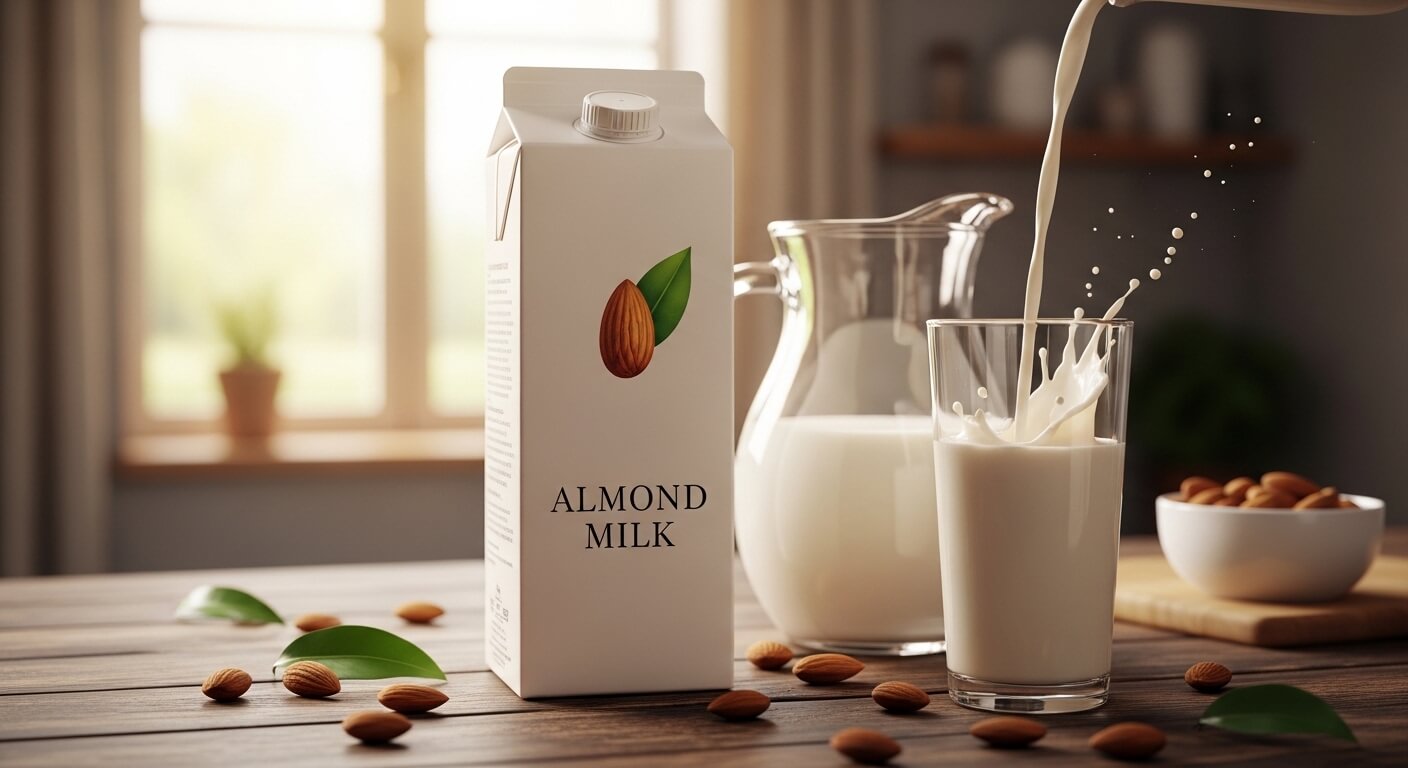
How to Make Almond Milk at Home
One of the most well-liked plant-based substitutes for dairy milk is almond milk. It is naturally lactose-free, light, nutrient-dense, and very simple to prepare at home. You may be shocked to hear how easy and affordable it is to make fresh almond milk in your own kitchen if you’ve ever purchased it from a store.
Everything you need to know to make almond milk at home will be covered in this book, including ingredients, detailed directions, advice, variants, and storage techniques.
What Is Almond Milk?
Almonds and water are blended, then the result is strained to remove particulates to create almond milk, a plant-based beverage. The end product is a smooth, somewhat nutty milk that may be used for baking, coffee, smoothies, and cooking.
Almond milk is naturally lactose-free, vegan, and low in calories when unsweetened, in contrast to dairy milk. For those who are lactose intolerant or seeking a healthier option, it’s a fantastic choice.
Benefits of Homemade Almond Milk:
Compared to store-bought varieties, making almond milk at home has a number of benefits:
1. No preservatives or Additives:
All of the ingredients in homemade almond milk are natural. Stabilizers, preservatives, and artificial flavors are frequently found in store-bought versions.
2. Improved Flavor:
When compared to commercial almond milk, fresh almond milk tastes cleaner and richer.
3. Economical:
Making your own milk and purchasing almonds in large quantities are typically less expensive over time.
4. Adaptable:
You can adjust the thickness, flavor, and sweetness to suit your tastes.
Ingredients You Need:
5. A Healthier Choice:
Almond milk produced at home has less added sugars and keeps more nutrients.
Ingredients You Need:
Making almond milk requires just a few simple ingredients:
- 1 cup raw almonds
- 3 to 4 cups water (for blending)
- Water for soaking
Optional:
- Dates (for natural sweetness)
- Honey or maple syrup
- Vanilla extract
- A pinch of salt
Equipment Required:
You don’t require expensive equipment. Simple kitchenware will suffice:
- Blender (preferably high-speed)
- Bowl (to soak almonds)
- Nut milk bag, cheesecloth, or strainer
- Bottle or container for storage
Step-by-Step Method to Make Almond Milk:
Step 1. Soak the Almonds:
First, put one cup of raw almonds in a bowl. Soak them in water for at least eight to twelve hours, or overnight.
The significance of soaking
- makes the almonds softer.
- facilitates merging
- enhances digestion
- improves the absorption of nutrients
The almonds should be drained and well rinsed after soaking.
Step 2. Blend the Almonds
Put the soaked almonds and three to four cups of fresh water in a blender.
- To make creamy almond milk, use three cups of water.
- For lighter almond milk, use four cups of water.
The liquid should be smooth and milky after 30 to 60 seconds of high speed blending.
Strain the milk in step three.
Step 3: Strain the Milk

- Cover a dish or jug with a cheesecloth, nut milk bag, or fine sieve.
- Fill it with the mixed mixture.
- To remove all the liquid, gently push or compress. Your fresh almond milk is this liquid.
You can preserve the remaining pulp and use it for smoothies or baking.
Step 4: Flavor Addition (Optional)
You may now personalize your almond milk:
- For natural sweetness, add one or two dates.
- For flavor, add one teaspoon of vanilla extract.
- To improve taste, add a pinch of salt.
If you add ingredients, blend for a few more seconds.
Step 5: Store Properly
Transfer the almond milk into a glass bottle or clean, airtight container. Put it in the fridge.
- Ideal for consumption within three to four days
- Before using, give it a good shake because separation happens naturally.
Tips for Perfect Almond Milk:
1. Make Use of Raw Almonds:
For optimal effects, always use raw, unsalted almonds.
2. Modify the Water Ratio:
- Thinner milk with more water
- Milk with less water is creamier.
3. Mix Completely:
- Better extraction and smoother milk are produced with a high-speed blender.
4. Appropriate Strain:
- The smoothest texture is achieved by using a nut milk bag.
5. Keep the Pulp Intact:
Remaining almond pulp can be used in:
- Cookies
- Smoothies
- Balls of energy
- Recipes for baking
Different Variations of Almond Milk:
The ease of customization is one of the best features of homemade almond milk.
1. Almond milk that is sweet:
For a naturally sweet taste, add dates, honey, or maple syrup.
2. Almond milk with vanilla flavor:
For a deeper, dessert-like flavor, add vanilla extract.
3. Almond Milk with Chocolate:
For a nutritious chocolate beverage, blend with cocoa powder and a sweetener.
4. Almond Milk with Cinnamon:
For a toasty, fragrant taste, add a pinch of cinnamon.
5. Almond Milk with Protein Boost:
Add a scoop of protein powder or chia seeds and blend.
Nutritional Value of Almond Milk:
Almond milk prepared at home is inherently nourishing. Although precise amounts vary depending on the recipe, it typically includes:
- Good fats
- Antioxidants with Vitamin E
- Minimal calories (if not sweetened)
Additionally, it has no lactose or cholesterol.
How to Use Almond Milk?
Almond milk is incredibly adaptable and has numerous applications.
1. In tea and coffee:
An excellent dairy-free choice for your regular drinks.
2. In Smoothies:
Adds creaminess without adding more calories.
3. In Recipes for Breakfast:
Use in granola, oats, and cereals.
4. When Cooking:
Works great in curries, sauces, and soups.
5. When Baking:
Can be used in most recipes in place of dairy milk.
Common Mistakes to Avoid:
1. Avoid Soaking Almonds:
The milk becomes less creamy and has a terrible texture when soaking is neglected.
2. Overuse of Water:
Reduces the milk’s flavor and makes it too thin.
3. Inadequate Straining:
Causes the texture to become gritty.
4. Excessive Blending:
The mixture may become hot and lose its flavor if it is blended too much.
Homemade vs Store-Bought Almond Milk
| Feature | Homemade | Store-Bought |
| Freshness | High | Moderate |
| Additives | None | Often present |
| Cost | Lower | Higher |
| Taste | Rich and natural | Sometimes diluted |
| Shelf Life | 3–4 days | Longer due to preservatives |
Storage and Shelf Life:
Because homemade almond milk doesn’t include preservatives, it needs to be stored properly.
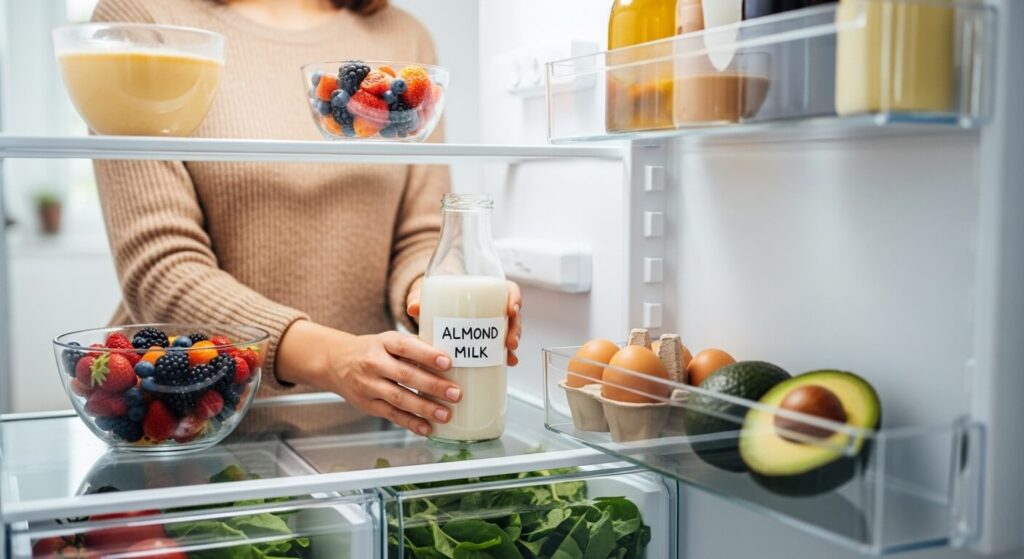
- Always keep it in the refrigerator.
- Use within three to four days.
- Before using, shake.
- If it smells sour, throw it out right away.
Why Should You Start Making Almond Milk?
Making almond milk at home is satisfying and simple. You have total control over the ingredients in your beverage, guaranteeing that it remains hygienic, nutritious, and customized to your preferences.
It’s also a terrific way to start living a healthy lifestyle, particularly if you’re trying to cut back on dairy.
1. Can I make almond milk without soaking almonds?
Yes, but soaking is recommended for better texture and taste.
2. How long does homemade almond milk last?
It lasts about 3 to 4 days in the refrigerator.
3. Can I use roasted almonds?
It’s better to use raw almonds for a clean and natural flavor.
4. What can I do with leftover almond pulp?
You can use it in baking, smoothies, or even dry it to make almond flour.
Final Thoughts:
Making almond milk at home is a straightforward skill with many advantages. Almonds, water, and a blender are all you need to make a tasty, nourishing, and fresh beverage that works well with your everyday schedule.
It’s difficult to switch back to store-bought almond milk after trying homemade. It is fully adjustable, tastier, and cleaner.
This is one of the simplest adjustments you can do to live a more natural and healthful lifestyle.