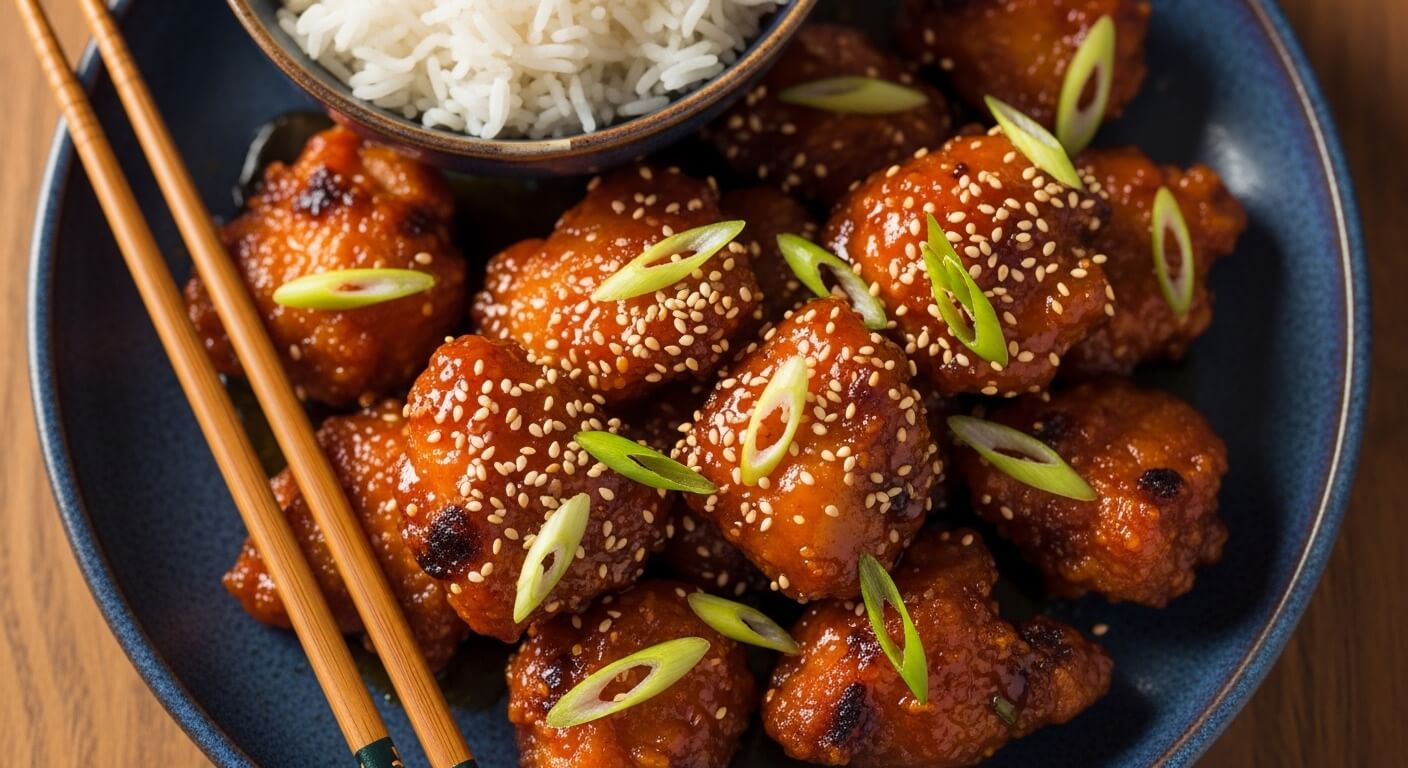
How to Make Orange Chicken (Complete Guide)
One of those foods that immediately makes you feel at ease is orange chicken. A popular dish at many Asian-inspired restaurants is crispy chicken covered in a glossy, sweet, tangy, and slightly spicy orange sauce. The good thing is that you can enjoy it without takeaway. You can prepare restaurant-quality orange chicken in your own kitchen with a few basic ingredients and the proper technique.
From prepping the chicken to creating the ideal sauce and achieving that distinctive crispy texture, this guide lays everything down step-by-step.
What Is Orange Chicken?
Bite-sized chicken pieces are battered, fried, and then combined with a thick sauce with an orange taste to create orange chicken. Orange juice, soy sauce, sugar, vinegar, and garlic are typically added to the sauce to balance its sweet, acidic, and savory characteristics.
It’s unique because of the contrast between the crispy exterior of the chicken and the rich, sticky sauce that coats each piece.
Why Make It at Home?
Homemade orange chicken is worth trying for a number of reasons:
1. Improved Control of Flavor:
Tanginess, spice, and sweetness can all be changed to suit your preferences.
2. New Ingredients:
No excessively processed sauces or preservatives.
3. Crispy Texture:
Compared to takeout chicken that sits for a time, freshly fried chicken maintains its crispness.
4. Cost-effective:
Making meals at home is frequently less expensive than frequently placing takeout orders.
Ingredients You’ll Need:
For the Chicken:
- 500g boneless chicken breast or thighs
- 1 cup all-purpose flour
- ½ cup cornstarch
- 1 egg
- Salt and pepper to taste
- Oil for frying
For the Orange Sauce:
- 1 cup fresh orange juice
- 1 tablespoon orange zest
- 2–3 tablespoons soy sauce
- 3–4 tablespoons sugar (adjust to taste)
- 1 tablespoon vinegar (white or rice vinegar)
- 2 cloves garlic (minced)
- 1 teaspoon ginger (optional)
- 1 tablespoon cornstarch mixed with water (slurry)
Step-by-Step Instructions to Make Orange Chicken:
1. Prepare the Chicken
- Slice the chicken into bite-sized pieces.
- To ensure that they cook evenly, try to keep them consistent.
- Add a little salt and pepper for seasoning.
- This contributes to internal flavor development.
2. Prepare the batter:
- To make a thick batter, combine flour, cornstarch, egg, and a small amount of water in a bowl.
- When cooked, the cornstarch helps produce a crisp outside, which makes it crucial.
3. Apply a coat to the chicken:
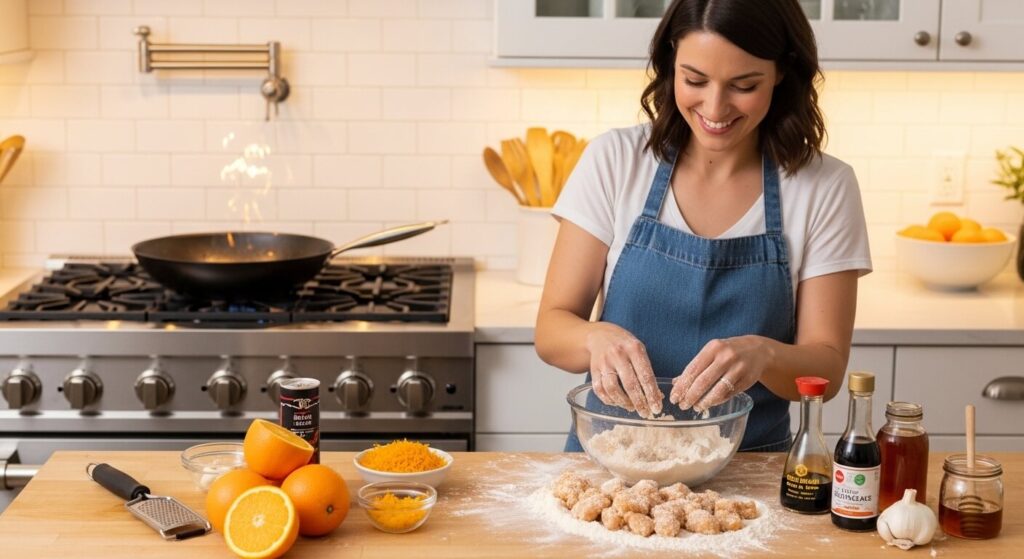
- Make sure every piece of chicken is well coated by dipping it into the batter.
- Before cooking, let the excess drop off.
4. Cook the chicken:
- In a deep pan, heat the oil over medium-high heat.
- To prevent crowding, fry the chicken in small batches.
- Cook for 4–6 minutes per batch, or until golden brown and crispy.
- To get rid of extra oil, place the fried chicken on paper towels.
5. Get the orange sauce ready:
- Add the orange juice, orange zest, soy sauce, sugar, vinegar, garlic, and ginger to another pan.
- Over medium heat, bring it to a soft simmer.
6. Make the sauce thicker:
- To create a slurry, combine cornstarch with a small amount of water.
- Pour it slowly into the sauce and mix.
- The sauce will start to get glossy and thicken.
7. Mix the sauce and chicken:
- Incorporate the crispy chicken pieces into the sauce.
- In order to coat every piece equally, toss swiftly.
8. Serve right away:
- When served hot and fresh, orange chicken tastes its finest.
- The coating is sticky and delicious on the inside yet remains crispy on the outside.
Tips for Perfect Orange Chicken:
1. Avoid packing the pan too full:
When too many pieces are fried at once, the oil temperature drops and the chicken becomes soggy.
2. Make use of cornstarch:
It’s the key component for added crispness.
3. The Importance of Fresh Orange Juice:
Compared to bottled juice, fresh juice has a more natural and vibrant flavor.
4. Equilibrate the Sauce:
Add a small amount of vinegar if it’s overly sweet. Add a little more sugar if it’s too tart.
5. Toss Right Before Serving:
Chicken may lose its crisp texture if it is combined with sauce too soon.
Common Mistakes to Avoid:
1. Ignoring the Frying Stage
The chicken won’t have that distinctive crunch without frying.
2. Light Sauce
The chicken won’t be adequately coated if the sauce isn’t thick enough.
3. Cooking chicken too much
Chicken that is overcooked gets chewy and dry.
4. Excessive Oil Temperature Use
Extremely high heat might cause the exterior to burn before the interior cooks.
Variations of Orange Chicken:
- Orange Chicken with Spice. For heat, add sriracha or chili flakes.
- A healthier version instead of deep-frying the chicken, bake or air-fry it.
- Orange chicken with honey, for a deeper sweetness, use honey in place of some of the sugar.
- Garlic-heavy version, for a more robust savory taste, add more garlic.
What to Serve With Orange Chicken
Orange chicken pairs well with:
- Steamed white rice
- Fried rice
- Noodles
- Stir-fried vegetables
Rice is the most popular choice because it absorbs the extra sauce perfectly.
Storage and Reheating:
Storage
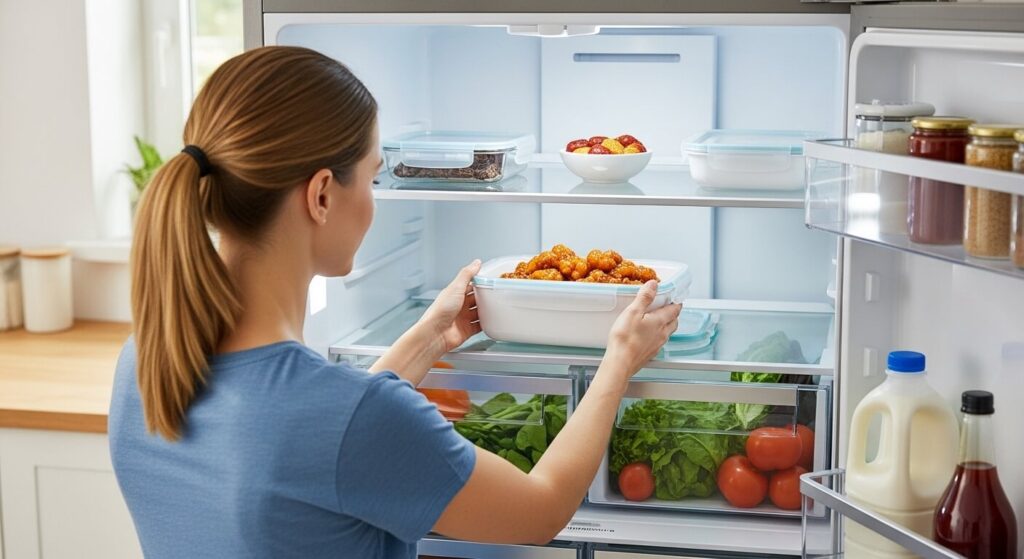
Store leftovers in the refrigerator for up to three days in an airtight container.
Warming up
In a pan over low heat, reheat. If at all possible, avoid microwaving since it diminishes the crunchy crispness.
Can You Freeze Orange Chicken?
Indeed. For optimal results, freeze the fried chicken without the sauce. Reheat and mix with freshly prepared sauce when ready to eat.
Why Does Homemade Orange Chicken Taste Better?
You have complete control over every aspect when you make your own orange chicken. The degree of crispness, spice, and sweetness is up to you. It is also less greasy, fresher, and devoid of superfluous ingredients.
1. What is orange chicken made of?
It is made with crispy fried chicken pieces coated in a sweet and tangy orange-based sauce.
2. Is orange chicken spicy?
Traditionally it is mild, but you can add chili flakes or hot sauce to make it spicy.
3. Can I bake orange chicken instead of frying it?
Yes, baking or air frying is a healthier alternative, but frying gives the crispiest texture.
4. Why is my orange chicken not crispy?
It may lose crispiness if it’s over-sauced, under-fried, or cooked at low oil temperature.
5. Can I use chicken breast or thighs?
Both work well. Thighs are juicier, while breast is leaner.
Final Thoughts:
Orange chicken has the ideal balance of robust flavor and crispy texture. Even though it can appear difficult, once you break it down into steps, it’s actually rather easy. The proportion of the sauce and the frying method are crucial.
You can easily make a restaurant-style dish at home that tastes even better than takeout with a little effort. This recipe is adaptable enough to suit your preferences, whether they are sweet, tangy, or spicy.
After you give it a try, making it at home could quickly become a culinary staple.