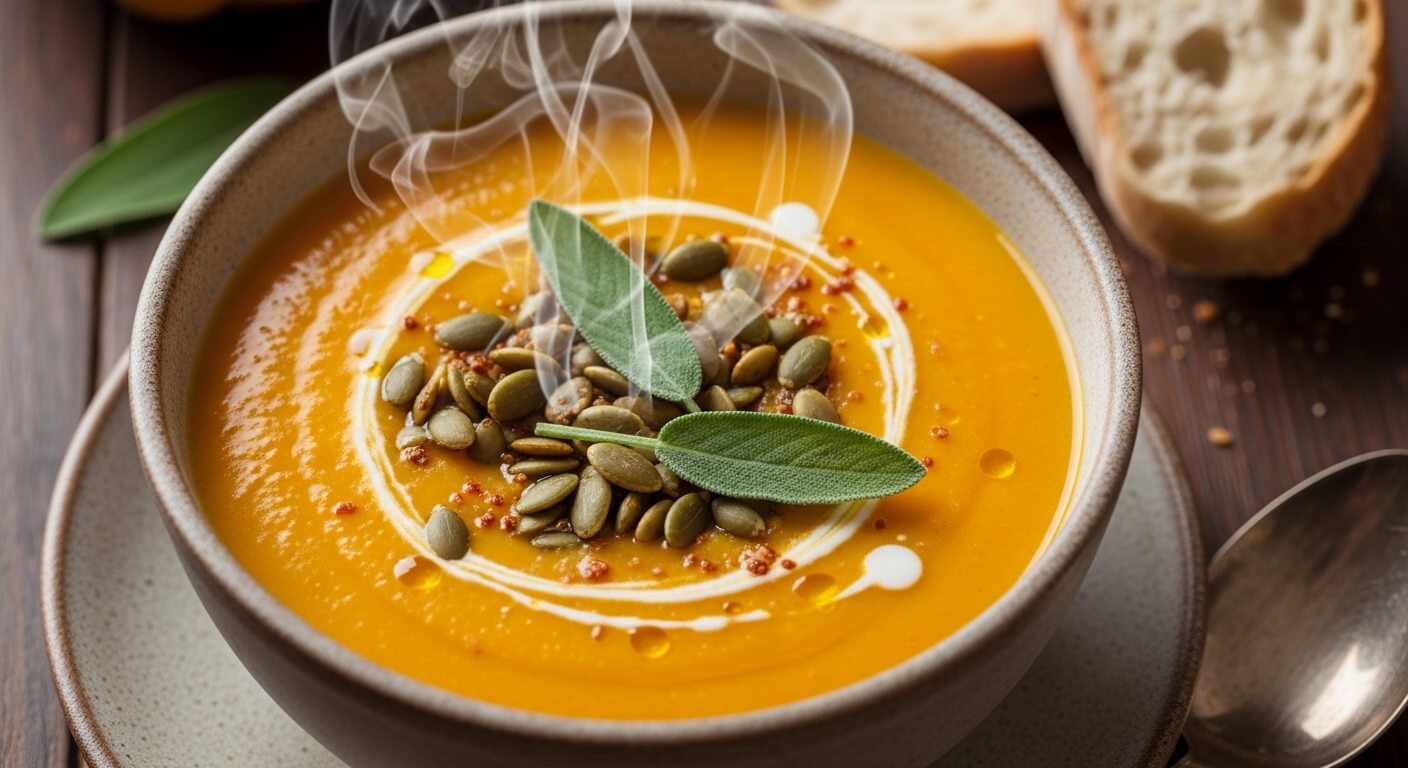
One of those classic comfort foods that never goes out of style is butternut squash soup. It’s a dish that seems both filling and decadent because of its naturally sweet flavor, velvety texture, and stunning golden hue. There are countless options for butternut squash soup recipes, whether you’re searching for a warm winter supper, a nutritious lunch choice, or a sophisticated dinner party starter.
Everything you need to know will be covered in this tutorial, from selecting the best squash to making a variety of delectable varieties. By the end, you’ll feel comfortable making restaurant-caliber soup in your own kitchen.
Why Is Butternut Squash Soup So Popular?
Butternut squash soup is served on menus all around the world for a reason. It appeals to seasoned cooks as well as novices since it blends simplicity and depth of taste.
People adore it for the following reasons:
- Texture that is naturally creamy without the need for thick cream
- Savory spices and a hint of sweetness
- Rich in antioxidants, fiber, and vitamins
- Easy to prepare and reasonably priced
- Ideal for freezing and preparing meals
The versatility of butternut squash is further enhanced by its excellent pairing with roasted veggies, garlic, ginger, apple, coconut milk, and sage.
Choosing the Perfect Butternut Squash:
wonderful ingredients are the foundation of a wonderful soup. When choosing butternut squash, keep an eye out for:
- Firm skin free of cracks and soft areas
- Matte beige instead of lustrous skin
- It weighs a lot for its size, which suggests freshness.
- length of the neck, which has more muscle
Point: The flavor of fresh squash is superior, but if you’re pressed for time, frozen pre-cut squash might also be a good option.
Classic Butternut Squash Soup Recipe:
This classic version is smooth, comforting, and easy to customize.
1. Ingredients:
- 1 large butternut squash (peeled, seeded, cubed)
- 1 onion (chopped)
- 3 cloves garlic (minced)
- 2 tablespoons olive oil or butter
- 4 cups vegetable or chicken broth
- ½ teaspoon salt (adjust to taste)
- ¼ teaspoon black pepper
- ½ cup cream or coconut milk (optional)
- Pinch of nutmeg (optional but recommended)
2. Instructions:
Step 1: Roast the squash
- Set the oven temperature to 200°C (400°F).
- Add salt, pepper, and olive oil to the squash cubes.
- Roast until soft and begin to caramelize, 25 to 30 minutes.
Step 2: Cook aromatics
- Saute the onion in oil or butter over medium heat in a large pot until it becomes tender.
- Cook for one more minute after adding the garlic.
Step 3: Combine ingredients
- Add the broth and roasted squash to the pot. For 10 minutes, bring to a medium simmer.
Step 4: Blend until it’s smooth
- Until creamy, use a countertop mixer or immersion blender.
Step 5: Add cream to finish
If desired, stir in coconut milk or cream. Add the nutmeg and adjust the spice.
Suggestion: Serve hot with croutons or crusty bread.
Variation of Butternut Squash Soup:
1. Roasted Butternut Squash Soup:
The natural sweetness is enhanced and a more nuanced flavor profile is produced by roasting.
For a gourmet twist, include these ingredients:
- Carrots
- Apples
- Fresh sage or thyme
- A maple syrup drizzle
Suggestion: Compared to boiling vegetables alone, roasting them produces a deeper, somewhat caramelized flavor.
2. Healthy Butternut Squash Soup Options:
You can readily change the components if you’re searching for lighter recipes.

Healthy substitutions consist of:
- Instead of using butter, use olive oil.
- Use coconut milk or Greek yogurt in place of cream.
- For protein, include chickpeas or lentils.
- Make use of low-sodium soup.
Point: Butternut squash is perfect for weight-loss meals because it is low in calories and high in vitamin A.
3. Dairy-Free and Vegan Butternut Squash Soup:
A dairy-free version is just as creamy and flavorful.
Ingredients for Vegan Version:
- Butternut squash
- Onion and garlic
- Vegetable broth
- Coconut milk or cashew cream
- Ginger or curry powder
Coconut milk keeps the soup plant-based while adding richness.
4. Spiced Butternut Squash Soup Recipes:
Spices have the power to dramatically change your soup if you like strong flavors.
Common spice pairings:
- Curry powder combined with Thai-inspired coconut milk
- Paprika with cumin (smoky and toasty)
- Turmeric and ginger (anti-inflammatory properties)
- Flakes of chili (for heat)
These spices provide depth and intensify sweetness.
5. Slow Cooker Butternut Squash Soup:
Slow cookers simplify preparation for people with hectic schedules.
Approach:
- To the slow cooker, add the squash, onion, garlic, broth, and spices.
- Cook for 3–4 hours on high or 6–7 hours on low.
- If desired, add in cream after blending until smooth.
This technique creates a rich flavor with little work.
6. Instant Pot Butternut Squash Soup:
While preserving nutrition, pressure cooking saves time.
Procedures:
- Use the sauté mode to cook the onion and garlic.
- Add the broth and squash.
- Cook under pressure for eight minutes.
- Blend, then add coconut milk or cream to finish.
It takes less than 30 minutes to prepare dinner.
Flavor Pairings That Work Best:
Both savory and sweet elements go well with butternut squash.
Best additions include:
- Apples or pears
- Carrots
- Sweet potatoes
- Bacon or pancetta
- Sage and thyme
- Parmesan cheese
- Toasted pumpkin seeds
These ingredients elevate both texture and flavor.
Tips for the Creamiest Texture:
For really smooth soup:
- Before combining, roast the vegetables.
- Make use of a high-speed blender.
- If necessary, strain the soup.
- Finally, add butter, coconut milk, or cream.
- For a thicker consistency, simmer longer.
Taste and presentation are greatly enhanced by a smooth texture.
How to Store and Freeze Butternut Squash Soup?
Butternut squash soup keeps quite well in storage.
1. The refrigerator:
- Keep in an airtight container.
- lasts for three to four days.
2. Freezer:
- Freeze for a maximum of three months.
- Make room for growth.
- Thaw in the refrigerator overnight.
To preserve texture, reheat gently.
Serving Ideas and Garnishes:
A basic soup can be elevated to a gourmet experience through presentation.
Consider adding:
- Coconut milk drizzle or cream swirl
- Pumpkin seeds that have been toasted
- Fresh herbs (sage, thyme, and parsley)
- Croutons
- Crispy pieces of bacon
- Cheese with Parmesan
Accompany with salads, grilled cheese sandwiches, or warm bread.
Common Mistakes to Avoid:
Being careless can cause even easy dishes to go wrong.
Steer clear of these errors:
- The soup is underseasoned.
- Ignoring toasting to achieve a deeper taste
- Excessive liquid addition (makes it watery)
- Insufficient blending time
- Cream that is overcooked may curdle.
Little changes lead to large gains.
Nutritional Benefits of Butternut Squash Soup:
Butternut squash is very nutrient-dense.

Important advantages include:
- Rich in vitamin A for healthy eyes
- Packed with antioxidants
- Aids in immunological function
- A good source of fiber
- Low in calories and fat
You may feel good about eating this comfort food.
Creative Butternut Squash Soup Variations:
Once you master the basics, try these creative twists:
- Butternut squash and apple soup
- Moroccan spiced squash soup
- Butternut squash and red lentil soup
- Roasted garlic squash soup
- Butternut squash and carrot ginger soup
- Cheesy butternut squash soup
Experimenting keeps meals exciting.
Do you need to peel butternut squash before making soup?
Since the skin is tough and does not soften properly when cooked, peeling is advised.
What spices go well with butternut squash soup?
Nutmeg, cinnamon, ginger, curry powder, cumin, paprika, and sage all pair beautifully.
How long does butternut squash soup last in the fridge?
When kept in an airtight container, it keeps fresh for three to four days.
How do I make the soup extra creamy without cream?
Add cashew cream, coconut milk, or even a small potato for natural creaminess after blending well.
Conclusion:
Recipes for butternut squash soup offer the ideal balance of comfort, health, and adaptability. There is a recipe to fit every taste and occasion, whether you want traditional creamy variants, strong spicy versions, or nutritious vegan options.
Anyone can make a thick, savory bowl of soup that tastes both homemade and gourmet using basic ingredients and simple cooking methods. After you give it a try, butternut squash soup might end up being a staple in your kitchen, particularly in the cooler months when hearty, cozy dishes are most appealing.