How to Bake a Cake Beginner to Pro Guide
Making a cake from scratch may seem daunting at first, but once you grasp the fundamentals, it turns into one of the most fulfilling culinary endeavors. A well-baked cake has the ideal texture, flavor, and softness. This comprehensive book will bring you through every step in an easy-to-follow manner, whether you’re baking for a celebration or simply have a sweet tooth.
Understanding the Basics of Cake Baking:
It’s helpful to know what makes a cake work before you start. A few essential elements are balanced in every cake:
- Flour gives things structure.
- Sugar provides moisture and sweetness.
- Eggs give richness and connect everything together.
- Oil or butter adds flavor and softness.
- Baking powder and other leavening chemicals aid in the cake’s rising.
- The batter is kept smooth by liquid (milk, water, or buttermilk).
These ingredients make a delicate, airy cake when they are properly blended and baked at the proper temperature.
Essential Tools You’ll Need:
To make a delicious cake, you don’t need a professional kitchen. Just a few basic tools:
- Mixing bowls
- Measuring cups and spoons
- Electric mixer or whisk
- Cake pans
- Oven
- Spatula
- Cooling rack
When baking, it’s crucial to use the right measures, so make an effort to be as precise as you can.
Ingredients for a Basic Cake:
Here’s a simple recipe to get started:
- 2 cups all-purpose flour
- 1 ½ cups sugar
- ½ cup butter (softened)
- 1 cup milk
- 3 eggs
- 2 teaspoons baking powder
- 1 teaspoon vanilla extract
- A pinch of salt
This forms a classic vanilla cake base that you can customize later.
Step-by-Step Cake Baking Process:
1. Turn on the oven:
- Preheat your oven to 180°C (350°F) before beginning.
- This guarantees uniform baking from the start.
2. Get the cake pan ready:
- Lightly coat your cake pan with flour after greasing it with butter or oil.
- This keeps the cake from adhering.
3. Combine Dry Substances:
- In a bowl, mix together:
- Baking powder, flour, and salt
- After thoroughly mixing them, set them aside.
4. Cream Sugar and Butter:
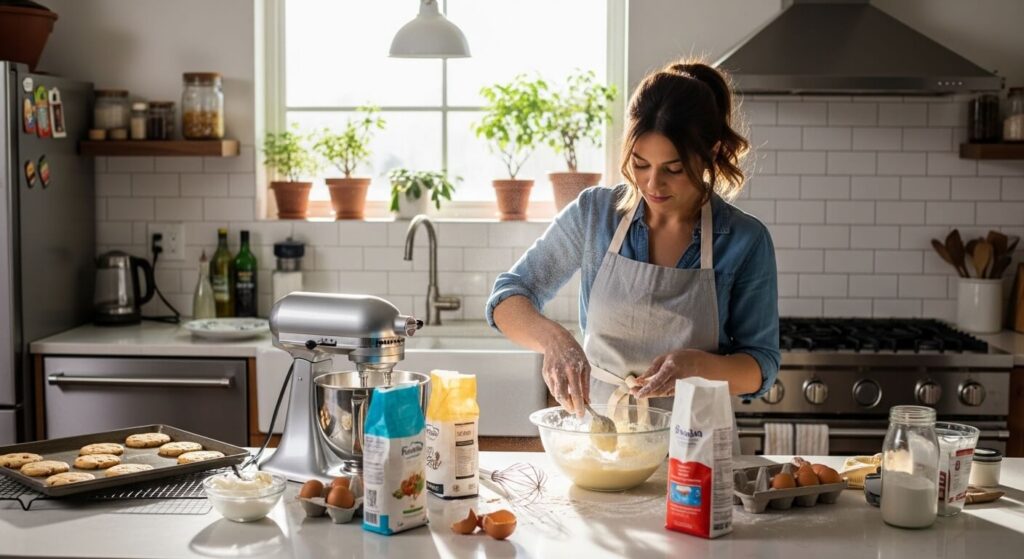
- Beat the sugar and butter together in a separate bowl until the mixture is light and fluffy. This is an important step because it helps the cake rise by adding air to the mixture.
5. Add vanilla and Eggs:
- Eggs should be added one at a time, thoroughly mixed after each addition.
- Add the vanilla extract after that.
- This develops structure and flavor.
6. Mix Dry and Wet Substances:
Now alternate between adding dry ingredients and milk into the butter mixture:
- Add some of the dry ingredients.
- Next, pour in some milk.
- Continue until everything is mixed.
Gently stir. The cake may become dense if it is overmixed.
7. Fill the pan with batter:
- Evenly pour the batter into the pan that has been prepared.
- Use a spatula to smooth the top.
8. Bake the cake:
- Bake the pan for 30 to 35 minutes after placing it in the oven.
- The rise may be impacted if the oven is opened too frequently.
9. Verify Doneness:
Put a toothpick in the middle:
- The cake is done if it comes out clean.
- Bake for a few more minutes if not.
10. Cool the Cake:
- After letting the cake cool in the pan for ten to fifteen minutes, move it to a cooling rack.
- A heated cake will melt the icing, so never frost it.
Common Mistakes to Avoid:
If you’re not careful, even easy cakes can go wrong. Here are some things to be aware of:
- Texture can be ruined by incorrect measurements.
- Cakes get difficult when batter is overmixed.
- Sinking can result by opening the oven too early.
- Baking becomes uneven when preheating is neglected.
If you pay attention to these details, your performance will increase right away.
Tips for a Perfect Cake Every Time:
For best mixing, use ingredients at room temperature.
- To prevent lumps, sift the flour.
- Avoid hurrying the creaming process.
- Make use of the appropriate pan size
- Before decorating, let the cake cool fully.
In baking, minor adjustments have a significant impact.
Different Types of Cakes You Can Try:
You can try several variants once you’ve mastered the basic recipe:
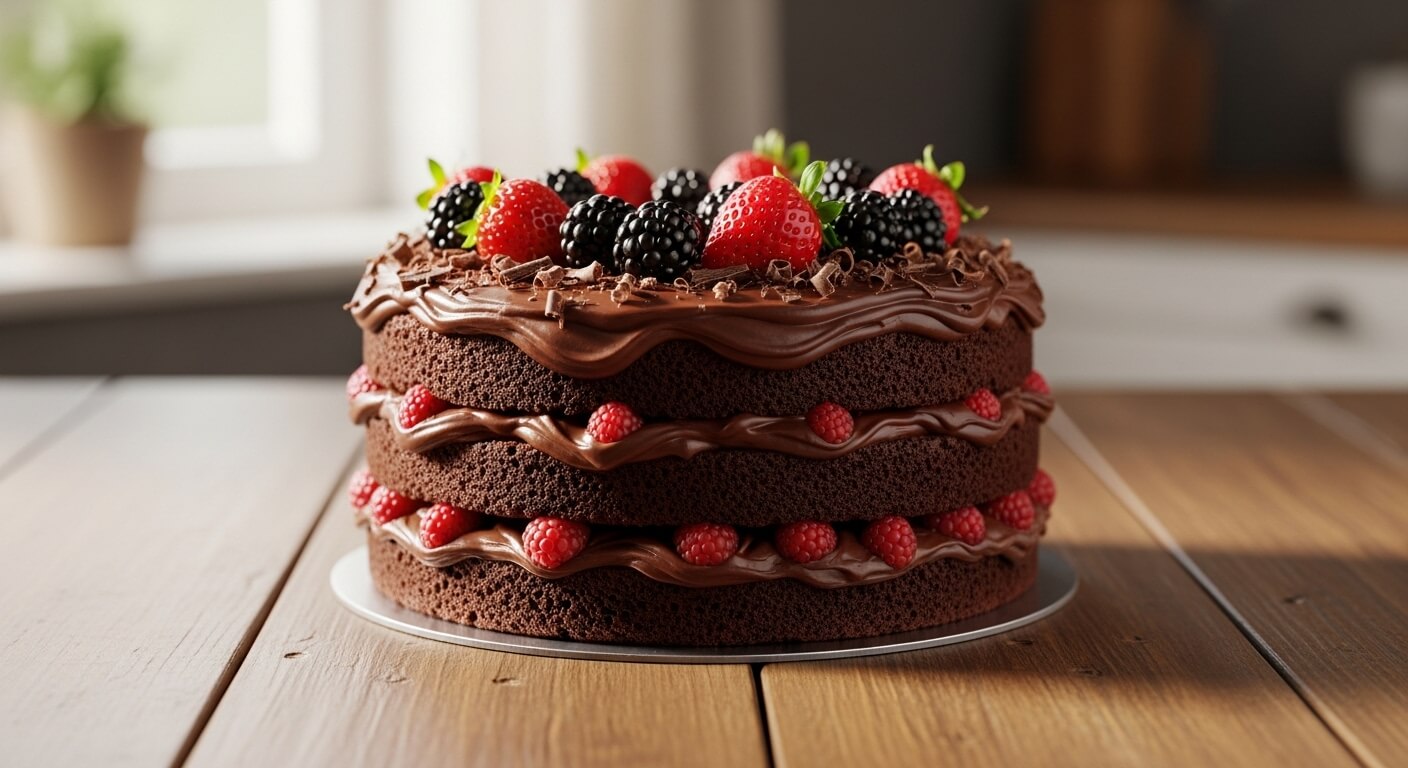
1. Chocolate Cake:
For a rich taste, add melted chocolate or cocoa powder.
2. Cake Sponge:
For a lighter texture, use more eggs and less fat.
3. Cake with Butter:
Rich and dense, ideal for icing and stacking.
4. Cake with Fruit:
contains nuts and dried fruits for added texture.
5. Cake Without Eggs:
Replaces eggs with yogurt, vinegar, or baking soda.
Simple Frosting Ideas:
Frosting makes a cake even better. Here are some simple choices:
1. Frosting with buttercream:
Made with sugar, vanilla, and butter. Creamy and silky.
2. Whipped Cream:
Perfect for fresh cakes, it’s light and airy.
3. Ganache with chocolate:
Made from chocolate and cream, it’s glossy and rich.
4. Frosting with Cream Cheese:
Perfect for red velvet or carrot cakes, it has a hint of acidity.
Decorating Your Cake:
To make your cake seem good, you don’t have to be an expert baker:
- Using a spatula, evenly distribute the frosting.
- Add chocolate chips or sprinkles.
- Use fruits to create a fresh appearance.
- If you have a piping bag, pipe basic designs.
Your cake can feel unique even with a basic adornment.
Storage Tips:
To maintain the freshness of your cake:
- Keep for one to two days at room temperature.
- If using cream-based frosting, refrigerate.
- Tightly cover to avoid drying out.
- Cake layers can be frozen for later use.
Why Is Baking at Home Worth It?
There are several benefits to making your own cake:
- The ingredients are under your control.
- It is frequently healthier and fresher.
- You can alter the flavors.
- It reduces expenses.
- It’s a creative and soothing pastime.
Baking becomes a lifelong talent once you start doing it on a regular basis.
What is the secret to a soft and fluffy cake?
Correct measures and appropriate mixing are crucial. A soft texture can be achieved by using fresh baking powder, creaming butter and sugar thoroughly, and without overmixing the batter.
How do I know when my cake is fully baked?
Put a toothpick in the middle. Your cake is done if it comes out clean or with a few crumbs.
Can I use oil instead of butter in cake?
It is possible to use oil, and it frequently adds moisture to the cake. Butter, on the other hand, adds a deeper flavor.
How long should I let the cake cool before frosting?
The frosting will melt if you don’t let it cool completely, which normally takes 30 to 60 minutes.
Final Thoughts:
It takes more than just following a recipe to learn how to bake a cake. It’s about understanding how ingredients work together and building confidence in the kitchen. It’s okay if your first cake isn’t flawless. Every effort teaches you something new.
You’ll soon be baking cakes that look and taste fantastic if you start with a basic recipe and carefully follow the instructions. You can eventually make something wholly unique by experimenting with tastes, fillings, and embellishments.
Once you get the knack of baking, store-bought cakes will never seem the same. Baking is a combination of art and science.