How to Cook Steak on Stove Perfectly Every Time
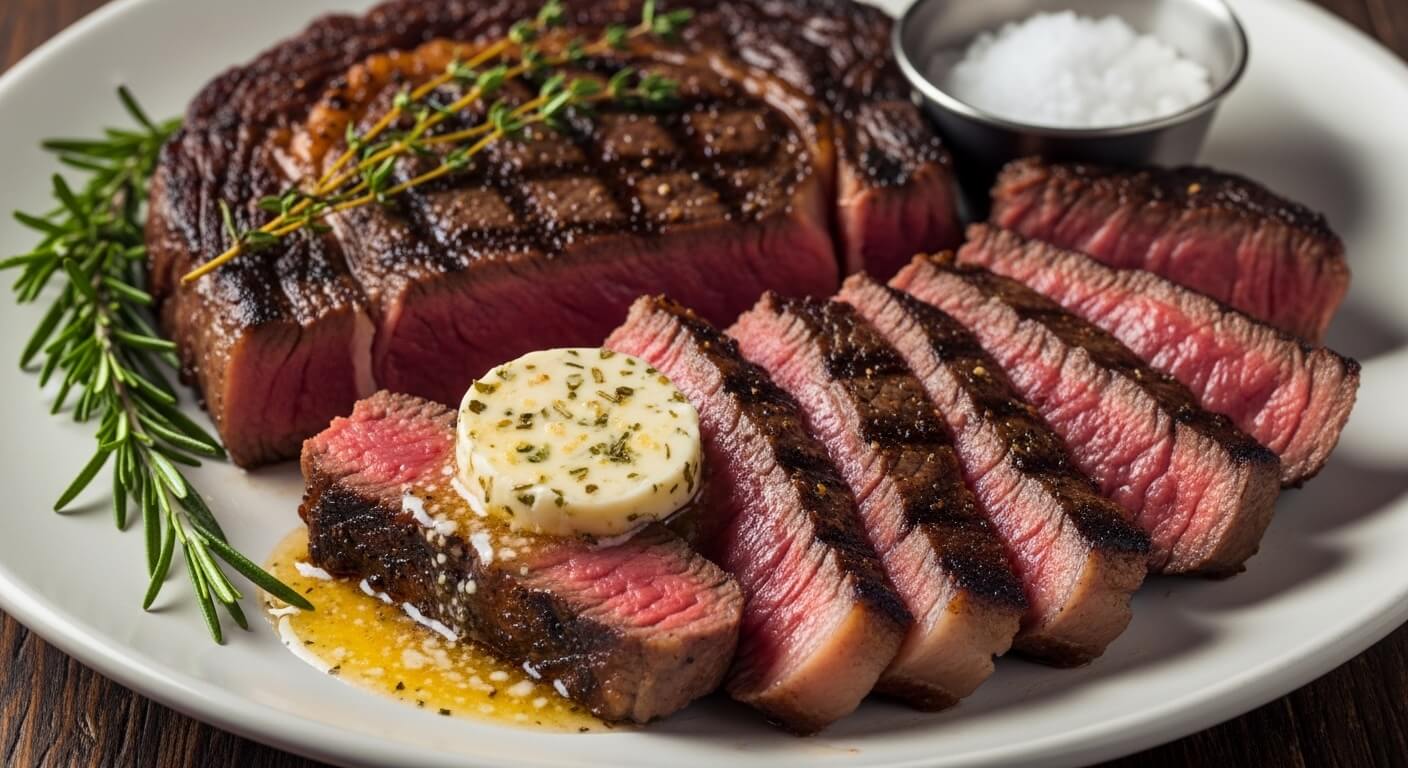
It may seem easy to cook a steak on the stove, but the actual trick is to get that ideal sear with a juicy, delicate core. The good news is that you can prepare restaurant-quality steak at home without a grill or expensive equipment. You can make a steak on your stovetop that can compete with any steakhouse if you utilize the proper method, timing, and a few basic ingredients.
Everything from selecting the ideal cut to perfecting the sear and finishing like a pro will be covered in this comprehensive tutorial.
Why Cook Steak on the Stove?
Although stovetop cooking actually gives you greater control, many people believe that grilling is the only way to cook a tasty steak. Butter and aromatics can be used to monitor heat, modify time, and enhance flavor.
Benefits of cooking steak on the stove:
- Improved control over doneness and heat
- consistent outcomes each and every time
- All year long (no grill required)
- produces a golden, rich crust.
Choosing the Best Steak:
The quality of your steak matters more than anything else. Even perfect technique can’t fix a poor cut.
Best Cuts for Stove Cooking:
- Ribeye – Rich, juicy, and full of flavor
- New York Strip – Balanced between tender and firm
- Filet Mignon – Extremely tender but lean
- Sirloin – Budget-friendly with good flavor
Thickness Matters:
For stovetop cooking, aim for a steak that is:
- 1 to 1.5 inches thick
Thinner steaks cook too quickly and don’t develop a proper crust.
Ingredients You’ll Need:
You don’t need much to make a great steak. Keep it simple.
- 1 steak (ribeye, strip, or filet)
- Salt (preferably coarse or kosher)
- Black pepper
- 1–2 tablespoons oil (high smoke point like canola or avocado)
- 2 tablespoons butter
- Optional: garlic cloves, fresh thyme or rosemary
Step-by-Step: How to Cook Steak on Stove
1. Bring the Steak to Room Temperature:
- Before cooking, remove the steak from the refrigerator for thirty to forty minutes.
- It cooks more evenly as a result.
2. Use a lot of Seasoning:
- Using paper towels, pat the meat dry. For a good sear, this is crucial.
- Next, season both sides with black pepper and salt
Warning: Avoid being bashful. It all comes down to a well-seasoned crust.
3. Correctly heat the Pan:
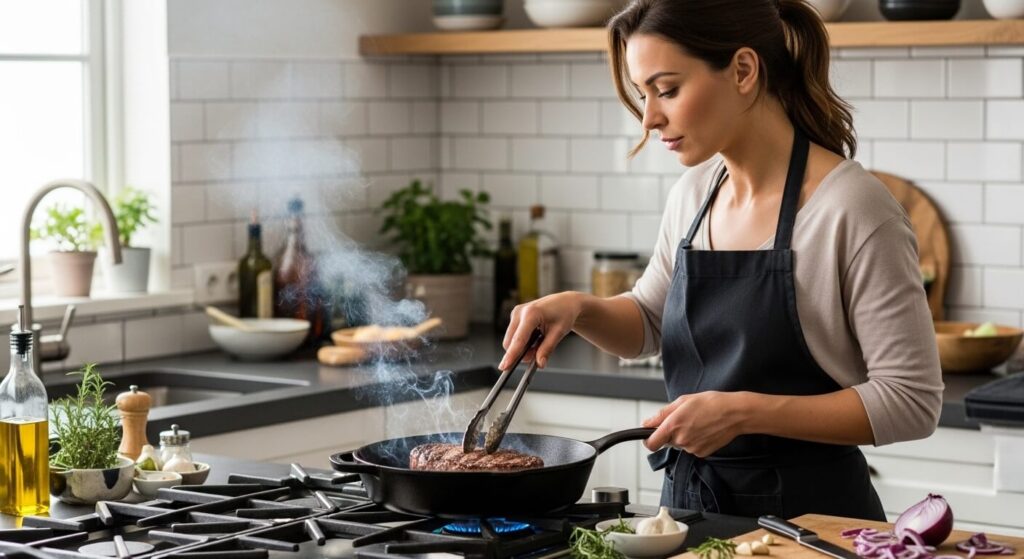
- If at all feasible, use a heavy pan, such as a cast iron.
- Put the pan over medium-high heat.
- Add some oil.
- Heat the oil until it shimmers, almost smoking.
The secret to the ideal crust is a hot pan.
4. Sear the Steak:
- Gently add the meat to the pan. There should be a loud sizzling.
- For two to three minutes, do not move the steak.
- Cook the other side for an additional two to three minutes after flipping.
- A thick brown crust is produced as a result.
5. Include Aromatics and Butter:
- Reduce the heat a little and add herbs, butter, and garlic (optional)
- For one to two minutes, tilt the pan and baste the steak with melted butter using a spoon.
- Amazing flavor is added at this phase.
6. Check Doneness:
Use a meat thermometer for accuracy:
- Rare: 120–125°F (49–52°C)
- Medium Rare: 130–135°F (54–57°C)
- Medium: 140–145°F (60–63°C)
- Medium Well: 150–155°F (65–68°C)
- Well Done: 160°F+ (71°C+)
7. Let It Rest:
- After removing the steak, give it five to ten minutes to rest.
- This keeps the steak juicy by allowing the juices to re-distribute.
Pro Tips for the Perfect Steak:
1. Avoid packing the pan too full:
Cook one or two steaks at a time. If there are too many, the heat will drop and the sear will be ruined.
2. Make Use of a Cast Iron Skillet:
It produces a better crust and retains heat better.
3. Flip Multiple Times (Optional Method)
For uniform cooking, some cooks flip every 30 to 60 seconds.
4. Steer Clear of Frequent Moves:
Give the steak time to form a golden crust.
Common Mistakes to Avoid:
- Preparing Cold Steak causes cooking to be uneven.
- Steak isn’t dried. Appropriate browning is hindered by moisture.
- Applying low heat the flavor and crust will be missed.
- Ignoring Rest Periods when cut, juices will leak out.
How to Add Extra Flavor?
To elevate your steak to a new level:
- While basting, add the herbs and crushed garlic.
- Add a dash of flaky salt to finish.
- After resting, sprinkle a little butter on top.
The remaining fluids can also be used to quickly prepare a pan sauce.
Pan Sauce (Optional but Powerful):
Once the meat has been removed:
- Maintain the pan’s medium heat.
- Add a little vinegar, broth, or water.
- Scrape away the brown particles.
- Stir in the butter.
In just a few minutes, this produces a tasty, thick sauce.
What to Serve with Steak:
A great steak deserves great sides:
- Mashed potatoes
- Roasted vegetables
- Garlic butter rice
- Fresh salad
How to Store and Reheat Steak:
1. Storage:
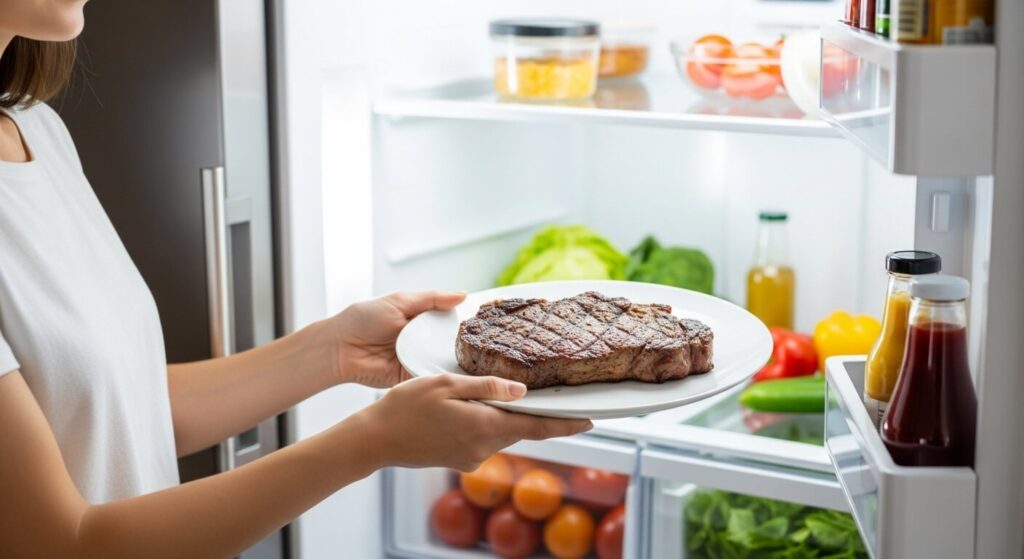
- Store in the refrigerator for up to three days.
- Keep in an airtight container.
2. Warming up:
- In a pan, use low heat.
- To keep it moist, add a small amount of butter.
- Steer clear of the microwave if you can.
Can I cook steak on the stove without cast iron?
Yes, but a heavy pan works best for heat retention.
How long should I cook steak on the stove?
Usually 4–6 minutes total for medium-rare, depending on thickness.
Should I use butter or oil?
Use oil first, then butter for flavor at the end.
How do I know when to flip the steak?
When it releases easily from the pan and has a brown crust.
Final Thoughts:
One of the most useful cooking talents you may possess is the ability to cook steak on the stove. When done correctly, it’s easy, quick, and produces incredible effects. The secret is to concentrate on selecting the appropriate cut, searing the steak perfectly with high heat, and letting the steak rest after cooking to preserve the juices. You will be able to prepare a wonderfully juicy and tasty steak from your kitchen at any time once you have mastered these fundamentals.