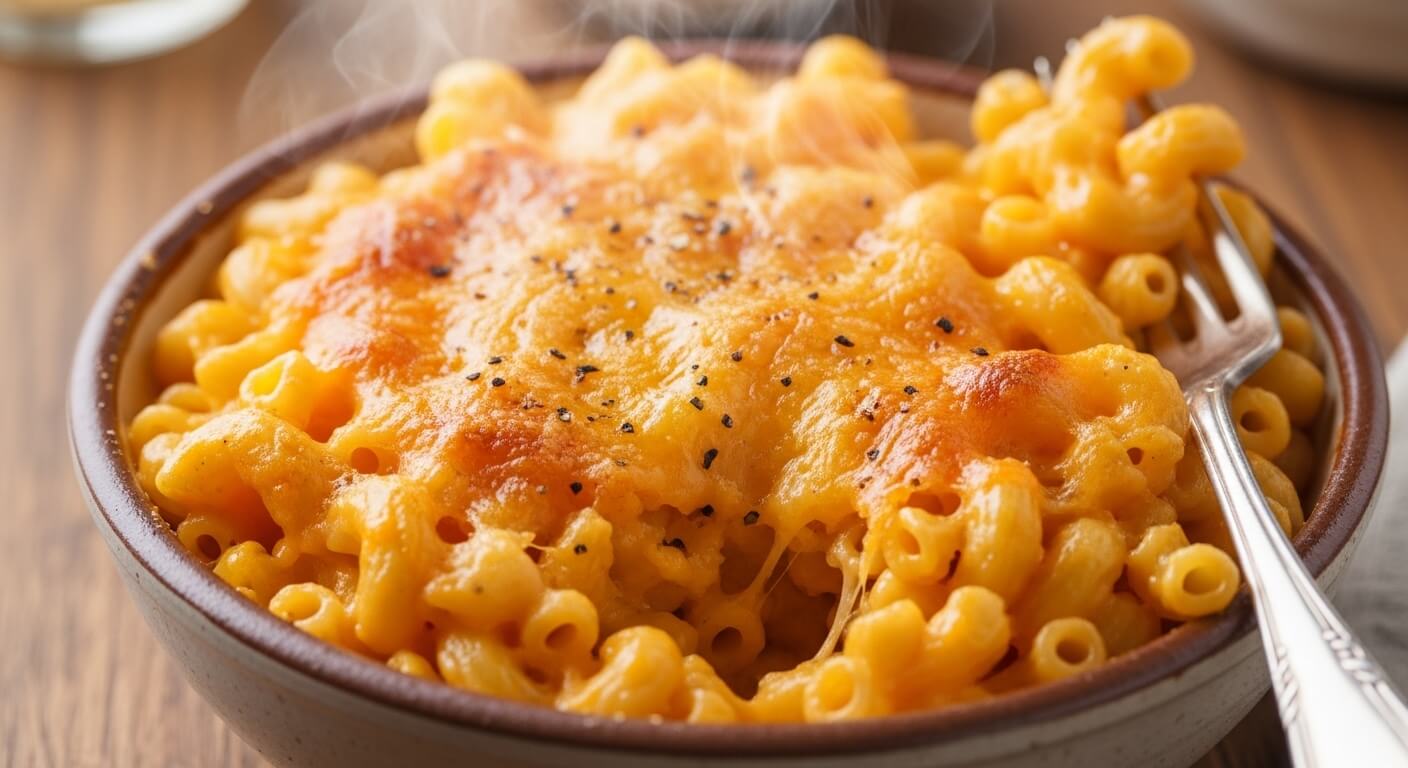
Macaroni and cheese is one of the world’s most enduring and comfortable foods. It has the texture of a warm hug on a plate—it’s rich, creamy, cheesy, and gratifying. Learning to make mac and cheese from scratch will revolutionize your experience of this traditional food, regardless of whether you grew up eating it from a blue box or your grandmother’s oven-baked casserole dish.
Everything you need to know, from selecting the ideal pasta and cheese to creating a smooth sauce, is covered in this comprehensive tutorial. You will eventually be able to make mac and cheese in your own home that rivals that of a restaurant.
What Is Mac and Cheese?
The abbreviation “mac and cheese” refers to a pasta dish that consists of cooked macaroni and a rich cheese sauce. Pasta and cheese have been around for centuries in Europe, despite being frequently linked to American comfort food.
The basic ingredients of mac and cheese are pasta and cheese sauce. However, the ingredients and technique are what make the difference.
Ingredients You’ll Need:
Let’s get everything together before we begin cooking:
1. For the Classic Creamy Version:
- 2 cups elbow macaroni
- 2 tablespoons butter
- 2 tablespoons all-purpose flour
- 2 cups whole milk (warm)
- 2 cups shredded cheese (cheddar recommended)
- ½ teaspoon salt
- ¼ teaspoon black pepper
Optional: pinch of paprika or mustard powder.
Choosing the Right Pasta:
The classic option is elbow macaroni, which retains sauce well due to its bent form. Nevertheless, you can try out:
- Cavatappi (spiral tubes that trap more cheese)
- Small shells (great for scooping sauce)
- Fusilli or rotini (adds texture)
Suggestion: To ensure that the cheese sticks to the pasta, it is important to select pasta with ridges or curves.
Step-by-Step: How to Make Mac and Cheese
Step 1: Cook the Pasta
- Bring a big pot of water that has been salted to a boil.
- Cook until al dente, or soft but still slightly firm, after adding the macaroni.
- Usually, this takes seven to nine minutes.
Expert Advice: Avoid overcooking. When the pasta is combined with the hot sauce, it will continue to cook. After draining, set away.
Step 2: Make the Roux (The Sauce Base)

- Melt the butter in a saucepan over medium heat.
- Add the flour after it has melted, and whisk constantly for one to two minutes.
- We refer to this mixture as a roux. It adds structure and thickens the sauce.
Suggestion: It should appear smooth, with a hint of bubbliness but not brown.
Step 3: Add the Milk
- While whisking continuously, slowly pour in the heated milk. This keeps lumps from developing.
- For another three to five minutes, keep heating and stirring until the mixture thickens into a smooth white sauce.
- When it coats the back of a spoon, you’ll know it’s done.
Step 4: Add the Cheese
Reduce the heat to low and add the shredded cheese little by little, stirring until it melts completely.
Classic cheddar can be combined with:
- Sharp cheddar (strong taste)
- Mozzarella for added elasticity
- Jack Monterey (smooth melt)
- Gruyère (richness of nuts)
Add optional spices, salt, and pepper for seasoning.
Step 5: Combine Pasta and Sauce
- Gently mix the drained pasta into the cheese sauce until all of the spaghetti is coated.
- You now have rich, creamy, and ready-to-serve stovetop mac and cheese.
- But continue reading if you want to go further.
How to Make Baked Mac and Cheese:
For a crispy, golden top:
- Set the oven temperature to 180°C (350°F).
- Place the mac and cheese in a baking dish that has been oiled.
- Top with additional shredded cheese.
- Cover with a coating of melted butter and breadcrumbs.
- Bake until golden and bubbling, 20 to 25 minutes.
Suggestion: To ensure it sets properly, let it rest for five minutes before serving.
Best Cheese Combinations for Mac and Cheese:
The flavor is determined on the cheese you select. The following are winning combinations:
- Sharp cheddar + mozzarella (balanced and creamy)
- Cheddar + Gruyère (deep, nutty flavor)
- Colby Jack + Monterey Jack (mild and smooth)
- Cheddar + cream cheese (ultra creamy)
Never use pre-shredded cheese; always shred your own. Anti-caking chemicals found in packaged shredded cheese may cause the sauce to become gritty.
Common Mistakes to Avoid:
Simple recipes can also go awry. Steer clear of these typical problems:
1. Grainy sauce:
Cause: Pre-shredded cheese or high heat
Fix: Slowly melt cheese over low heat.
2. Macaroni and cheese without cheese:
Cause: Overbaking or insufficient sauce
Fix: If baking, make extra sauce.
3. Flavor of Bland:
Cause: Improper seasoning
Fix: Season with paprika, mustard powder, salt, and pepper.
How to Make It Extra Creamy:
If you enjoy extremely smooth mac and cheese:
- Use heavy cream in place of some milk.
- Put in one or two teaspoons of cream cheese.
- Add a dash of evaporated milk and stir.
- A tiny bit of pasta water should be added.
Suggestion: Creaminess results from combining fat with the right melting method.
Flavor Variations to to Make Mac and Cheese:
Try these upgrades after you’ve mastered the classic:
1. Spicy Mac and Cheese:
Add hot sauce, chili flakes, or chopped jalapeños.
2. Garlic Parmesan Version:
Before preparing the roux, sauté the minced garlic in butter. For depth, add parmesan.
A. Protein Additions:
- Grilled chicken
- Crispy bacon
- Cooked shrimp
- Ground beef
B. Veggie Boost:
- Broccoli
- Spinach
- Mushrooms
- Roasted peppers
Mac and cheese is extremely customizable.
How to Store and Reheat?
For up to four days, keep leftovers in the fridge in an airtight container.
To warm up:
- Add a spoonful or two of milk.
- Use a microwave or stove to gradually heat.
- Keep it smooth by stirring halfway through.
Suggestion: The sauce may separate if it is overheated, so be careful.
Can You Freeze Mac and Cheese?
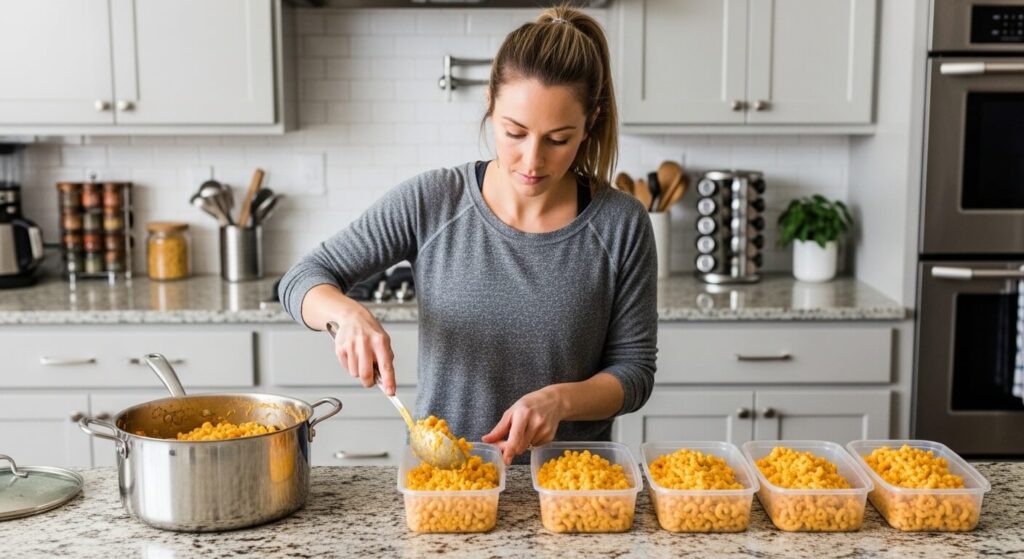
Yes, but proceed with caution. For optimal results, freeze before baking. For up to two months, securely wrap and freeze.
When it’s time to use:
- Thaw in the refrigerator overnight.
- Bake as normal.
Point: After freezing, the texture of cream-based sauces may somewhat change, but they still taste great.
Is Homemade Better Than Boxed?
Macaroni and cheese in a box is nostalgic and easy. But homemade prevails in:
- Flavor depth
- Creaminess
- Ingredient control
- Customization
You won’t often return once you’ve mastered the fundamentals.
Nutritional Overview of Mac and Cheese:
1. Mac and cheese is comfort food, so it’s rich in:
- Carbohydrates (from pasta)
- Fat (from cheese and butter)
- Protein (from dairy)
2. You can lighten it by:
- Using low-fat milk
- Reducing cheese slightly
- Adding vegetables
Balance is key.
Why Does Everyone Love Mac and Cheese?
Pasta covered in melted cheese has a cozy quality that appeals to all people. It’s easy, fulfilling, and flexible. Macaroni and cheese is always a favorite, whether it is served during weeknight meals, family dinners, or holidays.
Adults find it nostalgic, while children find it thrilling. It might be formal or informal. The great thing about this recipe is that it works for any occasion.
What is the best cheese for mac and cheese?
Sharp cheddar has a strong flavor and melts smoothly, making it the ideal base cheese.
How do you keep mac and cheese creamy?
To keep the sauce from getting gritty, cook on low heat and add cheese gradually.
How can I add more flavor to mac and cheese?
Add mustard powder, paprika, garlic, or mix different cheeses.
Is mac and cheese healthy?
Although it’s a delicious comfort food, you may make it lighter by using low-fat dairy or adding veggies.
Final Thoughts:
One of the most satisfying culinary talents you can acquire is making mac and cheese from scratch. You only need a few staple ingredients and a straightforward method to make a dinner that consistently feels decadent and cozy.
Keep in mind the following important guidelines:
- Make spaghetti al dente.
- Prepare a smooth roux.
- Slowly add the heated milk.
- Over low heat, slowly melt the cheese.
- Make a good season
The permutations are unlimited after you have mastered the basic formula. Mac & cheese may be tailored to your tastes, whether you want it simple on the stovetop or with a crunchy baked topping.