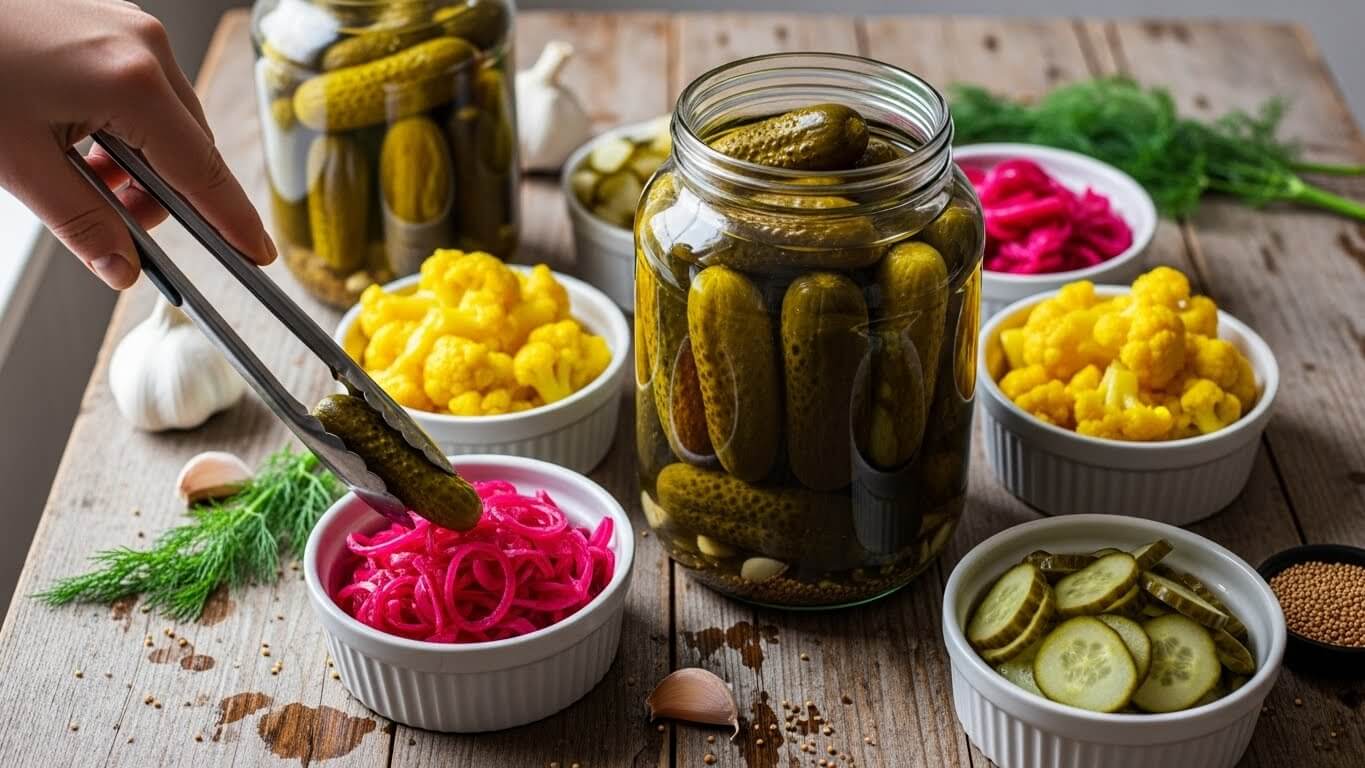
One of the dishes that has a mystical quality is pickles. You begin with a few basic ingredients and plain vegetables. A short while goes by. All of a sudden, any meal is awakened by crisp, tangy, and savory bits.
You’ve come to the right site if you’ve ever wondered how to make pickles at home. This guide guides you through every step in a cool, collected manner. Don’t worry. No fancy equipment. Just trustworthy, authentic kitchen advice.
I will converse with you in the same way that I would with a buddy who is interested in learning something new. By the time it’s all over, you’ll be self-assured enough to create your first jar and possibly your second.
What Are Pickles, Really?
Pickles are fruits or vegetables preserved in a sour or salty juice. Usually, this liquid is either salt water or vinegar. The primary objective is straightforward. Add flavor and preserve the food at the same time.
Pickles have been prepared by humans for thousands of years. Pickling extended the shelf life and improved the flavor of food long before refrigerators.
These days, we pickle for taste, enjoyment, and that wonderful crunch. Pickling is more than just preserving food. It involves transforming ordinary items into something unique.
Why Make Pickles at Home?
Pickles from the store are simple. However, pickles produced at home have a certain allure.
Here’s why a lot of people enjoy creating them at home:
- You are in charge of the spices, sugar, and salt.
- No odd preservatives
- Improved crispness and fresh flavor
- You can sample interesting flavors.
- Over time, it saves money.
Above all, opening a jar you made yourself is satisfying.
Types of Pickles You Can Make:
It’s helpful to understand the primary pickling styles before we begin. This will assist you in selecting items that suit your preferences.
1. Vinegar Pickles:
These are the most prevalent. They are fast and acute.
- Made with sugar, salt, water, and vinegar
- In a few hours or days, ready
- Vibrant and zesty taste
2. Salt-Fermented Pickles:
These require patience and salt water.
- Absence of vinegar
- Fermentation that occurs naturally
- Rich, nuanced flavor
- It takes a few days or weeks.
3. Refrigerator Pickles:
These are the simplest.
- kept in the refrigerator
- Unstable on the shelf
- Excellent for novices
Since vinegar pickles and refrigerator pickles are easy and safe for home chefs, we largely concentrate on them in this article.
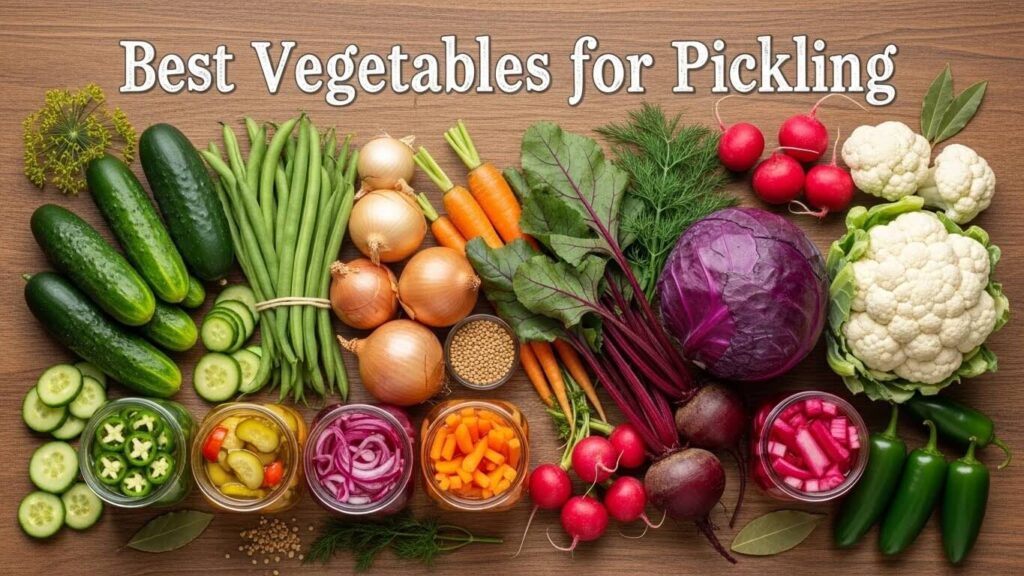
Best Vegetables for Pickling:
Pickling is not limited to cucumbers.
Here are popular choices:
- Cucumbers
- Green beans
- Onions
- Carrots
- Cabbage
- Cabbage
- Beets
- Jalapeños
- Cauliflower
- Radishes
Suggestion: Always choose vegetables that are firm and free of soft areas.
Basic Pickling Ingredients Explained:
To make things clear, let’s break down the primary components.
1. Vinegar:
Pickles get their sour flavor from this.
Excellent choices:
- White vinegar
- Vinegar made from apple cider
- Vinegar made from rice
Fact: The most popular and potent vinegar is white vinegar.
2. Water:
- Vinegar’s acrid flavor is mellowed by water.
Suggestion: If at all feasible, use filtered, pure water.
3. Salt:
Salt enhances taste and aids with preservation.
Use:
- Pickling salt
- Kosher salt
Warning: Steer clear of table salt. Pickles may become hazy as a result.
4. Sugar:
- The sour taste is counterbalanced by sugar.
- The amount can be changed to suit your preferences.
5. Spices:
Magic happens when spices are in the appropriate amount.
- Dill
- Peppercorns
- Mustard seeds
- Chili flakes
- Bay leaves
- Garlic
Simple Pickle Brine Recipe (Basic Formula):
- 1 cup vinegar
- 1 cup water
- 1 tablespoon salt
- 1 tablespoon sugar
This can be doubled or tripled as necessary. For the majority of quick pickles, this recipe works.
Tools You Need (Nothing Fancy):
No extra equipment is required.
- Clean glass jars with lid
- A knife
- A pot for heating brine
- Measuring cups and spoons
- A cutting board
That is it.
Step-by-Step: How to Make Easy Pickles:
Step 1: Wash and Prep the Vegetables
Give everything a thorough wash. Slice vegetables into:
- Cuts
- Spears
- Portions
Suggestion: To ensure that they pickle equally, try to maintain uniform sizes.
Step 2: Prepare the Jars:
- Use hot, soapy water to clean jars.
- Rinse well.
- You want them tidy, not fancy.
Step 3: Add Spices to the Jars:
Spices should be dropped straight into each jar.
Try this for a single jar:
- One clove of garlic
- One teaspoon of mustard seeds
- A few of peppercorns
- Dried or fresh dill
Feel free to make changes.
Step 4: Pack the Vegetables:
- Vegetables should be packed softly but firmly.
- Avoid crushing them.
Suggestion: At the top, leave a small gap.
Step 5: Make the Brine:
Within a pot:
- Add water, vinegar, sugar, and salt.
- Heat until the sugar and salt melt.
Suggestion: No need to boil vigorously.
Step 6: Pour Brine Over Vegetables:
- Pour hot brine into jars with caution.
- Ensure that the vegetables are completely coated.
Step 7: Cool and Store:
Jars should cool on the counter.
- Store pickles in the refrigerator.
- Wait a full day before consuming fast pickles.
Over time, the flavor gets better.
How Long Do Pickles Take to Be Ready?
This depends on the type.
| Pickle Type | Ready Time | Best Use |
| Quick pickles | 1 to 24 hours | Fast snacks |
| Refrigerator pickles | 2 to 3 days | Fresh crunch |
| Fermented pickles | 1 to 3 weeks | Deep flavor |
How to Keep Pickles Crunchy?
Soggy pickles are disliked by all.
Here are some expert crunch tips:
- Make use of fresh vegetables.
- Cucumbers should have their bloom ends trimmed.
- Add bay or grape leaves.
- Avoid overcooking the brine.
- After cooling, keep jars cold.
Care is the source of crunch.
Flavor Ideas to Try:
Enjoy yourself once you have mastered the fundamentals.
1. Classic Dill:
- Garlic
- Peppercorns
- Dill
2. Sweet Pickles:
- Extra sugar
- Cloves
- Onion slices
3. Spicy Pickles:
- Chili flakes
- Black pepper
- Jalapeños
4. Asian-Style:
- Rice vinegar
- Garlic
- Ginger
Common Pickling Mistakes to Avoid:
Simple things can go awry.
Be wary of these:
- Using leftover veggies
- Leaving out salt
- Applying table salt
- Not giving vegetables enough attention
- Eating too early and making snap judgments
Fact: Pickles require some time to mature.
Storage and Safety Tips:
Refrigerator Option:
- Keep in the refrigerator
- lasts for up to two months.
For vinegar pickles that aren’t canned:
- Keep cool at all times.
- Make sure your utensils are clean.
Suggestion: Throw it away if it has a slimy texture, mold, or an odd scent.
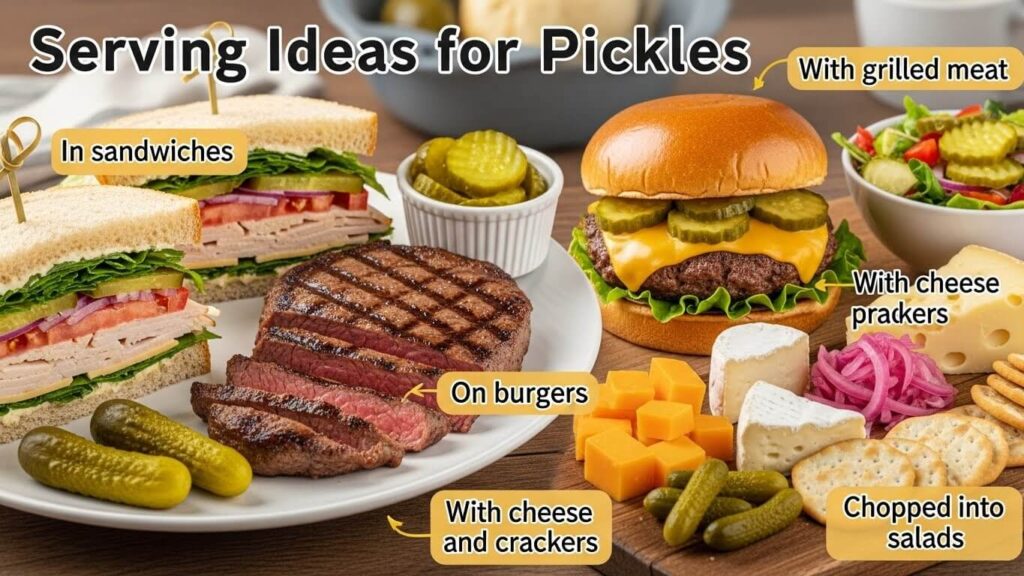
Serving Ideas for Pickles:
Pickles are not just a side.
Try them:
- In sandwiches
- With grilled meat
- On burgers
- With cheese and crackers
- Chopped into salads
They wake up with simple food.
A Small Personal Note:
When I prepared pickles for the first time, I added too much garlic and neglected the sugar. They were bold, incisive, and imperfect. Even so, I was proud to open that jar. After that, each batch improved. Pickling is a gentle approach to teach patience.
Can I make pickles without sugar?
Indeed, sugar is optional and depends on personal preference.
Do pickles need to be canned?
No, canning is not necessary for refrigerator pickles.
Why are my pickles cloudy?
Minerals in water or table salt frequently cause this.
Can I reuse pickle brine?
Its flavor will be diminished after one use.
Final Thoughts:
Pickles are easy, soothing, and satisfying to make at home. You don’t require sophisticated abilities or equipment. All you need is some curiosity, a simple brine, and fresh vegetables. Begin modestly. As you go, taste. Modify the tastes. Have fun with the process. Store-bought pickles might never feel the same if you start making your own.