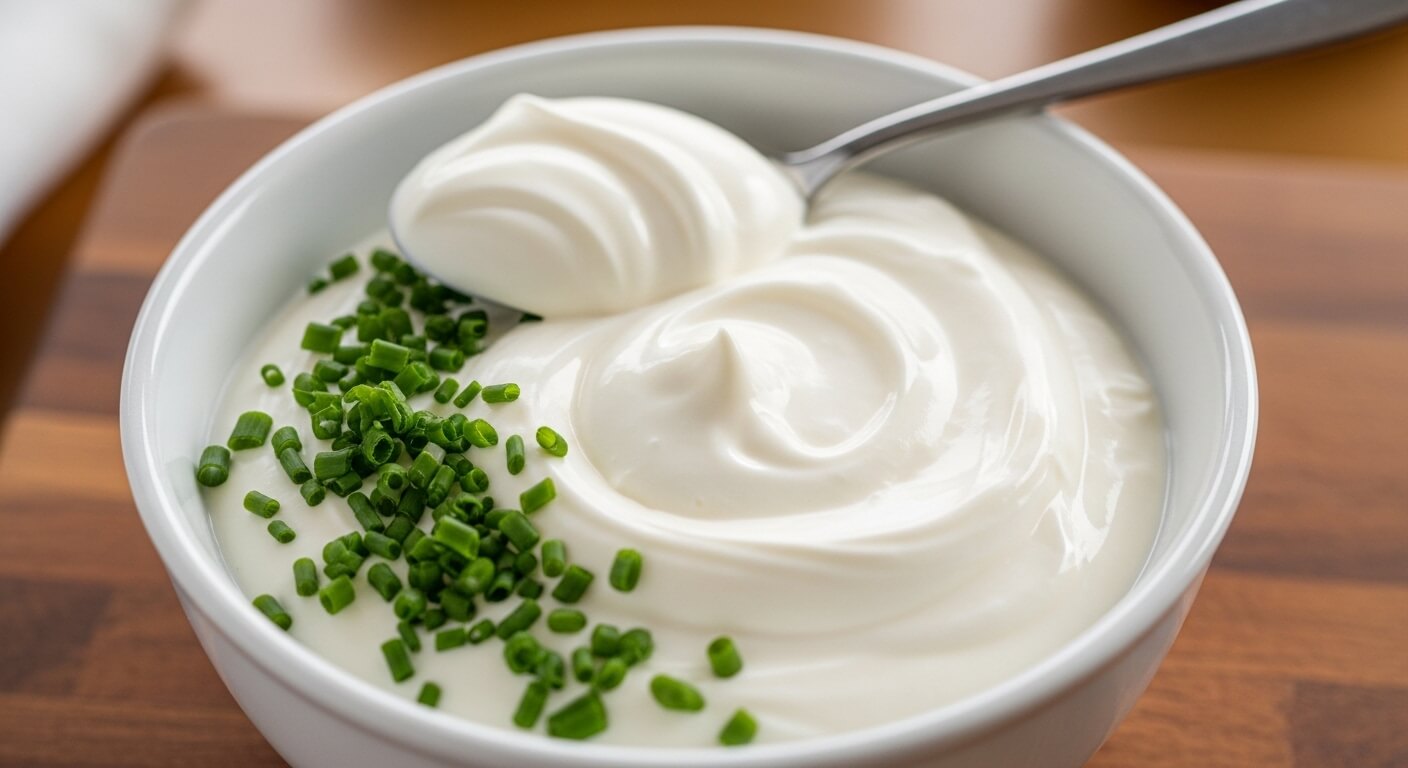
A creamy, tart ingredient, sour cream gives both savory and sweet recipes depth and richness. Sour cream is a versatile kitchen essential that may be used in baked potatoes, tacos, cakes, dips, and sauces. While picking up a container from the store is straightforward, many people are unaware of how easy it is to manufacture sour cream at home with a few basic ingredients.
Making your own sour cream gives you greater control over the texture, thickness, and flavor in addition to making it taste fresher and more natural. Furthermore, it is free of artificial additives and preservatives. Learning how to make sour cream at home is a rewarding skill, regardless of whether you like to cook from scratch or want to undertake a fun kitchen activity.
Even if you are a novice, you will learn all you need to know in this comprehensive book, including ingredients, detailed instructions, variants, storage suggestions, and troubleshooting.
What Is Sour Cream?
A dairy product called sour cream is created by fermenting cream with lactic acid bacteria, which are good bacteria. These microorganisms give sour cream its distinctively tangy flavor and thicken the cream.
Though it uses different bacterial cultures, the fermentation process is similar to that of making yogurt and produces a milder and fuller flavor.
Why Make Sour Cream at Home?
Making sour cream at home has several advantages:
1. Fresher Taste:
The pure, creamy flavor of homemade sour cream frequently outperforms that of store-bought varieties.
2. No Additives or Preservatives:
In many commercial products, thickeners and stabilizers are used. Sour cream prepared at home is natural and pure.
3. Custom Texture:
To suit your tastes, you can make it pourable, light, or thick.
4. Cost-Effective:
It may be less expensive to make sour cream at home, particularly if you already use cream frequently.
5. Simple Ingredients:
Just two basic ingredients are required: cream and a starter culture (such as yogurt or buttermilk).
Ingredients You Need:
A few simple items are all you need to produce sour cream at home:
- Fresh cream, or heavy cream, is the primary component.
- The bacterial culture is provided by buttermilk or plain yogurt.
- If necessary, adding vinegar or lemon juice can help with tanginess.
That’s all. No complex ingredients are needed.
Equipment Required:
In your kitchen, you probably already have everything you need:
- Clear a glass bowl or jar.
- Whisk or spoon
- Cloth or a loose lid
- Cups for measuring
Equipment must be kept clean to prevent undesirable microbes.
Methods to Make Sour Cream at Home:
Method 1: Traditional Sour Cream Using Buttermilk
This is the most trustworthy and genuine approach.
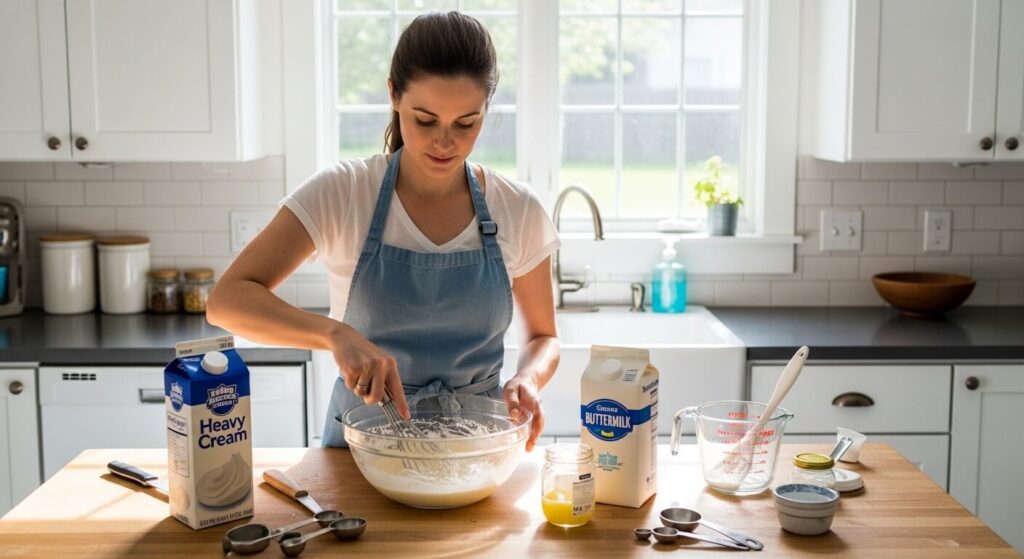
- Fill a clean basin or jar with 1 cup of heavy cream.
- Add two tablespoons of buttermilk and stir.
- Gently stir until everything is well blended.
- Leave the container at room temperature for 12 to 24 hours after lightly covering it with a lid or cloth.
- The mixture will get thicker and start to smell sour.
Suggestion: Before using, let it thicken in the refrigerator for at least four hours.
It’s time to make your own sour cream.
Method 2: Quick Sour Cream Using Lemon Juice or Vinegar
You may still prepare a quick version without buttermilk.
- Add one spoonful of vinegar or lemon juice to one cup of cream.
- Give it ten minutes to sit.
- Stir, then chill.
This variant works well in recipes but has less tang.
Method 3: Using Yogurt as a Starter
- Additionally, living microorganisms found in plain yogurt have the ability to ferment cream.
- Mix 2 tablespoons of plain yogurt with 1 cup cream.
- Mix well.
- For 12 to 24 hours, leave it covered and at room temperature.
- Before using, keep it chilled.
The flavor produced by this method is moderate and creamy.
How to Know Sour Cream Is Ready?
You’ll observe:
- Thickness of consistency
- A faintly tart scent
- Texture that is smooth
- A creamy look
Throw it away if it smells bad or has mold on it.
Tips for Perfect Homemade Sour Cream:
- Always use high-quality cream for the best results.
- Fermentation is aided by room temperature, which is about 20–25°C (68–77°F).
- For the bacteria to develop effectively, ventilation is necessary.
- Texture is stabilized and fermentation is stopped by cold temperatures.
- Stirring resolves the small separation of homemade sour cream.
How to Make Thick Sour Cream?
To make your sour cream extremely thick:
- Instead of using light cream, use heavy whipping cream.
- Once fermentation is complete, strain through cheesecloth.
- Keep in the fridge longer.
Flavor Variations:
Try some inventive sour cream variations after you’ve mastered the basics.
1. Sour Cream with Garlic:
Add the herbs for dips and minced garlic.
2. Herbal Sour Cream:
Add dill, parsley, or chives.
3. Hot Sour Cream:
Add spicy sauce or chili powder and blend.
4. Sweet Sour Cream:
For desserts, add vanilla or honey.
How to Use Sour Cream?
Making your own sour cream has several uses.
1. Savory Uses:
- Tacos and nachos
- Baked potatoes
- Dips and sauces
- Salad dressings
- Soups
- Pasta sauces
2. Sweet Uses:
- Cheesecake
- Cakes and muffins
- Pancakes and waffles
- Fruit toppings
- Frostings
It adds moisture, richness, and flavor to many recipes.
Storage and Shelf Life:
How long does homemade sour cream last?
Refrigerator: a week or two
Freezer: Not advised because it alters texture
Suggestion: Use a clean spoon at all times and keep in an airtight container.
Common Problems and Solutions:
1. The Sour Cream Didn’t Get Thick:
Potential reasons:
- Too cold in the room
- Inactive starter culture
- Too little fat in the cream
Solution: Use fresh ingredients or let it sit for a longer period of time.
2. Tastes Too Sour:
Fermented for too long. Next time, take less time to rest.
3. There was separation:
Typical error Before using, simply stir.
4. Negative Odor:
Throw it away right away. It might have been contaminated.
Can You Make Sour Cream Without Heavy Cream?
Indeed. You can make use of:
- Half and half
- Butter and full-fat milk
- Coconut cream (for an alternative to dairy)
Suggestion: But for the best texture, use heavy cream.
Health Benefits of Sour Cream:
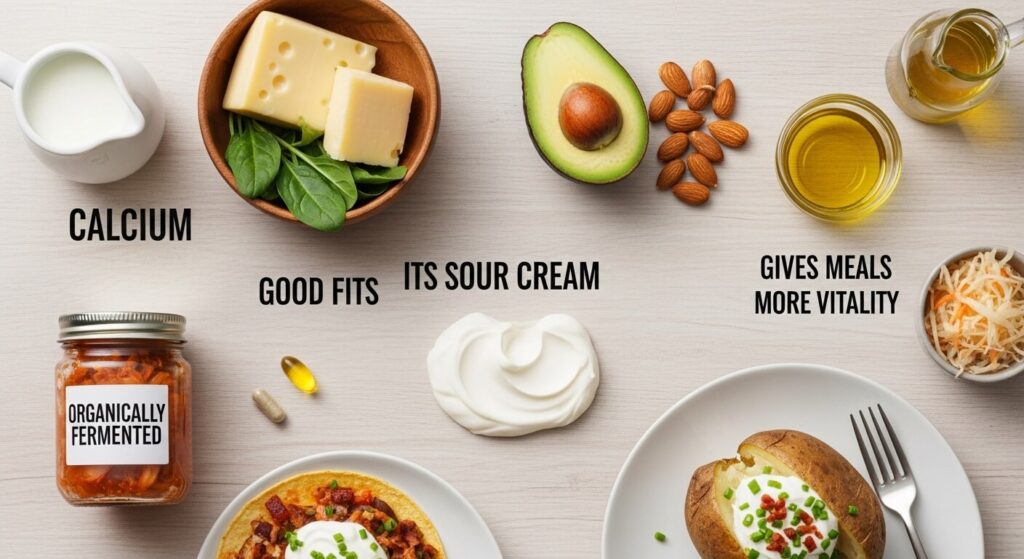
Despite its richness, sour cream has advantages:
- Has calcium in it
- supplies good fats
- promotes intestinal health (if organically fermented)
- Gives meals more vitality.
Suggestion: Due to its high calorie content, moderation is essential.
Homemade vs Store-Bought Sour Cream:
| Feature | Homemade | Store-Bought |
| Taste | Fresh and natural | Sometimes artificial |
| Ingredients | Simple | May include additives |
| Texture | Adjustable | Fixed |
| Cost | Often cheaper | Can be expensive |
| Nutrition | More natural | Processed |
Homemade sour cream often wins in quality.
Pro Tips for Best Results:
For a more flavorful product, use organic cream.
- Avoid overfermenting.
- Put the date on the label of your container.
- Maintain clean utensils.
- Before chilling, taste.
Is sour cream the same as yogurt?
No. They taste different and employ different microbes.
Can I use milk instead of cream?
Yes, but the texture will be thinner.
Is homemade sour cream safe?
Yes, provided that fresh food and hygienic equipment are used.
Can I use milk instead of cream?
Yes, but the texture will be thinner.
Final Thoughts:
Making your own sour cream is surprisingly simple and quite fulfilling. You can make a fresh, creamy product that tastes better than store-bought equivalents with just a few ingredients and little work.
You will love the rich flavor, velvety texture, and adaptability that homemade sour cream adds to your baking and cooking after you give it a try. This easy homemade essential can make ordinary meals into something extraordinary, whether you use it for savory foods, sweets, or dips.
Making sour cream at home allows you to enjoy authentic, carefully prepared meals in addition to saving money.