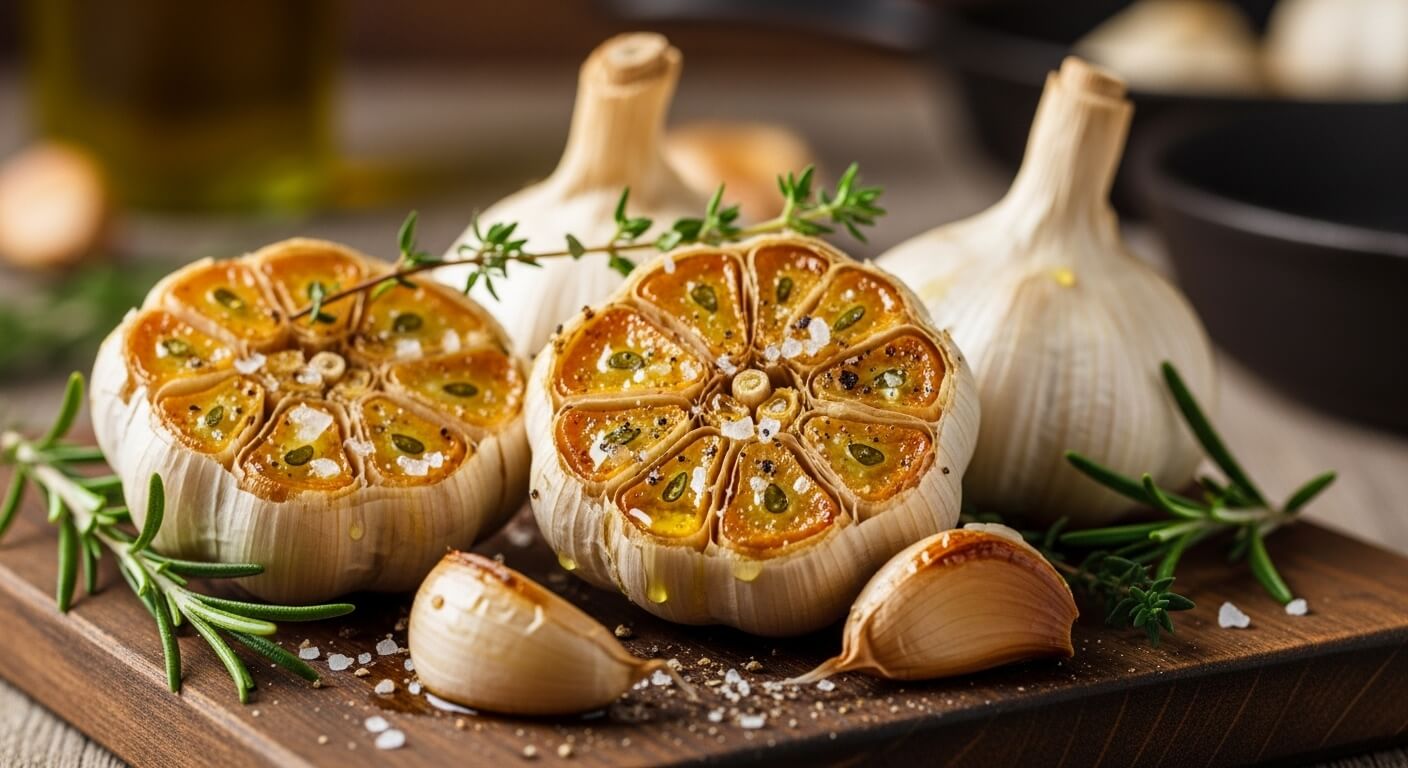
One of the most popular ingredients in kitchens worldwide is garlic. A dish can be suddenly transformed by its intense taste and strong scent. However, roasting garlic produces a mystical effect. The texture becomes buttery smooth, the flavor becomes sweet and nutty, and the sharp bite fades. Garlic that has been roasted is mellow, rich, and very adaptable.
This tutorial will teach you all you need to know if you’ve ever wondered how to properly roast garlic, from basic oven roasting to inventive variants, preservation advice, and delectable uses for roasted garlic in regular cooking.
Why Roast Garlic?
Garlic’s character is entirely altered by roasting. Roasting garlic brings out its inherent sweetness and richness, yet raw garlic may be overbearing and hot.
Benefits of Roasted Garlic:
- Caramelized, sweet, and mild flavor
- Texture that is spreadable and soft
- Simpler to digest than raw garlic
- Improves spreads, dips, sauces, and soups
- Adds exquisite flavor with little work
For those who enjoy the flavor of garlic but prefer something softer and less harsh, roasted garlic is ideal.
What You Need to Roast Garlic:
The simplicity of roasted garlic is one of its best features. No expensive equipment or ingredients are required.
1. Ingredients:
- Whole garlic bulbs (not peeled)
- Olive oil (extra virgin is best)
- Salt (optional)
- Black pepper or herbs (optional)
2. Equipment:
- Oven
- Aluminum foil or a small baking dish
- Knife
- Baking tray
That’s it. Simple ingredients, big flavor.
How to Roast Garlic in the Oven (Classic Method)?
This is the most widely used and dependable method for roasting garlic.
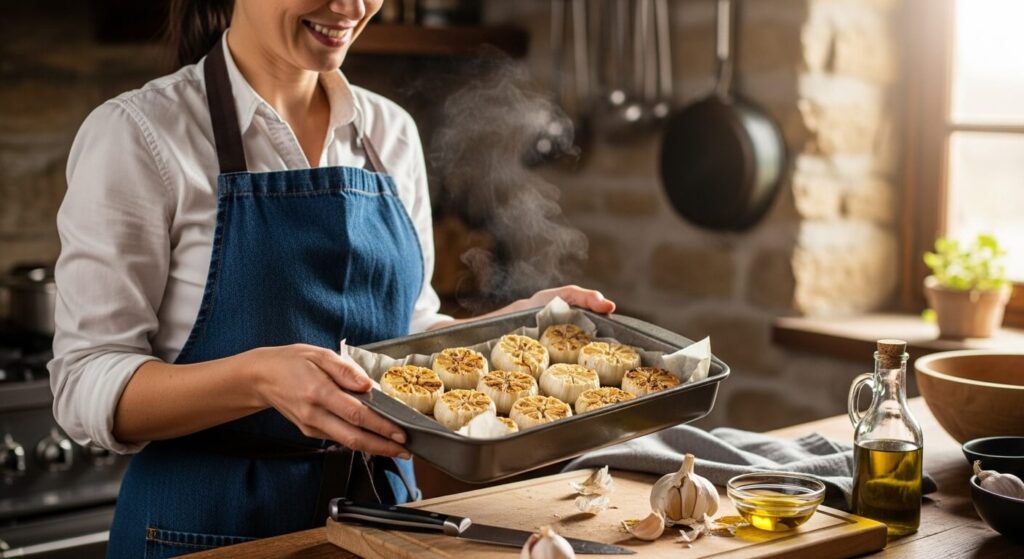
Step 1: Preheat the Oven
- Set the oven temperature to 400°F, or 200°C.
Point: The garlic may cook uniformly and caramelize at this temperature without burning.
Step 2: Prepare the Garlic
- Place a full garlic head on a cutting board.
- Cut off approximately ¼ inch from the top of the bulb using a sharp knife.
This helps the garlic cloves roast evenly by exposing their tops.
Step 3: Add Olive Oil
- On a piece of aluminum foil, place the garlic bulb.
- Make sure the oil gets into each clove by drizzling 1-2 teaspoons of olive oil over the exposed cloves.
Suggestion: Add some salt or herbs, such as rosemary or thyme, if desired.
Step 4: Wrap the Garlic
- To make a sealed packet, carefully wrap the foil around the garlic.
This helps the garlic soften during roasting by capturing steam.
Step 5: Roast
- Put the covered garlic straight onto a baking tray or oven rack.
- Roast for forty to forty-five minutes.
Step 6: Check for Doneness
Unwrap the foil carefully, being mindful of any steam. The cloves ought to be:
- Brown in gold
- Extremely soft
- Squeezed effortlessly from their skin
Suggestion: Roast for a further five to ten minutes if necessary.
How to Roast Garlic Without Foil?
Garlic is still simple to roast if you don’t want to use aluminum foil.
- Put the garlic bulb in a shallow dish that may be baked.
- Pour some olive oil over it.
- Put a lid on it or use another ovenproof dish.
- Roast for 45 minutes at 400°F (200°C).
This approach is more eco-friendly and equally effective.
How to Roast Individual Garlic Cloves?
A complete bulb is not always necessary.
Procedures:
- Peel each clove of garlic separately.
- Lightly toss them in olive oil.
- Arrange them on a baking sheet.
- Roast for 20 to 25 minutes at 375°F (190°C).
- Halfway through, stir once.
This is a terrific way to add roasted garlic straight to salads or veggies.
How to Know When Garlic Is Perfectly Roasted?
The ideal roasted garlic should be:
- Light golden to rich caramel hue
- Soft enough to use a fork to mash
- Fragrant, nutty, and sweet
Suggestion: The garlic is over-roasted if it is bitter or dark brown. The next time, lower the temperature or shorten the cooking time.
Common Mistakes to Avoid:
Garlic is easy to roast, but a few missteps can have a tremendous impact on the outcome.
1. Using Too High Heat:
Before the garlic softens, it may be burned by high heat. Keep the temperature between 375 and 400°F.
2. Not Enough Oil:
Olive oil aids in caramelization and keeps food from drying out. Don’t miss it.
3. Over-Roasting:
Garlic that has been burned tastes bitter. Check at the forty-minute mark.
4. Using Old Garlic:
The finest flavor comes from fresh garlic. Old garlic can have a bland or strong flavor.
Delicious Ways to Use Roasted Garlic:
Garlic that has been roasted is very adaptable. Here are a few common applications for it:
1. Spread on Bread:
Spread roasted garlic on toast, crackers, or warm bread after mashing it with butter or olive oil.
2. Add to Mashed Potatoes:
For a deep, cozy taste, add roasted garlic to mashed potatoes.
3. Pasta and Sauces:
Add roasted garlic to tomato, cream, or pasta sauces.
4. Soups and Stews:
For warmth and depth, blend roasted garlic into soups.
5. Dressings for Salads:
For a tasty dressing, mash with olive oil, lemon juice, and salt.
6. Pizza and Flatbreads:
For a gourmet twist, spread roasted garlic over pizza crust instead of sauce.
Health Benefits of Roasted Garlic:
Roasting garlic retains many of its well-known health advantages.
- Advantages of Nutrition
- promotes heart health
- Has antioxidants in it
- Increases immunity
- less harmful to the stomach than raw garlic
Roasting garlic makes it easier to digest and more palatable for many individuals, even if it slightly decreases certain compounds.
How to Store Roasted Garlic?
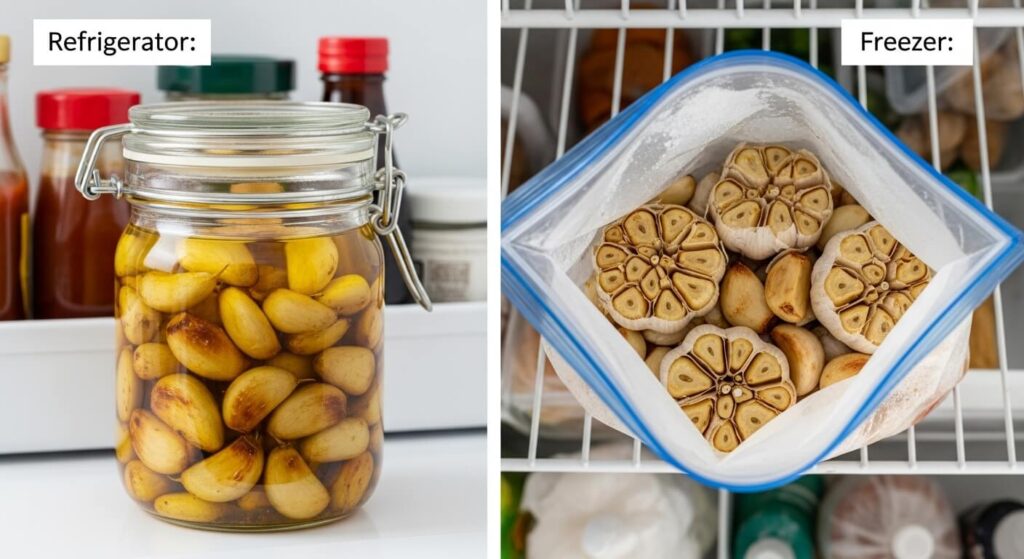
It’s crucial to store garlic correctly if you roast more than you need.
1. Refrigerator:
- Squeeze the cloves from the skins.
- Keep in an airtight container.
- Apply a layer of olive oil.
- Store in the refrigerator for up to a week.
2. Freezer:
- Roasted garlic should be mashed into a paste.
- Freeze in ice cube trays or little quantities.
- Use within three months.
Warning: Roasted garlic should never be kept at room temperature, especially when it’s in oil.
Flavor Variations to Try:
Try different flavors once you’ve mastered the fundamentals.
1. Roasted Garlic with Herbs:
Before roasting, add oregano, thyme, or rosemary.
2. Hot Roasted Garlic:
Add a pinch of paprika or chile flakes.
3. Roasted Garlic with Lemon:
After roasting, drizzle with lemon zest or a little lemon juice.
4. Roasted Garlic with Honey:
For a sweet-savory twist, lightly sprinkle with honey.
Can You Roast Garlic in Other Ways?
Indeed! There are alternatives, but the oven is the finest.
1. The Air Fryer:
- Cover the garlic with foil.
- For 20 to 25 minutes, air fry at 375°F (190°C).
2. Stovetop:
- Peel the cloves.
- Cook slowly over low heat in olive oil until golden.
3. Grill:
- Cover the entire bulb with foil.
- For forty minutes, grill over indirect heat.
Each technique works well but produces a somewhat distinct flavor.
Do I need to peel garlic before roasting?
No, for optimal flavor and texture, garlic is roasted whole with the peel on.
What does roasted garlic taste like?
Garlic that has been roasted has a soft, buttery texture and a mild, sweet, and nutty flavor.
Why did my roasted garlic turn bitter?
When garlic is overtoasted or cooked at an excessively high temperature, it becomes bitter.
Can I use roasted garlic instead of raw garlic?
Yes, if you want a softer flavor, roasted garlic can be used in place of raw garlic.
Final Thoughts:
One little culinary skill that can significantly improve your meal is learning how to roast garlic. You can make a rich, sweet, and adaptable ingredient that enhances nearly any dish with just a few ingredients and little work.
Roasted garlic should have a regular spot in your kitchen, whether you use it as a secret flavor enhancer, spread it on bread, or incorporate it into recipes. You won’t view garlic the same way after you try it. You’ll discover countless uses for the bulbs you roast today.