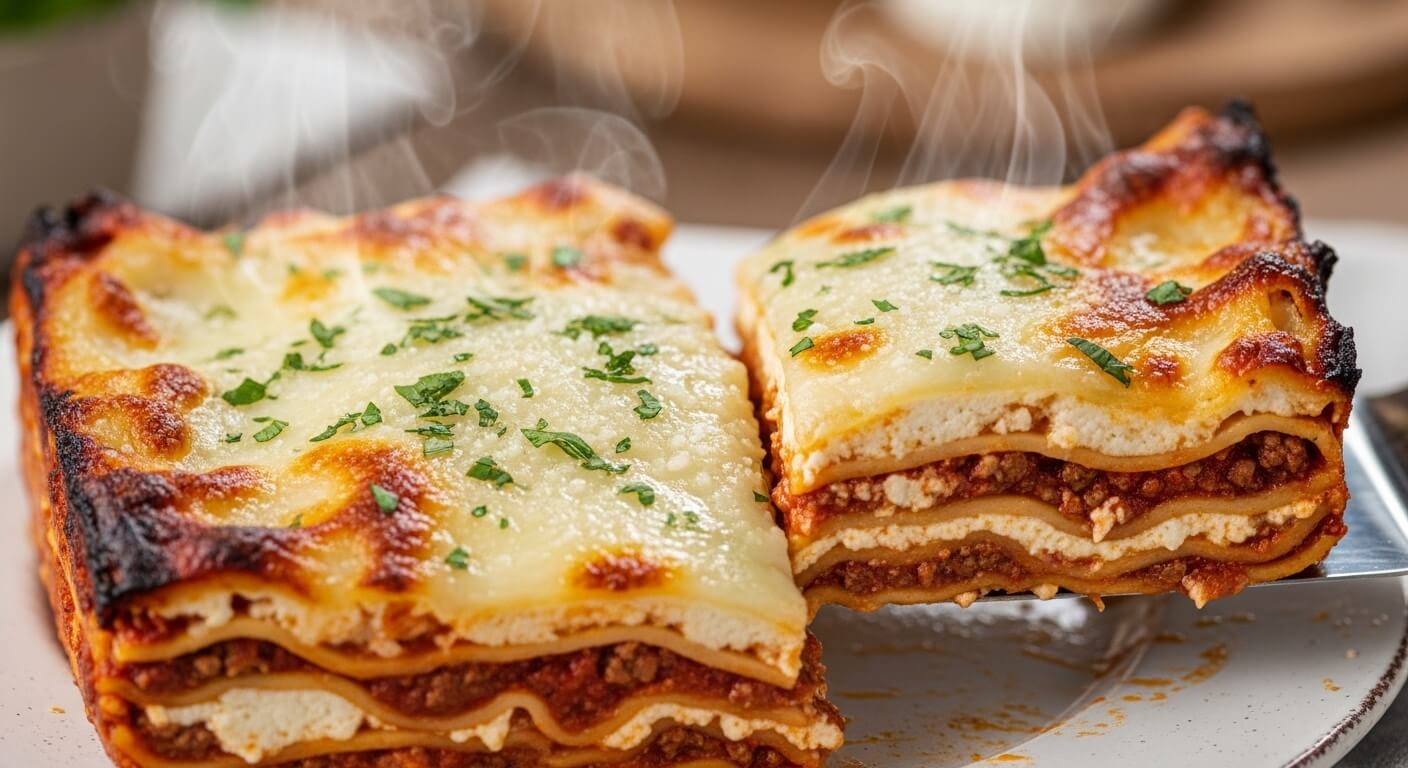
One of those timeless comfort dishes that never goes out of style is lasagna. A dish that is both decadent and filling is produced by the combination of rich pasta layers, savory meat sauce, creamy ricotta filling, and melting cheese. You’re in the right place if you’re searching for the ideal lasagna recipe that includes beef and ricotta. With the guidance of this detailed recipe, you can make a filling, tasty lasagna in your own kitchen that tastes just like it would at a real Italian restaurant.
This recipe is dependable, easy for beginners to follow, and incredibly tasty whether you’re preparing for a family dinner, a holiday get-together, or weekly meal prep.
Why Ricotta and Beef Make the Perfect Lasagna Combination?
The distinctive flavor and texture of traditional lasagna are derived from the mix of ground beef and ricotta cheese.
- Ground beef contributes flavorful taste, protein, and richness.
- The contrast of ricotta cheese is creamy and slightly sweet.
- When combined, they produce layers that are well-balanced and neither overly dry nor heavy.
- The enticing cheesy finish is created by the melted mozzarella and Parmesan on top.
Fact: Additionally, this mixture bakes well, so you get clean slices rather than a sloppy casserole.
Ingredients You’ll Need:
1. For the Meat Sauce:
- 1 pound (450g) ground beef
- 1 tablespoon olive oil
- 1 small onion, finely chopped
- 3 cloves garlic, minced
- 1 can (28 oz) crushed tomatoes
- 2 tablespoons tomato paste
- 1 teaspoon Italian seasoning
- ½ teaspoon dried oregano
- Salt and black pepper to taste
- 1 teaspoon sugar (optional, balances acidity)
- Fresh basil (optional)
2. For the Ricotta Filling:
- 15 oz (425g) ricotta cheese
- 1 large egg
- ½ cup grated Parmesan cheese
- 2 tablespoons chopped parsley
- Salt and pepper to taste
3. For the Layers:
- 9–12 lasagna noodles (regular or oven-ready)
- 2 cups shredded mozzarella cheese
- Extra Parmesan for topping
Step-by-Step Instructions:
1. Prepare the Meat Sauce:

- In a large skillet, heat the olive oil over medium heat to begin.
- Cook the chopped onion until it becomes transparent and tender.
- Add the garlic and simmer for one more minute, or until it becomes aromatic.
- Break up the ground beef with a spoon after adding it and cooking it until it turns brown.
Suggestion: If needed, drain extra fat.
- Add crushed tomatoes, tomato paste, oregano, Italian seasoning, salt, pepper, and sugar and mix until combined.
- After lowering the heat, simmer the sauce for 20 to 30 minutes.
- This process thickens the sauce and adds a rich taste.
2. Cook the Lasagna Noodles:
- Cook the traditional noodles as directed on the package until they are al dente.
- To keep them from sticking, drain and place them flat on parchment paper.
Suggestion: You can omit this step if you’re using noodles that are ready to bake.
3. Make the Ricotta Mixture:
- Ricotta cheese, egg, Parmesan, parsley, salt, and pepper should all be combined in a medium-sized bowl.
Suggestion: Blend till creamy and smooth. As the ricotta bakes, the egg helps it firm and form stable layers.
4. Assemble the Lasagna:
Set the oven temperature to 375°F, or 190°C.
Coat the bottom of a baking dish with a thin layer of beef sauce. Next, adhere to this layering sequence:
- Noodles for lasagna
- Ricotta blend
- Sauce made from meat
- Cheese with mozzarella
Suggestion: Continue layering until all of the ingredients have been used, then top with sauce and mozzarella. For a golden crust, add more Parmesan.
5. Bake the Lasagna:
- To avoid sticking, carefully grease the underside of the foil before covering the dish with it.
- Cover and bake for 25 minutes, then take off the foil and continue baking for another 20 to 25 minutes, or until golden brown and bubbling.
6. Rest Before Serving:
- This is an important step.
- After baking, let the lasagna rest for ten to fifteen minutes.
This makes it easier to cut neat slices by allowing the layers to solidify.
Tips for the Best Lasagna:
- For the creamiest texture, choose ricotta made with whole milk.
- Give the sauce enough time to develop flavor by simmering it.
- Balance is vital, so avoid overloading layers.
- Before slicing, let the lasagna rest.
- Flavor is greatly enhanced by fresh herbs.
Variations You Can Try:
1. Lasagna with beef and sausage:
For added taste, combine Italian sausage with ground beef.
2. Lasagna with spinach and ricotta:
For added nutrition, stir cooked spinach into the ricotta mixture.
3. Lasagna with Low Carbs:
Slices of eggplant or zucchini can be used in place of pasta.
4. Lasagna with White Sauce:
For a creamy variation, use béchamel instead of tomato sauce.
Make-Ahead and Storage Tips:
Lasagna is ideal for pre-preparation.
1. Refrigerate:
Before baking, put the lasagna together, cover it tightly, and keep it in the refrigerator for up to 24 hours.
2. Freezing:
Lasagne can be frozen for up to three months, either baked or unbaked.
3. Heating up again:
You can microwave individual portions or reheat in the oven at 350°F (175°C) until well heated.
What to Serve with Lasagna:
Lasagna pairs well with lighter sides that balance its richness:
- Garlic bread
- Caesar salad
- Roasted vegetables
- Antipasto platter
- Tomato basil soup
Common Mistakes to Avoid:
- Excessive usage of sauce results in mushy lasagna.
- Not taking a break
- Noodles that are overcooked
- The ricotta mixture is not seasoned.
- Cutting right away after baking
Why Is Homemade Lasagna Worth It?
Homemade lasagna is superior to store-bought. When you create it yourself:
- Ingredients and quality are under your control.
- It tastes fresher and richer.
- You can customize portions.
- It’s more economical.
- It feels cozy and unique.
Even though making lasagna from scratch takes some time, the result is an incredibly fulfilling dinner that unites people.
Nutritional Overview (Approximate):
Per serving:
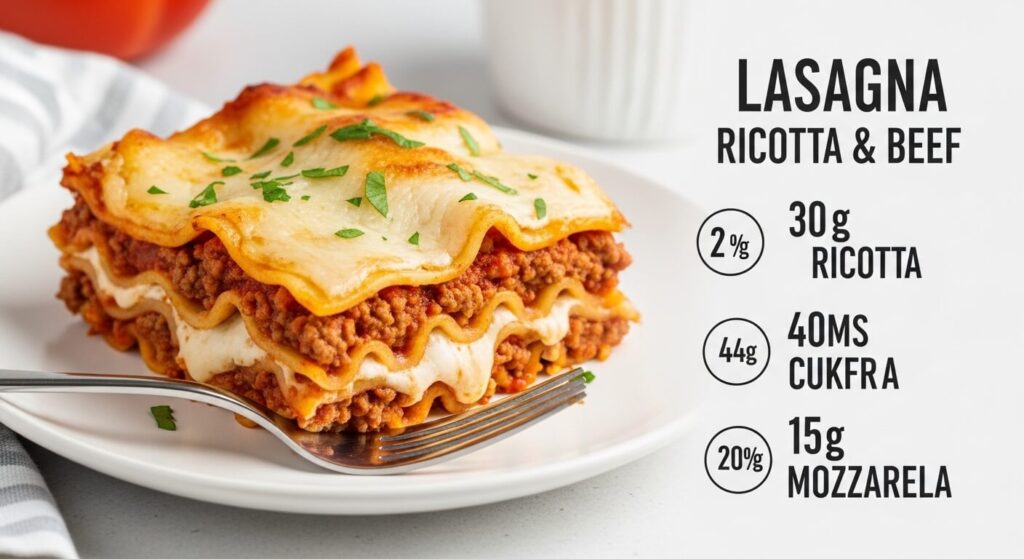
- Protein: 25–30g
- Calories: 450–550
- Carbohydrates: 35–45g
- Fat: 20–25g
Values vary depending on ingredients used.
Can I use cottage cheese instead of ricotta?
Cottage cheese can be used in its place, although it will have a slightly different texture.
Can I make lasagna without eggs?
Yes, however the layer of ricotta might be softer. You can omit the egg or use a tiny bit of cream.
Why is my lasagna watery?
Excessive wetness can result from using too much sauce or from not allowing it to settle after baking.
How long does lasagna last in the fridge?
Up to 4 days when stored in an airtight container.
Final Thoughts:
Every bite of this classic lasagna recipe with beef and ricotta brings comfort, flavor, and contentment. This meal rapidly becomes a family favorite because of its rich meat sauce, creamy ricotta filling, and gooey melted cheese.
Learning how to make lasagna is a valuable skill, regardless of whether you’re cooking for a special occasion or just because you’re yearning a filling, home-cooked meal. After you give it a try, you’ll find yourself returning time and time again, and your family will appreciate it.