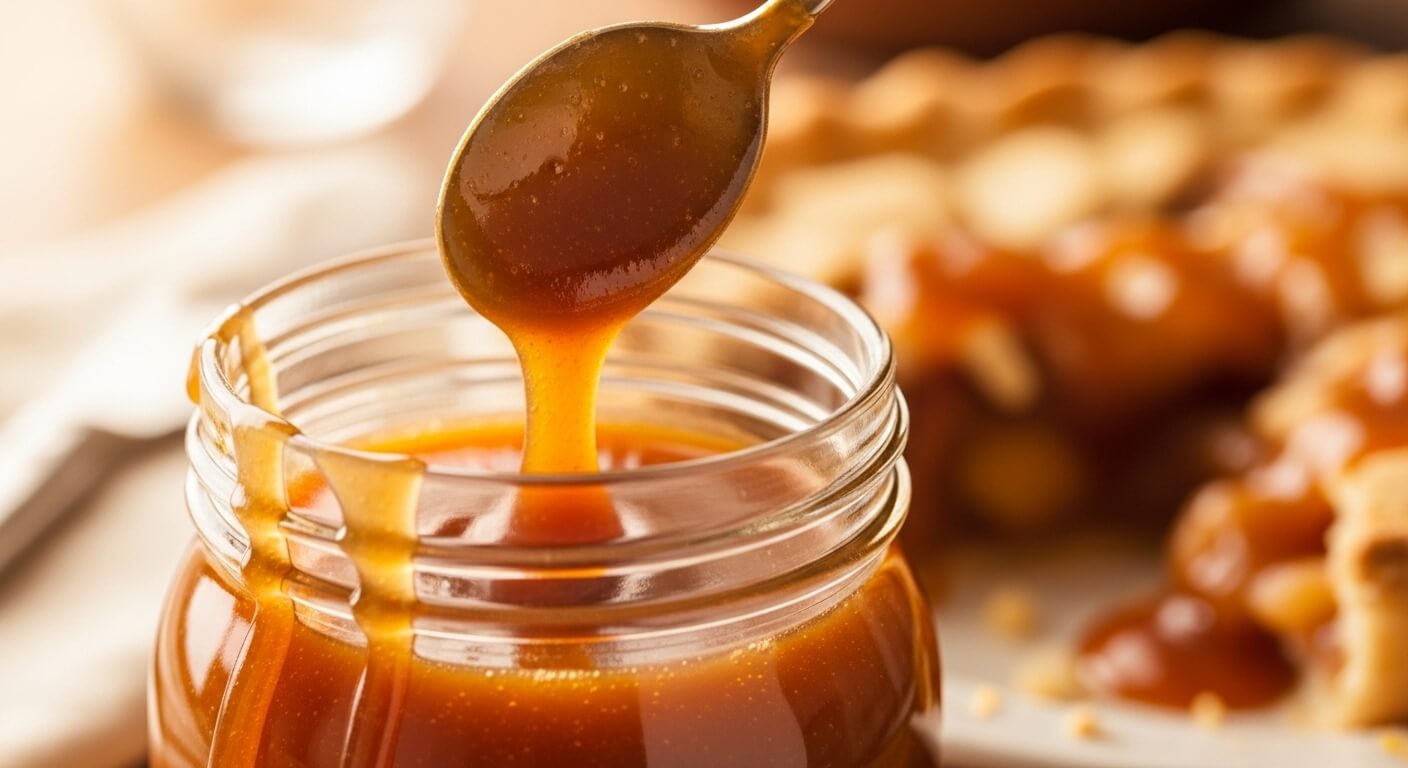
How to Make Caramel Sauce at Home
One of those amazing kitchen concoctions that feels opulent yet is surprisingly easy to produce is caramel sauce. Sugar, butter, and cream are the only basic ingredients needed to make a smooth, golden sauce that elevates dishes from average to spectacular. Store-bought caramel sauce rarely compares to the rich flavor of homemade caramel sauce, whether you’re using it to dip fruit, drizzle it over ice cream, swirl it into coffee, or pour it on cakes.
Everything you need to know about creating caramel sauce from home, including methods, success strategies, variants, storage guidelines, and troubleshooting, is covered in this extensive book. By the end, you will feel comfortable making caramel even if you have never done it before.
What Is Caramel Sauce?
After boiling sugar until it melts and turns golden brown, butter and cream are added to produce a smooth, pourable consistency that is used to make caramel sauce. By chemically altering the sugar, the heating process creates rich, nuanced flavors with hints of butterscotch and toffee.
Making caramel can be done in two ways:
Dry Method: In a pan without water, sugar is melted on its own.
Wet Method: Before heating, sugar is dissolved in water.
Although both approaches are effective, novices frequently find the wet method simpler because of its lower danger of burning.
Ingredients You Need:
The simplicity of caramel sauce is what makes it so beautiful. Just a few materials are required:
Granulated sugar gives the base of caramel flavor.
Butter provides smoothness and creaminess
A heavy cream produced a creamy texture.
Optional salt balances sweetness and improves flavor.
Vanilla extract (optional) enhances richness and fragrance
There is a discernible difference in flavor when premium butter and cream are used.
Equipment Required for Caramel Sauce:
A few necessities assist guarantee success even though you don’t require fancy tools:
- A saucepan with a heavy bottom (to avoid scorching)
- Heat-resistant spatula or wooden spoon
- Cups for measuring
- Whisky
- Heat-resistant storage container
Suggestion: Because it lets you keep an eye on the caramel’s color while it boils, a light-colored saucepan is extremely useful.
Step-by-Step: How to Make Caramel Sauce
Step 1: Heat the Sugar
- In a saucepan, place the sugar over medium heat.
- To moisten the sugar while using the wet method, add a tiny bit of water.
- Slowly let the sugar melt and dissolve.
- To evenly spread heat, gently swirl the pan rather than stirring constantly.
Point: The sugar will turn from clear to pale gold to amber as it melts.
Step 2: Add the Butter
- Carefully add the butter once the sugar has turned a deep golden color.
- It is typical for the mixture to bubble vigorously.
Suggestion: Continue to stir until the butter melts completely and blends with the caramel.
Step 3: Pour in the Cream
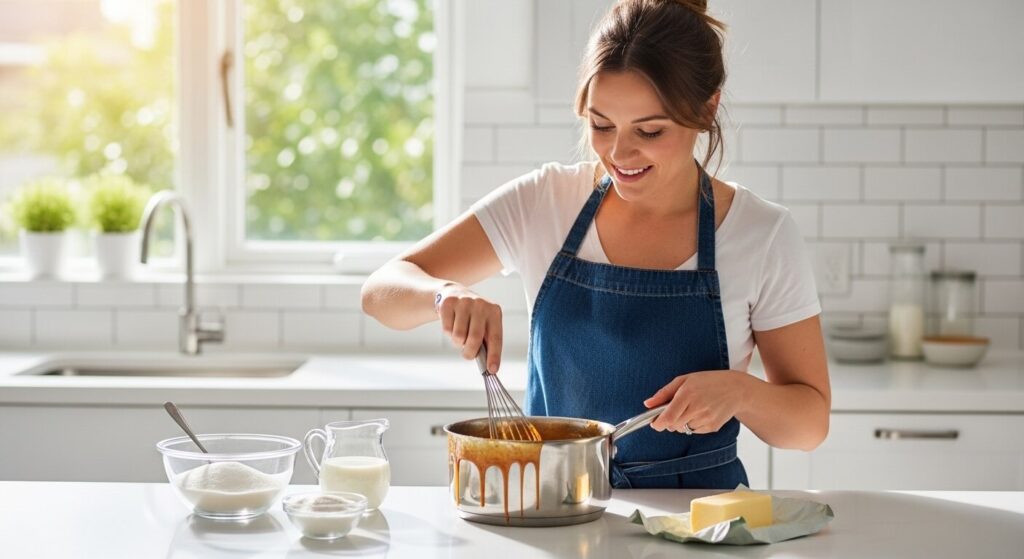
- Add heavy cream gradually while stirring.
- When the temperature changes, the caramel will bubble once more.
Suggestion: Keep swirling until the sauce is uniformly smooth.
Step 4: Add Flavor (Optional)
- Take off the heat and, if you’d like, mix in some salt or vanilla essence.
Step 5: Cool the Sauce
- Before putting the caramel sauce in a jar or other container, let it cool.
As it cools, it will become thicker.
Tips for Perfect Caramel Sauce:
Although making caramel may seem daunting, following pointers help:
1. Pay Close Attention to the Color:
- In a matter of seconds, caramel may turn from flawless to scorched. Instead of dark brown, aim for a rich amber hue.
2. Utilize Ingredients at Room Temperature:
- The caramel may seize or solidify if the butter or cream is cold.
3. Don’t Stir Too Much:
- Sugar crystals may appear if you stir too much. The best swirling is gentle.
4. Have patience:
- Sugar can burn if the heat is turned up too quickly. The ideal heat is medium.
5. Take Care When Using Hot Sugar:
- Burns can result from the intense heat of melted sugar. Add ingredients gradually at all times.
Common Mistakes and How to Fix Them:
1. Caramel that has burned:
It is burnt if it has a harsh fragrance or is very black. You will have to start over since burnt caramel cannot be repaired.
2. Texture with Grain:
Usually, as sugar crystals develop, this occurs. Sometimes it can be fixed by gently warming it with a little water.
3. Too Thick of Sauce:
Stir in a tiny bit of heated cream until the consistency you want is achieved.
4. Too Thin a Sauce:
Reduce and thicken by simmering a bit longer.
Variations of Caramel Sauce:
You can experiment with various versions once you have mastered basic caramel.
1. Salted Caramel Sauce:
For a really well-liked sweet-salty flavor balance, add sea salt.
2. Caramel Vanilla:
For added warmth and fragrance, stir in vanilla extract.
3. Caramel Bourbon:
For desserts, a little bourbon adds a sophisticated flavor.
4. Caramel Without Dairy:
For a vegan alternative, use plant-based butter and coconut cream.
5. Caramel with Spice:
For a taste of the season, add cardamom, nutmeg, or cinnamon.
How to Use Caramel Sauce:
There are so many uses for homemade caramel sauce. Here are several delectable ways to savor it:
- Drizzle over ice cream
- Pour on pancakes or waffles
- Add to coffee or lattes
- Use as cake filling
- Dip apple slices or bananas
- Top cheesecakes and brownies
- Swirl into oatmeal or yogurt
- Mix into milkshakes
Suggestion: Caramel can also be used as a foundation for other delicacies, such as caramel icing or mousse.
Storage and Shelf Life:
When handled correctly, homemade caramel sauce keeps well.
Refrigerator: In an airtight container, up to two weeks
Freezer: Three months in the freezer
Reheating: Use a burner or microwave to gently reheat.
Suggestion: Just reheat and whisk the sauce if it thickens too much in the refrigerator.
Why Homemade Caramel Is Better Than Store-Bought?
Although store-bought caramel is more convenient, making your own caramel has a number of benefits:
- Fresher taste
- No preservatives
- Adjustable sweetness
- Custom flavors
- Better texture
- Higher quality ingredients
The deeper taste of handmade caramel surprises a lot of people.
The Science Behind Caramelization:
When sugar is heated to high temperatures, it breaks down and produces new flavor compounds, a process known as caramelization.
This process creates:
- Nutty flavors
- Toffee notes
- Golden color
- Complex aroma
Understanding this transformation helps you control the final result.
Beginner-Friendly Quick Caramel Method:
If you prefer a simpler method:
- First, melt the butter.
- Put in some brown sugar.
- Mix until it dissolves.
- Add the cream.
- Simmer until it becomes thick.
This shortcut reduces the chance of burning while still producing a wonderful sauce.
How do I know when caramel is ready?
Look for a strong scent and a deep amber color.
What sugar works best?
The most dependable granulated sugar is white.
Is caramel sauce hard to make?
No. With patience and attention, beginners can make it successfully.
Why did my caramel harden?
Hardening may result from cold components causing temperature shock.
Final Thoughts:
A satisfying culinary skill that leads to endless dessert options is learning how to make caramel sauce. At first, it could appear daunting, but with experience, it becomes easy. Patience, color awareness, and cautious handling of heated materials are crucial.
You might never use store-bought caramel again after tasting homemade caramel, which is buttery, smooth, and well-balanced.