The Ultimate Spring Roll Recipe: Crispy, Fresh, and Full of Flavor
The spring roll is one of the few foods that can successfully transition from a light, healthful snack to a deep-fried treat. Alongside fresh, translucent versions brimming with colorful veggies and herbs, merchants selling these golden, crispy logs of joy can be seen on the busy streets of Hanoi, Saigon, Bangkok, or Shanghai.
In actuality, though, spring rolls are more than just “restaurant food.” Making them at home is surprisingly simple, and once you get the hang of it, you’ll never look at the frozen aisle the same way.
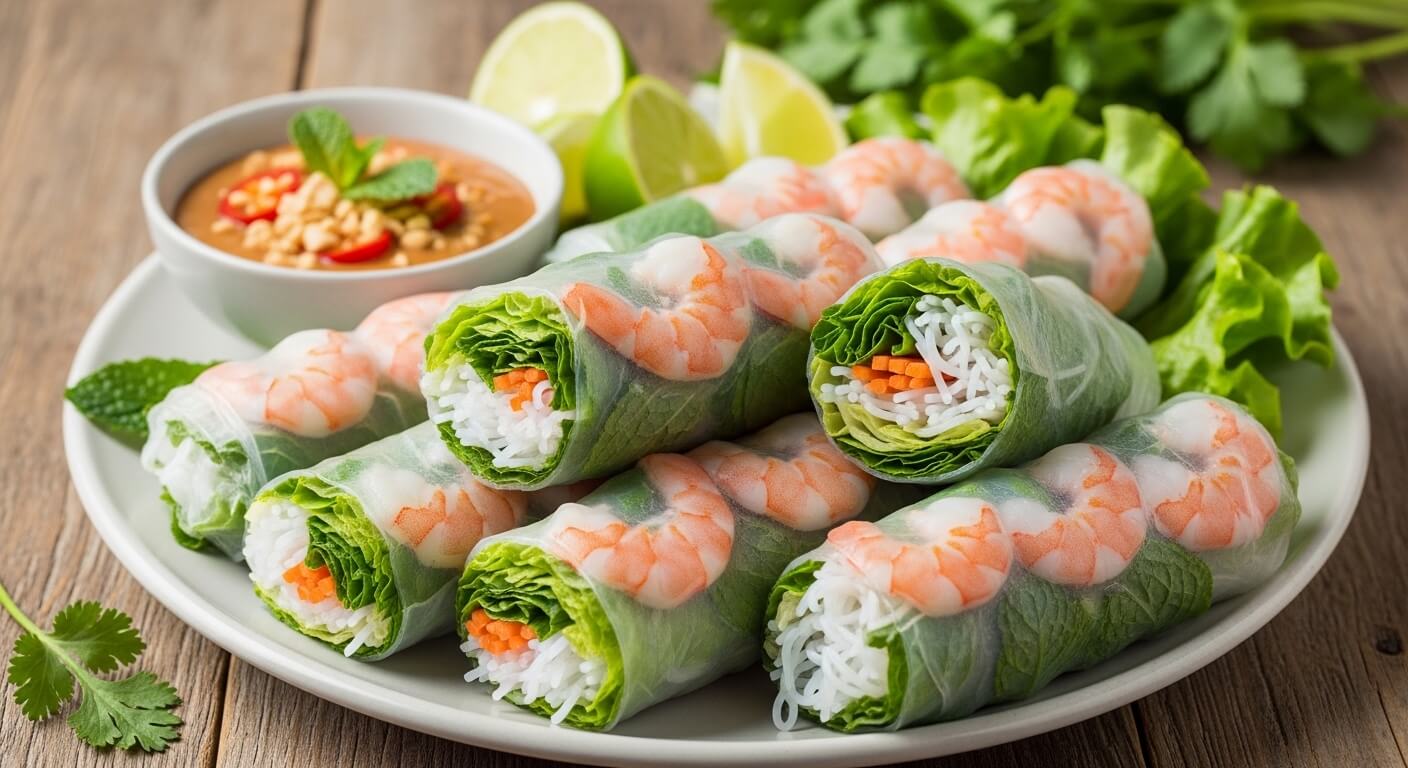
The Fresh Spring Roll (Gỏi Cuện), which is cool, healthful, and requires no cooking, and the Fried Spring Roll (Egg Roll Style), which is hot, crispy, and intensely delicious, are the two different kinds that we will examine in this book.
The Great Debate – Fresh vs. Fried Spring Roll Recipe
Which one ought to be made? It is totally dependent on how you are feeling.
Summer rolls, often known as fresh spring rolls, are uncooked. The wrapper is served cold with a dipping sauce after being rehydrated in water and stuffed with raw vegetables, herbs, shrimp, or pork. They are ideal for a 90-degree day because they are light and hydrating.
Fried Spring Rolls: These are tightly packed and cooked in hot oil until they are golden and bubbling. They are warm, crispy, and incredibly pleasant. They are the pinnacle of comfort food.
I advise learning both. Despite using comparable substances, their experiences are entirely different.
The Essential Ingredients (The Pantry List):
You need to find a few special ingredients in order to prepare real spring rolls at home. The majority can be found in an Asian market or the international section of a typical grocery shop.
1. For the Fresh Rolls (Makes 8-10 rolls):
- Ten round rice paper wrappers (Banh Trang): Choose the rough-textured ones rather than the silky tapioca ones that are used for desserts.
- 8 oz of thinly sliced roast pork or cooked shrimp, cut in half lengthwise.
- One bundle of cooked, drained, and cooled rice vermicelli noodles.
- For structure, use lettuce (butter or red leaf).
- Thai basil, cilantro (coriander), and mint are examples of fresh herbs. Don’t overlook these.
- Vegetables: bean sprouts, carrots, and cucumbers.
2. For the Fried Spring Rolls (Makes 15-20 rolls):
- Rice paper is not the same as spring roll pastry wrappers. They are located in the frozen department and are thin, square wrappers made of wheat. (They become chewy rather than crispy when fried on rice paper).
Filling:
- One pound of ground pork (or beef or chicken).
- One cup of finely shredded cabbage.
- One cup of shredded carrot.
- 1/2 cup coarsely chopped rehydrated Black Fungus (Wood Ear Mushroom).
- Two minced green onions (scallions).
- One minced garlic clove.
- Sesame oil, sugar, white pepper, oyster sauce, and soy sauce are the seasonings.
- Use neutral oil (vegetable, peanut, or canola) for frying.
- Slurry (your “glue”) is a mixture of 1 tablespoon flour and 2 tablespoons water.
3. The Dipping Sauces (Crucial!):
A spring roll’s dip determines how good it is.
- Peanut Hoisin Sauce for Fresh Rolls: Combine 1/2 cup hoisin, 1/2 cup peanut butter, 1/2 cup water, and crushed peanuts.
- Nuoc Cham, a Vietnamese dipping sauce made with fish sauce, lime juice, sugar, garlic, chile, and water, is recommended for fried rolls.
Step-by-Step Method to Make Spring Rolls:
Step 1. Get the Filling Ready:
- In a pan, heat the oil over medium heat.
- Add the minced ginger and garlic and sauté until fragrant, a few seconds.
- Add all the vegetables, including the capsicum, carrots, and cabbage.
- For two to three minutes, stir-fry over high heat.
- For a better texture, keep the veggies somewhat crispy.
- Add salt, black pepper, vinegar, and soy sauce. Mix thoroughly.
- Add the noodles now, if using them, and mix everything together.
- After turning off the heat, allow the mixture to cool fully.
Step 2. Get the wrappers ready:
- Store-bought spring roll sheets should be thawed as directed.
- To prevent them from drying out, keep them covered with a moist cloth.
Step 3. Rolling the Spring Rolls:
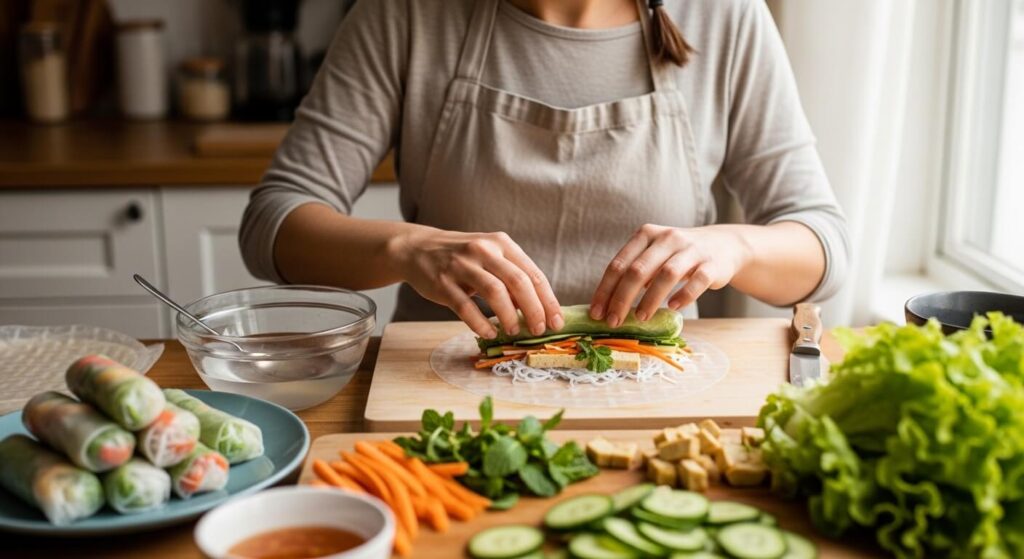
- Arrange one sheet in the shape of a diamond on a level surface.
- Put one or two tablespoons of filler close to a corner.
- Fold both edges inward after folding the lower corner over the filling.
- Tightly roll in the direction of the upper corner.
- After applying flour paste to the edge, properly seal.
- For every roll, repeat.
Step 4. Frying the Spring Rolls:
- In a deep pan, heat the oil over medium heat.
- Gently dip the rolls into the heated oil.
- Fry until crispy and golden brown.
- To absorb extra oil, remove and place on paper towels.
How to Make the Best Spring Rolls
- Avoid packing the rolls too full or they can shatter while frying.
- To guarantee even cooking, maintain a medium flame.
- Always carefully seal edges to keep oil out.
- To prevent soggy wrappers, let the filling cool before rolling.
- Don’t pack the pan too full; instead, fry in batches.
Healthy Alternative (Air Fry or Bake):
If you’d prefer a healthier version:
Air Fryer:
- Apply a mild oil brush roll.
- For ten to twelve minutes, air fried at 180°C.
The oven
- Set the oven temperature to 200°C.
- Bake until golden, 20 to 25 minutes.
These techniques use less oil and produce a crispy texture.
Variations of Spring Rolls:
1. Spring rolls made with chicken
For additional protein and taste, add cooked shredded chicken to the vegetable filling.
2. Spring Rolls with Beef
For a deeper flavor, use minced beef that has been cooked with spices.
3. Spring Rolls with Shrimp
For a seafood twist, add little shrimp pieces.
4. Spring Rolls with Cheese
For a creamy interior, incorporate cheese into the filling.
5. Delicious Spring Rolls
For a dessert variation, fill with chocolate, banana, or cream.
Serving Suggestions:
Spring rolls taste best when served hot and crispy. You can pair them with:
- Sweet chili sauce
- Garlic sauce
- Soy sauce
- Ketchup
You can also serve them with fried rice or noodles for a complete meal.
Storage Tips:
- Uncooked rolls can be kept in the freezer for up to a month.
- Cooked rolls: Store in the refrigerator and reheat in an air fryer or oven.
- Steer clear of the microwave as it softens them.
Common Mistakes to Avoid:
- Using wet filling results in mushy rolls.
- Low-heat frying (absorbs more oil)
- Inadequate sealing (rolls open during frying)
- Vegetables that are overcooked lose their crispness.
Why Are Homemade Spring Rolls Better?
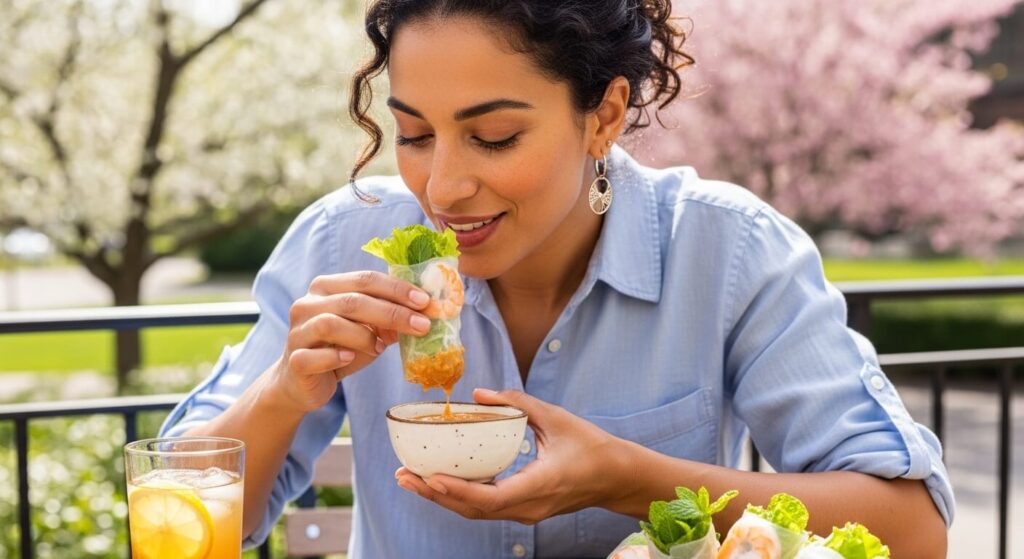
You have complete control over the ingredients and quality when you make spring rolls at home. Preservatives can be avoided, healthier options can be selected, and seasonings can be adjusted.
They can be tailored to your preferences and are reasonably priced.
1. Can I make spring rolls ahead of time?
Yes, you can prepare and freeze them. Fry when needed.
2. Why are my spring rolls not crispy?
Oil temperature may be too low, or rolls were not sealed properly.
3. Can I use any wrapper?
Spring roll wrappers work best, but you can also use thin pastry sheets.
4. Are spring rolls healthy?
They can be healthy if baked or air-fried and filled with vegetables.
Conclusion:
You can cook spring rolls at home with ease; they’re a straightforward but tasty dish. They are ideal for any occasion because of their tasty filling and crunchy texture. This recipe allows you to be creative, whether you like traditional veggie rolls or wish to try various fillings.
You’ll discover how simple and satisfying it is to make them yourself after you give it a try. Enjoy a restaurant-quality snack in your own kitchen by serving them hot with your preferred sauce.