How to Make Poached Eggs
Although poached eggs have a luxurious appearance, once you know how to make them, they’re among the easiest and healthiest methods to cook eggs. The approach is the problem, not the substance. You’re not the only one who has attempted egg poaching and ended up with a nasty cloud in the water. The good news is that you can prepare restaurant-quality poached eggs in your own home with a few simple steps.
In order to consistently achieve runny yolks and soft whites, this article breaks things down in a useful manner.
What Are Poached Eggs?
An egg cooked in simmering water without its shell is called a poached egg. It’s lighter and healthier than fried eggs because it doesn’t contain any butter or oil. The texture is silky and delicate as the white settles gently around the yolk.
A perfect poached egg has:
- Firm but tender whites
- A warm, runny yolk
- A smooth, round shape
It’s commonly served on toast, salads, grain bowls, and breakfast plates.
Why Do People Love Poached Eggs?
There’s a reason why poached eggs are so popular. They are quick, adaptable, and nourishing. They integrate nicely with healthy eating plans because they are cooked without added fat. They also go well with practically anything.
Some common uses include:
- Eggs Benedict
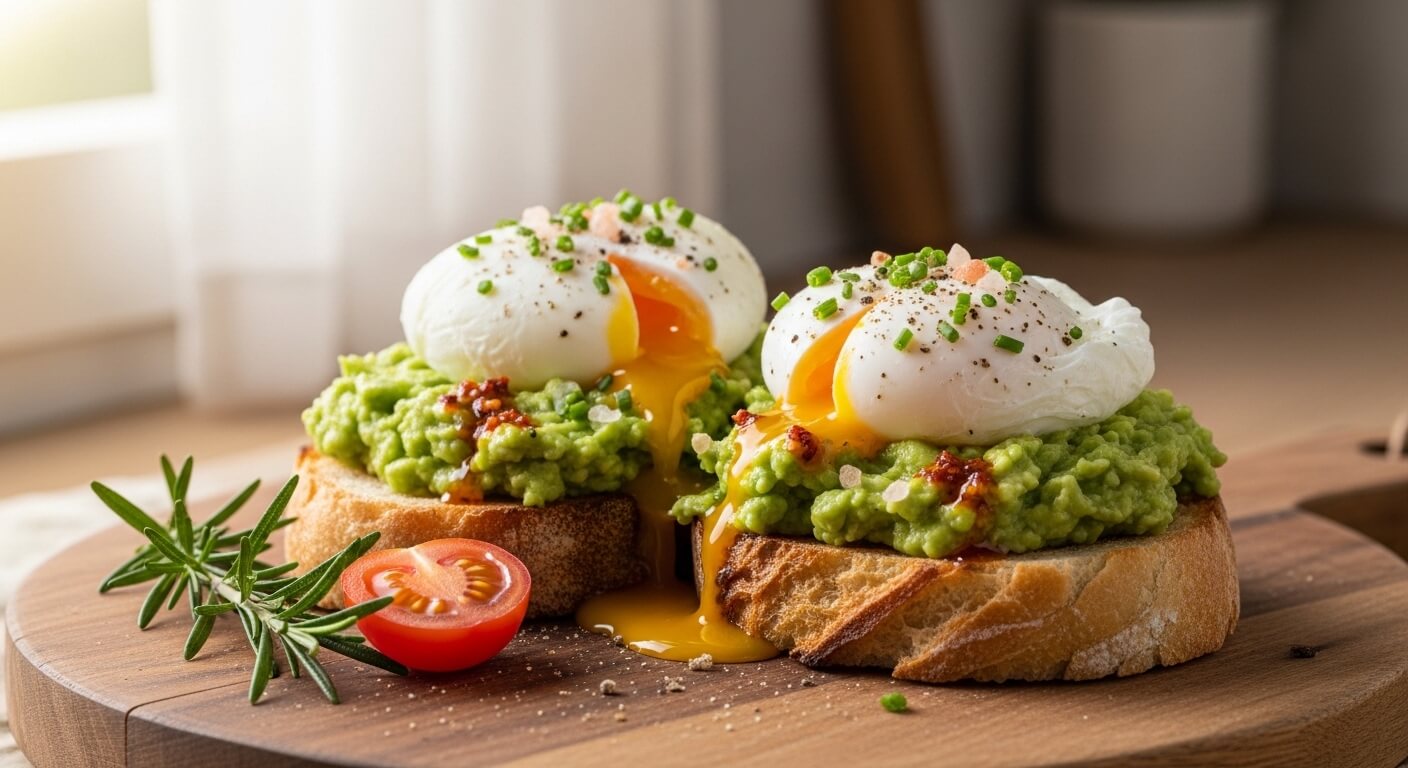
- Avocado toast
- Breakfast bowls
- Ramen topping
- Salads and grain dishes
Once you master the technique, you’ll find yourself using them in many meals.
Ingredients You Need:
The beauty of poached eggs is that you only need one main ingredient.
Basic:
- Fresh eggs
- Water
Optional but helpful:
- 1–2 teaspoons vinegar (white or apple cider)
- Salt (for serving)
- Pepper (for serving)
Vinegar is not mandatory, but it helps the egg whites set faster, especially if your eggs are not super fresh.
Tools You’ll Need:
You don’t need fancy equipment, but a few kitchen basics make things easier:
- A deep saucepan or pot
- A spoon or slotted spoon
- A small bowl or ramekin
- A timer (optional but helpful)
Step-by-Step Method for Perfect Poached Eggs:
1. Use Fresh Eggs:
- In water, fresh eggs maintain their shape better.
- Older eggs are more likely to disperse, which makes poaching more difficult.
Select the freshest eggs you have whenever feasible.
2. Heat the Water Properly:
Pour three to four inches of water into a saucepan and heat it until it is slightly below boiling.
The water should be:
- Warm
- Steaming
- Not bubbling violently, but gently moving
The egg will shatter if the water is boiling too vigorously. The egg won’t set correctly if it’s too cold.
3. Add Vinegar (Optional):
- A tiny bit of vinegar should be added to the water.
- The egg whites stiffen up more quickly as a result.
You won’t taste it in the finished product, so don’t worry.
4. First, crack the egg into a bowl:
- Crack the egg into a small basin rather than straight into the water.
- This helps the egg slip in smoothly and without shattering and offers you more control.
5. Make a Mild Whirlpool:
- To create a gentle whirlpool, stir the water in a circular motion with a spoon.
- By doing this, the egg white is better able to wrap around the yolk and take on a more organized shape.
You can omit this step if you want a more rustic look, but the outcome might not be as neat.
6. Insert the egg into the water:

- Gently transfer the egg from the bowl to the whirlpool’s center.
- In order to preserve the yolk, do it softly.
The white will quickly begin to wrap around itself.
7. Cook for three to four minutes:
Don’t disturb the egg while it cooks. The yolk’s desired runnyness determines the timing:
- Three minutes later, the yolk is quite runny.
- 4 minutes → a little firmer yolk
- Five minutes later, the yolk is more set.
Don’t stir while this is going on.
8. Carefully remove:
- To remove the egg from the water, use a slotted spoon.
- Before putting it on a platter, let any extra water drain.
- For a cleaner appearance, lightly trim any uneven edges if necessary.
9. Serve right away:
- The finest way to enjoy poached eggs is fresh.
- Serve them immediately over veggies, bread, or your preferred dish.
For additional taste, add salt and pepper.
Common Mistakes to Avoid:
Egg poaching is easy, but the outcome might be ruined by a few minor errors.
1. Too much boiling water:
As a result, the egg shatters and becomes messy.
2. Not eating fresh eggs:
In water, older eggs spread out excessively.
3. Not starting with a bowl:
Uneven forms are frequently the result of cracking immediately into water.
4. Cooking too much:
A runny yolk might become hard with just one more minute.
5. Too many eggs at once:
For optimal control, poach one or two eggs at a time.
Tips for Better Poached Eggs:
These pointers are quite helpful if you desire consistent results:
- Keep the water simmering gently instead of rolling boil, imagine tiny bubbles.
- Make use of a slotted spoon, it aids in lifting the egg without shattering it.
- For beginners, try vinegar, it facilitates a more forgiving process.
- Practice your timing. Adhere to your ideal time after you’ve found it.
Variations and Serving Ideas:
Eggs that have been poached are quite adaptable. Here are a few well-liked ways to savor them:
1. Toast with avocado:
Place a poached egg and smashed avocado on top of the toasted bread. For added taste, add lemon or chili flakes.
2. Benedict eggs:
English muffins, ham, poached eggs, and hollandaise sauce make up this traditional dish.
3. Bowls for breakfast:
For a substantial meal, serve poached eggs over rice, quinoa, or roasted vegetables.
4. Topping for Salads:
Any salad gains depth and protein from a poached egg.
5. Upgrade to Ramen:
For a creamy, delicious boost, top ramen with a poached egg.
Health Benefits of Poached Eggs:
Poached eggs are often considered one of the healthiest ways to eat eggs.
They are:
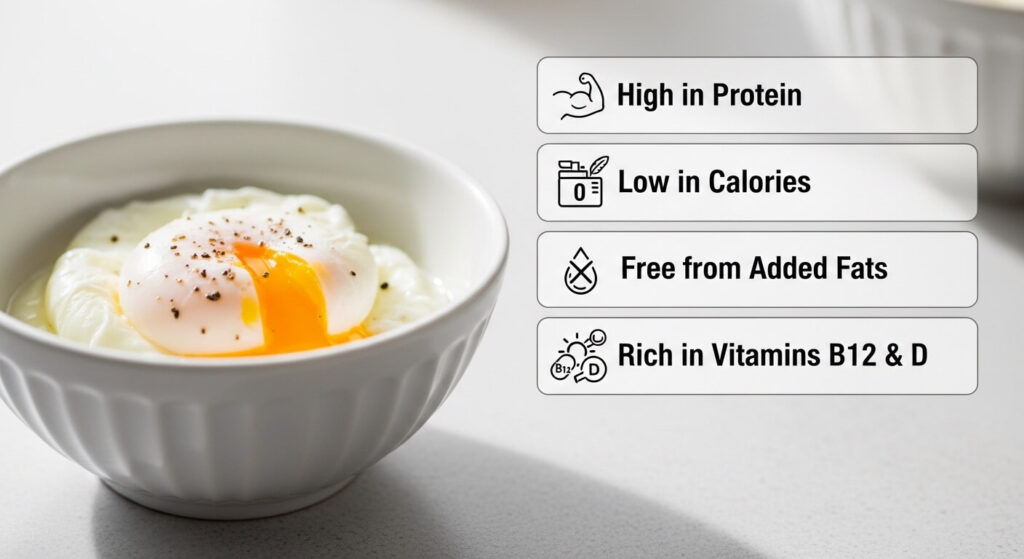
- Low in calories
- Free from added fats
- High in protein
- Rich in vitamins like B12 and D
Because they are not fried, they are lighter while still being filling and nutritious.
Troubleshooting Guide:
Here’s how to resolve typical problems if things don’t go as planned:
1. Too much egg spreading:
Add vinegar or use eggs that are fresher.
2. Yolk fractures:
When you slide the egg into the water, use more caution.
3. White appears disorganized:
Before cooking, drain any surplus watery white or use the whirlpool method.
4. Egg adheres to the spoon:
It can be helpful to lightly grease the spoon.
How long should I poach an egg?
Usually 3 to 4 minutes for a runny yolk.
Do I need vinegar to poach eggs?
No, but it helps the egg whites set faster.
Why do my poached eggs fall apart?
Old eggs or boiling water can cause them to break.
What type of eggs work best?
Fresh eggs give the best shape and texture.
Can I poach more than one egg at a time?
Yes, but it’s easier to control one or two at a time.
How do I know when a poached egg is done?
The whites are set and the yolk still feels soft.
Final Thoughts:
Poached eggs may appear difficult at first, but they become one of the simplest breakfast techniques to learn once you grasp the water temperature, timing, and technique. Patience and practice are crucial.
You’ll be able to consistently prepare silky, soft poached eggs that taste and look like they came from a café after a few tries.