How to Make Sticky Rice – Complete Guide
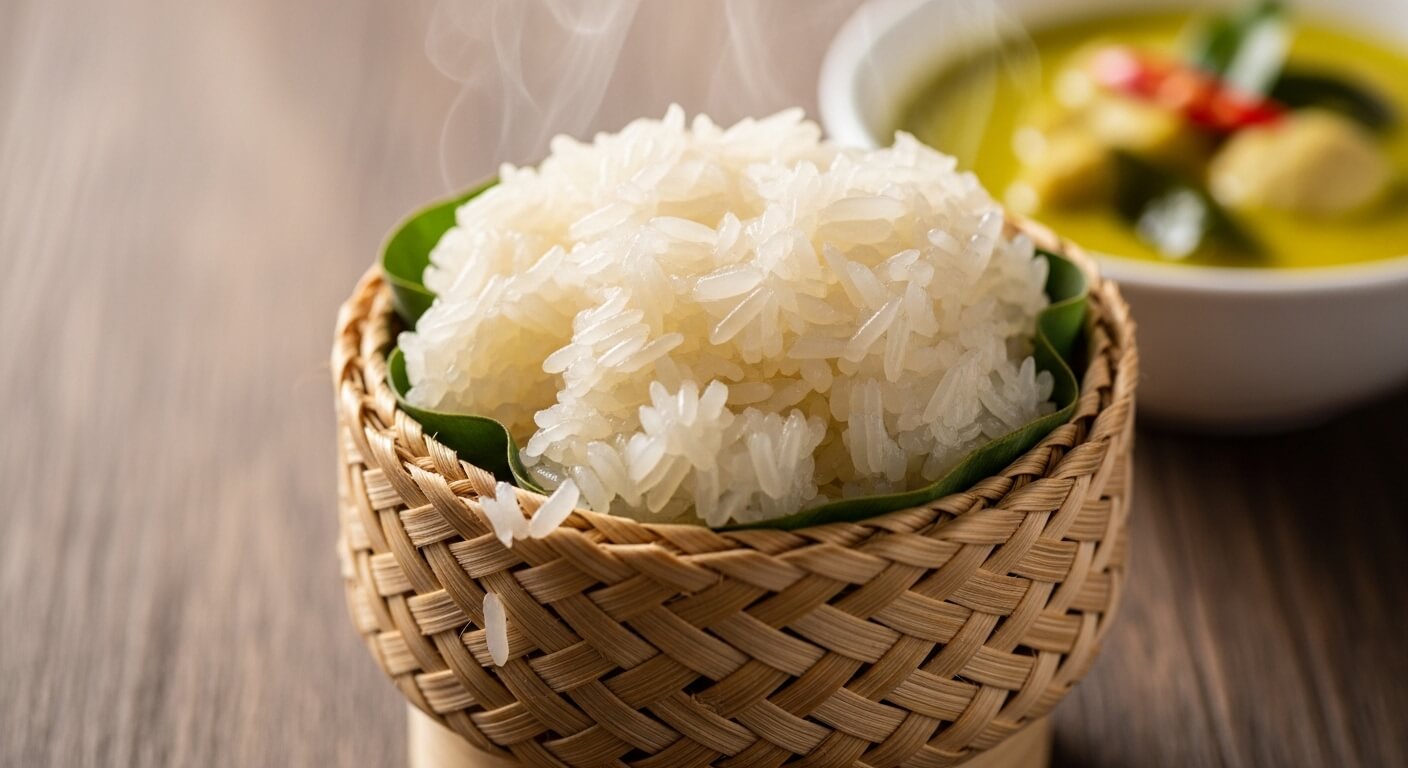
In many Asian cuisines, sticky rice—also referred to as glutinous rice or sweet rice—is a cozy and adaptable food. It doesn’t contain gluten, despite its name. Its distinct starch content, which causes the grains to stick together when cooked, gives it a “sticky” texture. Because of this, it has a chewy, soft, and slightly glossy texture that complements both savory and sweet recipes.
You already know how unique this rice can be if you’ve ever eaten sushi rice, Thai mango sticky rice, or traditional Asian dumplings. Fortunately, sticky rice is easy to make at home if you know how to do it.
What Is Sticky Rice?
Because of its high amylopectin content, sticky rice gets extremely sticky when cooked. Sticky rice naturally clumps together, in contrast to long-grain rice, which remains airy and distinct.
It is frequently utilized in:
- Mango sticky rice and other Thai treats
- Savory Thai and Lao cuisine
- Japanese sushi, a comparable short-grain type
- Dumplings and dim sum
- Snacks with rice balls
Why Proper Technique Matters?
Making sticky rice is easy, but it needs to be done correctly. It won’t cook well if you simply boil it like ordinary rice. The main distinctions are:
- Before cooking, soak
- Steaming as opposed to boiling (in conventional procedures)
- Choosing the right kind of rice
These procedures guarantee that the rice is cooked uniformly, softly, and chewily.
Ingredients You Need:
Just two basic elements are required:
- Two cups of glutinous rice, or sticky rice
- Water (for heating and soaking)
Depending on the recipe, optional:
- (For sweet variations) coconut milk
- Sugar or salt (for seasoning)
Step-by-Step Method (Traditional Steamed Sticky Rice):
1. Rinse the Rice:
- After putting the sticky rice in a bowl, give it a quick rinse with cold water.
- Drain the murky water by gently swirling it with your hand.
- Until the water is less hazy, repeat two or three times.
This enhances texture and gets rid of extra starch.
2. Let the rice soak:
- One of the most crucial processes is soaking.
- Soak the rice in a large amount of water for at least four hours, preferably overnight.
- Soaking guarantees uniform cooking and softens the grains.
3. Empty the Rice:
- After soaking, thoroughly drain the rice.
- To allow extra water to drop out, leave it for a few minutes.
4. Get the steamer ready:
- Use a metal or bamboo steamer that has been lined with clean muslin or cheesecloth.
- Rice cannot fall through the openings as a result.
5. Let the rice steam:
- In the steamer, evenly distribute the soaked rice.
- For 20 to 30 minutes, steam over medium heat.
- To guarantee consistent steaming, gently turn the rice halfway through cooking.
6. Verify Doneness:
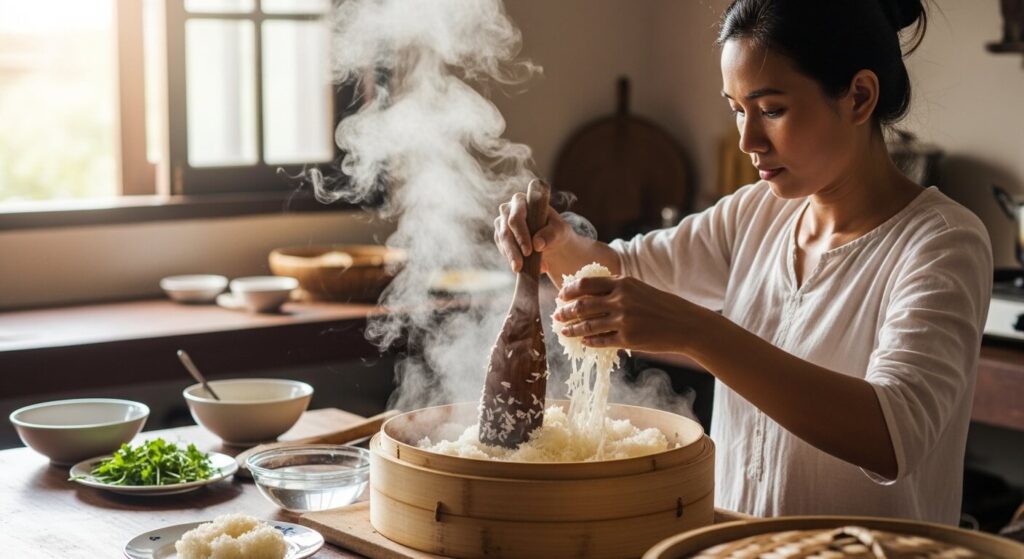
- When the rice turns shiny, sticky, and soft, it is ready.
- When squeezed, it ought to come together with ease.
Steam for a few more minutes if it feels tough.
7. Present Warm:
- The best way to serve sticky rice is warm.
- Depending on the food, you can serve it in a bowl or form it into tiny balls.
Alternative Method (Boiled Sticky Rice):
You can utilize this easier way if you don’t have a steamer.
Procedure:
- Give the rice four to six hours to soak.
- Empty the water.
- Put rice and fresh water in a pot.
- Cook over low heat until the water is absorbed.
- For ten minutes, let it steam on its own heat while covered.
Although this approach is simpler, the texture is a little less conventional.
Tips for Perfect Sticky Rice:
1. Don’t Forego Soaking
- It is necessary to soak. The rice will be unevenly cooked and tough without it.
2. Choose the Correct Rice
- Use only sticky, glutinous rice. The texture won’t be the same with regular rice.
3. When possible, steam rather than boil
- The most genuine texture is produced by steaming.
4. Avoid packing the steamer too full.
- To ensure optimum steam circulation, spread the rice uniformly.
5. Present Fresh
Freshly cooked sticky rice has the greatest flavor.
Common Mistakes to Avoid:
1. Ignoring Soaking Time
- Rice becomes hard and undercooked as a result.
2. Boiling Method with Too Much Water
- The rice becomes mushy as a result.
3. Inconsistent Steaming
- Certain areas of the rice may stay undercooked if it is too thick in the steamer.
4. Choosing the Incorrect Kind of Rice
- Basmati or long-grain rice won’t work.
Sweet Sticky Rice Variation (Coconut Version):
This is a popular dessert version.
Ingredients:
- Cooked sticky rice
- Coconut milk
- Sugar
- Pinch of salt
Method:
Warm sticky rice should be combined with heated coconut milk, sugar, and salt. Before serving, let it absorb for ten to fifteen minutes.
It has a rich, sweet, and creamy flavor.
Savory Sticky Rice Ideas:
Sticky rice is not just for desserts. It also works well in savory dishes like:
- Grilled meats
- Spicy sauces
- Stir-fried vegetables
- Dumpling fillings
It acts as a filling and satisfying base.
Storage and Reheating:
Storage
Remaining sticky rice can be kept in the fridge for up to two days in an airtight container.
Warming up
To restore suppleness, steam it once more or microwave it with a moist paper towel.
Can You Freeze Sticky Rice?
Indeed. After allowing it to cool fully, freeze parts of it. After thawing, steam or microwave if necessary.
Why Is Homemade Sticky Rice Better?
You can control the texture, freshness, and flavor of sticky rice when you make it yourself. Store-bought versions frequently dry out or lose their suppleness.
Fresh and softer, homemade rice can be tailored for both savory and sweet recipes.
1. What is sticky rice made from?
Sticky rice is made from glutinous rice, a special type of rice that becomes sticky when cooked.
2. Is sticky rice the same as regular rice?
No, sticky rice has a different starch structure that makes it clump together, unlike regular fluffy rice.
3. Do I need to soak sticky rice before cooking?
Yes, soaking is very important to ensure even cooking and soft texture.
4. How long should I soak sticky rice?
At least 4 hours, but overnight soaking gives the best results.
Final Thoughts:
Although sticky rice can appear easy, achieving the ideal texture takes time and attention. Selecting the appropriate rice, carefully soaking it, and uniformly steaming it are the most crucial procedures.
It becomes quite diverse and simple to prepare once you learn the procedure. Sticky rice is a cozy mainstay that goes well with a variety of meals, whether you like it with mango, coconut milk, or savory foods.
You can regularly prepare soft, chewy, and flawlessly sticky rice in your own kitchen with a little experience.