The Japanese Diet: A Comprehensive Guide to Health, Longevity, and Balanced Eating
Japan consistently ranks among the countries with the highest life expectancy in the world, and many experts believe that the traditional Japanese diet is a significant contributing factor . This way of eating, known as “washoku,” is recognised by UNESCO as an intangible cultural heritage, and for good reason . It’s not just a diet but a holistic approach to food that emphasises fresh, seasonal ingredients, beautiful presentation, and mindful eating.
This guide explores the core principles, health benefits, and practical applications of the traditional Japanese diet, offering you a roadmap to incorporate its wisdom into your own life.
What Is the Japanese Diet? Understanding “Washoku”
The traditional Japanese diet is a whole-foods-based eating pattern that is rich in fish, seafood, and plant-based foods, with minimal amounts of animal protein, added sugars, and fat . It is based on the culinary traditions of Japan, which centre around simple, fresh, and seasonal ingredients served in a variety of small dishes .
This style of eating emphasises the natural flavours of the ingredients, often using a light touch with seasoning, rather than masking them with heavy sauces or excessive fats . The goal is to create a harmony of tastes, textures, and colours in every meal.
Core Components of a Traditional Japanese Meal
A typical Japanese meal is structured around a few key components, creating a balanced and nutritious eating experience .
- Staple Food (Shushoku): This is the foundation of the meal, almost always steamed rice, though noodles like soba, udon, or ramen are also common.
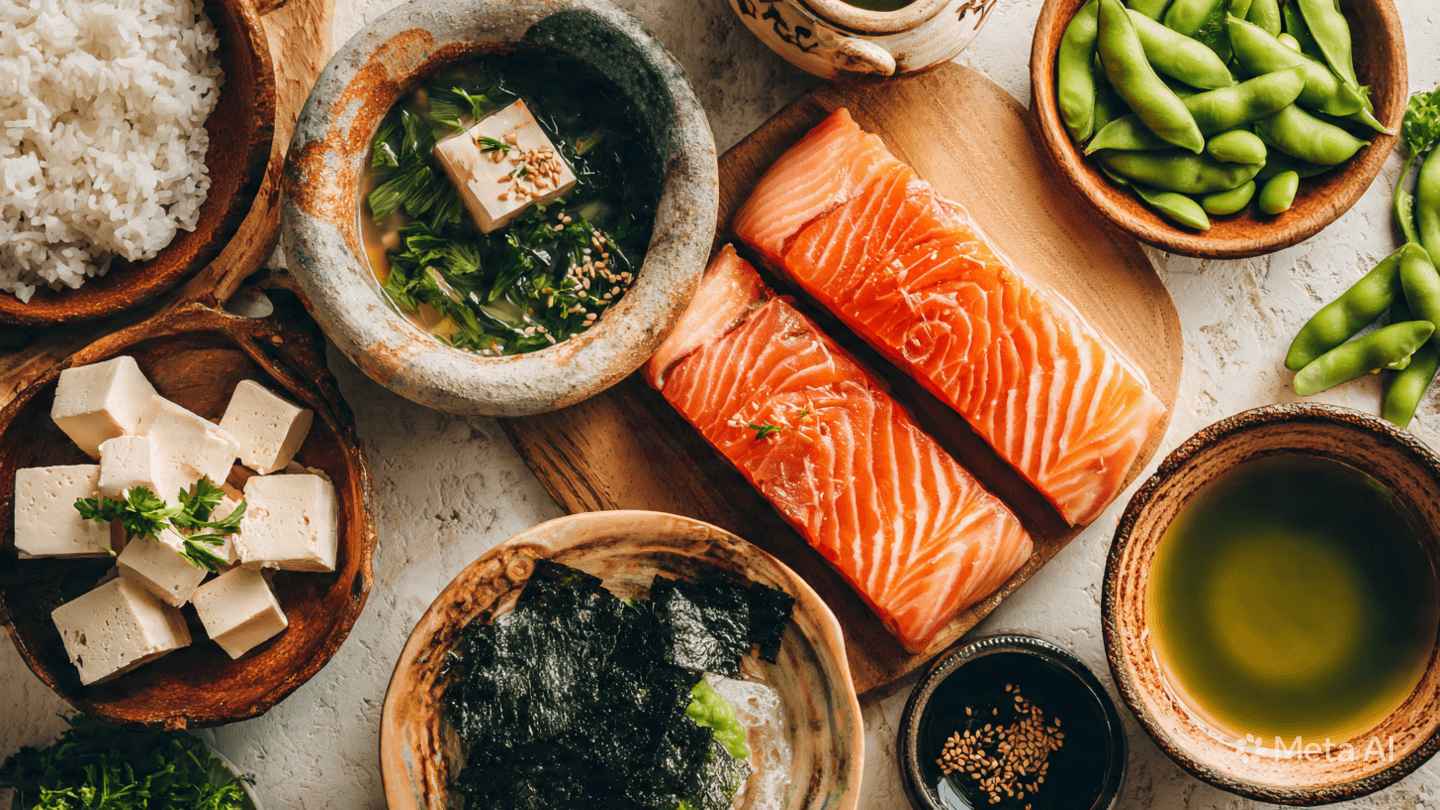
- Soup (Suimono or Shirumono): A warm bowl of soup is a quintessential part of a Japanese meal. The most famous is miso soup, made with a fermented soybean paste (miso) and dashi stock, often containing tofu, seaweed, and vegetables .
- Main Dish (Shusai): This is the primary protein source. It is typically fish or seafood, but can also include tofu, natto (fermented soybeans), or small amounts of meat or poultry .
- Side Dishes (Fukusai): These are small plates designed to complement the main dish and add variety. They often consist of vegetables (raw, steamed, pickled, or simmered), seaweed, and sometimes pickled fruits .
This structure ensures that each meal is balanced, visually appealing, and nutrient-dense.
Key Principles of the Traditional Japanese Diet
Beyond the food itself, the Japanese diet is guided by several cultural and practical principles that contribute to its health benefits.
Fresh, Seasonal, and Minimally Processed Foods
The traditional Japanese diet prioritises ingredients that are in season. This not only ensures the freshest and most flavourful produce but also aligns with the natural nutritional cycles of the body . Foods are typically eaten with minimal processing, preserving their natural vitamins, minerals, and antioxidants .
The Art of Umami
Umami, often described as the “fifth taste” alongside sweet, salty, sour, and bitter, is a cornerstone of Japanese cuisine . It is a savoury, rich flavour that is naturally occurring in ingredients like seaweed, dried fish, and fermented soy products. Using umami allows dishes to be deeply flavourful and satisfying without relying on excessive salt, sugar, or fat .
The Concept of “Hara Hachi Bu”
This is a traditional Confucian teaching that encourages people to eat until they are about 80% full . This practice prevents overeating, promotes mindful eating, and contributes to the calorie control that is characteristic of the diet, a factor likely linked to the low rates of obesity in Japan .
Visual Appeal and Mindful Eating
Japanese meals are as much a feast for the eyes as they are for the palate. Dishes are carefully arranged to be visually appealing, often using a variety of colours, textures, and shapes . Eating with chopsticks naturally encourages smaller bites and a slower, more mindful eating pace, which can help with digestion and satiety .
Essential Foods of the Japanese Diet
The traditional Japanese diet is built around a specific set of foods that are nutrient-dense and offer a wide array of health benefits.
Fish and Seafood
As an island nation, fish and seafood are staples of the Japanese diet . They are an excellent source of high-quality protein and long-chain omega-3 fatty acids, which are vital for brain, eye, and heart health . Fish can be prepared in many ways: grilled (yakizakana), raw (sashimi and sushi), or simmered in broth .
Soy Foods
Soy products are a cornerstone of the diet, serving as a primary source of plant-based protein. Common forms include :
- Tofu: A versatile soy curd used in soups, stir-fries, and as a main dish.
- Edamame: Fresh, young soybeans, often steamed and served as a snack or appetiser.
- Natto: Fermented soybeans with a strong flavour and unique texture, often eaten for breakfast.
- Miso: A fermented soybean paste used to make miso soup and other flavourful sauces.
Seaweed (Kaiso)
Sea vegetables are a significant part of the traditional Japanese diet, often eaten raw or dried . They are a powerhouse of minerals and antioxidants. Varieties include nori (used for sushi rolls), wakame (used in miso soup), and kombu (used to make dashi stock) .
Rice and Noodles
Steamed rice is the traditional staple food, providing a low-fat source of energy that helps people feel full . Noodles are another popular staple, with options including soba (made from buckwheat) and udon (made from wheat flour) . Soba noodles, in particular, are high in fibre .
Vegetables and Fruits
The diet includes a wide variety of cooked and pickled vegetables . These provide essential vitamins, minerals, and fibre. Green tea is another critical component, valued as a rich source of antioxidants .
The Japanese Food Guide Spinning Top
To make these principles easy to follow, the Japanese government developed the “Japanese Food Guide Spinning Top” . This visual guide recommends daily servings for different food groups:
- Grains (rice, bread, noodles, pasta): 5-7 servings
- Vegetables (including salads, cooked vegetables, and soups): 5-6 servings
- Fish, meat, eggs, and soy dishes: 3-5 servings
- Milk and fruit: 2 servings each
The guide also encourages regular physical activity, drinking plenty of water or tea, and limiting snacks and sugary beverages .
Health Benefits of the Japanese Diet
The traditional Japanese diet is linked to an array of health benefits, supported by a growing body of scientific research.
Promotes Longevity
Japan has one of the highest life expectancies globally, and adherence to the traditional Japanese diet is linked to a lower risk of premature death . The Japanese island of Okinawa, known for its high number of centenarians, follows a similar dietary pattern . A meta-analysis of over 3 million people found that higher adherence to a Japanese-style diet reduced the risk of cardiovascular disease mortality by 17%, stroke by 20%, and heart disease by 19% .
May Reduce Risk of Chronic Diseases
The diet’s emphasis on fish, seaweed, soy, and vegetables, combined with low levels of added sugar and saturated fat, is believed to protect against type 2 diabetes and heart disease . Research shows that Japanese people have a lower-than-expected risk of heart disease, despite their relatively high salt intake, likely due to the balancing effects of other elements of the diet . One study found that 91% of men following the traditional Japanese diet experienced significant reductions in risk factors for type 2 diabetes, including excess weight and high LDL cholesterol .
Supports Healthy Digestion
The diet is naturally rich in both soluble and insoluble fibre from seaweed, soybeans, fruits, and vegetables . Insoluble fibre promotes regularity, while soluble fibre feeds beneficial gut bacteria and reduces inflammation . Pickled vegetables, a common element of the diet, are also a great source of probiotics, which support gut health and reduce digestive symptoms .
Supports a Healthy Weight
The traditional Japanese diet is naturally low in calories due to its high vegetable content, small portion sizes, and minimal added sugar and fat . The practice of “hara hachi bu” further discourages overeating. The high-fibre and water content of the foods also helps to boost fullness and reduce appetite .
Tips for Adopting the Japanese Diet
You don’t need to move to Japan to benefit from this way of eating. Here are some practical tips to get started.
1. Build Your Plate the Japanese Way
Start by structuring your meals around the traditional model :
- Base: Start with a serving of steamed rice or soba noodles.
- Soup: Add a bowl of miso soup with tofu and seaweed.
- Main: Choose a grilled fish, tofu, or a small portion of lean meat.
- Sides: Add a few small side dishes of steamed, sautéed, or pickled vegetables.
2. Increase Your Fish Intake
Aim to replace red meat with fish a few times a week . Salmon, mackerel, sardines, and tuna are all excellent choices. Experiment with simple preparations like grilling with a little salt and lemon.
3. Embrace Soy and Seaweed
Incorporate tofu into stir-fries or soups. Add a sheet of nori to your rice or snack on edamame. Add dried wakame to a bowl of hot water with a little soy sauce for a quick, nutrient-dense soup .
4. Practice “Hara Hachi Bu”
This is a simple but powerful practice. Pause during your meal and ask yourself if you’re still hungry. Aim to stop eating when you feel about 80% full . This helps prevent overeating and allows you to truly enjoy your food.
5. Reduce Processed Foods and Sugar
Cut back on processed snacks, sugary drinks, and desserts. The Japanese diet naturally limits these . Instead, enjoy a piece of fresh fruit for dessert .
What to Limit on a Japanese Diet
The traditional diet naturally minimizes certain foods:
- Dairy: Milk, cheese, and yoghurt are not a large part of the traditional diet .
- Red Meat and Poultry: While eaten occasionally, these are consumed in smaller amounts compared to fish .
- Excess Fats and Oils: The diet uses minimal cooking oils and avoids rich, fatty sauces .
- Processed and Sugary Foods: Snacks, baked goods, and sugary drinks are uncommon in the traditional eating pattern .
Sample 3-Day Japanese Meal Plan
Here is a simple guide to get you started, based on the principles of the traditional diet .
| Day | Breakfast | Lunch | Dinner |
|---|---|---|---|
| 1 | Miso soup, steamed rice, natto, and a small seaweed salad | Soba noodles in a dashi-based broth, grilled tuna, kale salad | Udon noodle soup, fish cakes, edamame, and vegetables marinated in vinegar |
| 2 | Miso soup, steamed rice, a rolled omelet (tamagoyaki), and pickled fruit | Clam soup, rice balls wrapped in seaweed (onigiri), marinated tofu, and a cooked-vegetable salad | Miso soup, sushi with a variety of fish, seaweed salad, edamame, and pickled ginger |
| 3 | Udon noodle soup with a boiled egg and shrimp | Shiitake-mushroom soup, rice cakes, seared scallops, and steamed vegetables | Miso soup, steamed rice, vegetable tempura, and salmon or tuna sashimi |
What is the difference between the Japanese and Western diets?
Is the Japanese diet the same as the Okinawan diet?
While similar, they are not exactly the same. The Okinawan diet (from the island considered a Blue Zone for longevity) places a heavy emphasis on sweet potatoes, and contains less rice and fish than the traditional Japanese diet.
Can I eat out while following a Japanese diet?
Yes! Many dishes at Japanese restaurants fit perfectly into this plan. Sushi, sashimi, miso soup, edamame, grilled fish, and soba or udon noodle soups are all excellent choices.
Final Thoughts: Embracing the Japanese Way of Eating
The traditional Japanese diet is far more than just a list of healthy foods—it is a philosophy of eating that has sustained one of the healthiest populations on Earth for centuries. It teaches us that food is not just fuel, but something to be savoured, respected, and enjoyed with mindfulness.
What makes this approach so powerful is its simplicity and sustainability. You don’t need to count every calorie or eliminate entire food groups. Instead, you are invited to build your meals around fresh, whole ingredients; to listen to your body’s signals of fullness; and to take pleasure in the visual beauty and natural flavours of what you eat. By prioritising fish, plant-based proteins, vegetables, and fermented foods, while reducing processed items and added sugars, you are naturally giving your body the nutrients it needs to thrive.